
Reviewed · ANNAPURNA SANCTUARY TREKS
Pokhara: 7-Day Annapurna Base Camp Trek & Natural Hot Spring
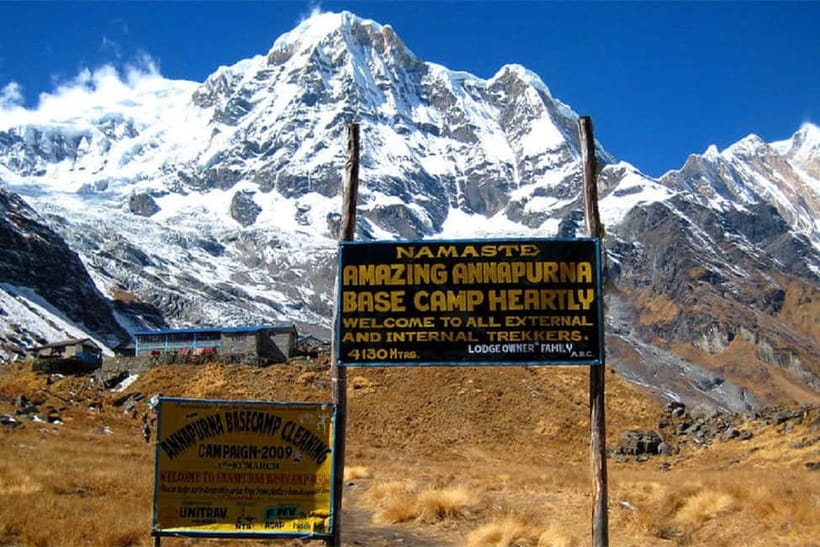
Annapurna rewards patient hikers fast. This 7-day trek from Pokhara mixes Gurung village culture, rhododendron forests, and the big payoff of walking into the Annapurna Sanctuary at 4,130m, then unwinding with Jhinu Danda natural hot springs.
I love how the route feels like a real journey step-by-step, not just a march to a summit, and I love the contrast between crisp, high-altitude views and that warm soak after the last climb. One drawback: you’ll be hiking 4–7 hours most days, and the altitude at base camp means you should take the climb seriously and pace yourself.
In This Review
- Key highlights worth planning for
- The big idea: Annapurna Base Camp plus a hot-spring reset
- From Pokhara to Ghandruk: warm-up day on the Modi Khola
- Chomrong to Himalaya: the climb that gives you Machhapuchhre views
- Into the alpine zone: Himalaya to Machhapuchhre Base Camp and Annapurna Base Camp
- From base camp down to Bamboo: the best kind of tired
- Jhinu Danda hot springs: the river-day finish that feels earned
- Heading back to Nayapool and Pokhara: close the loop
- Guides make or break it: the care factor you should look for
- What the $181 price means for value (and what it doesn’t cover)
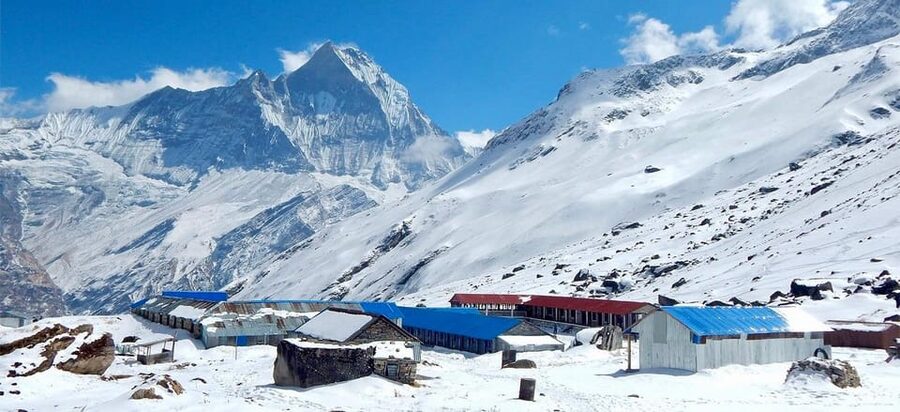
- What to expect from the “tea-house life” along the trail
- Altitude and fitness: the part you should plan for honestly
- What to pack so you don’t lose time or comfort
- Weather tips: why January can feel calmer
- Who this trek is best for (and who should reconsider)
- Should you book this Annapurna Base Camp and Jhinu Danda hot-spring trek?
- FAQ
- What is the altitude at Annapurna Base Camp on this trek?
- How long is the Annapurna Base Camp trek?
- Where does the trek start from in Pokhara?
- Are permits included?
- Is a guide included?
- Are meals included?
- Do I need travel insurance?
- Is a porter available, and how much does it cost?
- Where are the natural hot springs?
- Can I get pickup from my hotel or the airport?
- How much flexibility do I have if my plans change?
Key highlights worth planning for
- Annapurna Base Camp at 4,130m in 7 days with a full mountain-valley approach and clear views when the weather cooperates
- An actual “walk into the Sanctuary” feeling—you reach the alpine zone and glacier-valley amphitheater vibe around base camp
- Cozy tea-house nights in traditional mountain villages with meals along the way (depending on your selected option)
- Jhinu Danda natural hot springs as your finish line after a downhill day to the river area
- Private-group pacing and flexible overnight stops based on progress, with English-speaking support
Other ways up to Annapurna Base Camp from Pokhara.
- Kathmandu/Pokhara: 5-Day Annapurna Base Camp (ABC) Trek★ 4.9 · 72 reviews
- Private 7 – Day Annapurna Base Camp Trekking★ 5.0 · 50 reviews
- From Pokhara: 5-Day Annapurna Basecamp Trek with Hot Springs★ 4.9 · 26 reviews
- Annapurna Base Camp Trek from Pokhara 7 Days★ 5.0 · 19 reviews
The big idea: Annapurna Base Camp plus a hot-spring reset
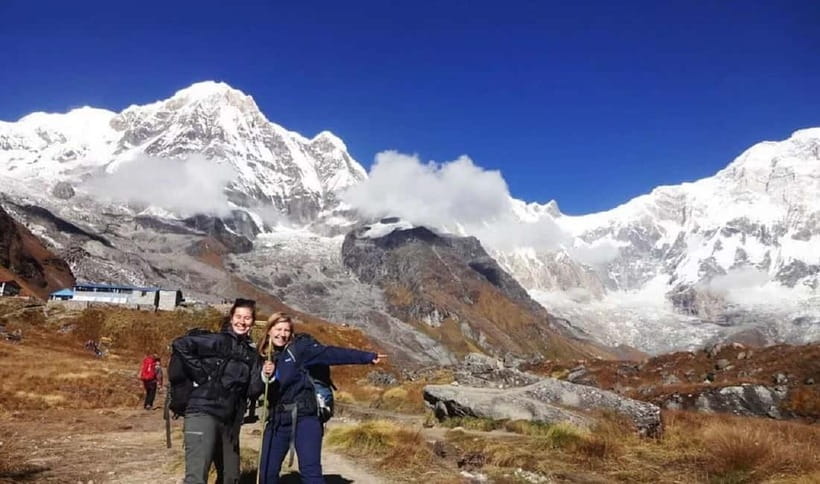
If you’ve wanted Annapurna without the long time commitment of longer treks, this plan fits well. You’re doing the classic Base Camp goal, but you also get the payoff most people remember most: the moment the mountains “open up” in the Sanctuary, followed by a simple, human reward—warm water at Jhinu Danda.
What makes this experience work for real travelers is the pacing. You’re not sprinting; the itinerary builds in gradual climbs and descents, with overnight stays at practical altitude steps. That’s important because you’re hitting base camp at 4,130m/13,550ft, where breathing gets harder and your body needs time to adjust.
And yes, the hot springs matter. Many treks end with a ride back to town. Here you end with a soak near the river. It’s the kind of small, grounded finish that makes the effort feel worth it.
From Pokhara to Ghandruk: warm-up day on the Modi Khola
Your trip starts with a drive from Pokhara to the trailhead area near Nayapool, then you trek toward Ghandruk. Expect about 5–6 hours of walking, with the first stretch giving you the rhythm: village paths, small forests, and steady effort.
Ghandruk is a great place to sleep because it’s not just a random stop. It’s one of those villages where the trek feels social—stone steps, local homes, and wide mountain views when the sky is clear. The altitude here is about 1,940m, so it’s a manageable “hello mountains” day before the bigger work starts.
Practical takeaway: use this first day to get your pack and shoes dialed in. Your legs should feel worked, not punished. If you start too hard, higher up will feel harder than it has to.
Chomrong to Himalaya: the climb that gives you Machhapuchhre views
The next push takes you to Chomrong, around 2,170m. This stretch often includes more climbing—stone steps and forest trails—so it’s where your legs learn the trek plan.
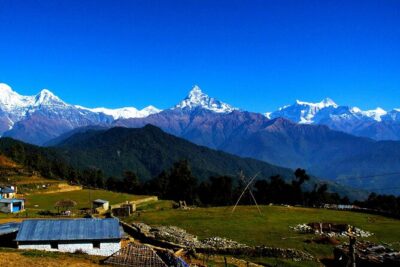
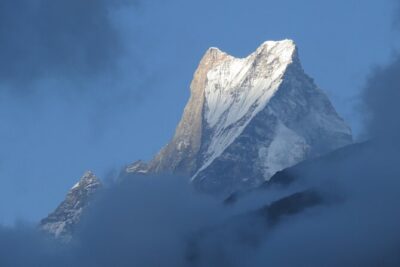
You’ll keep seeing wide views of Annapurna and Machhapuchhre (the Fish Tail mountain). In the mountains, those moments aren’t just pretty; they help you mentally measure your progress. When you can see what you’re walking toward, it feels less like suffering and more like moving through a place you came to experience.
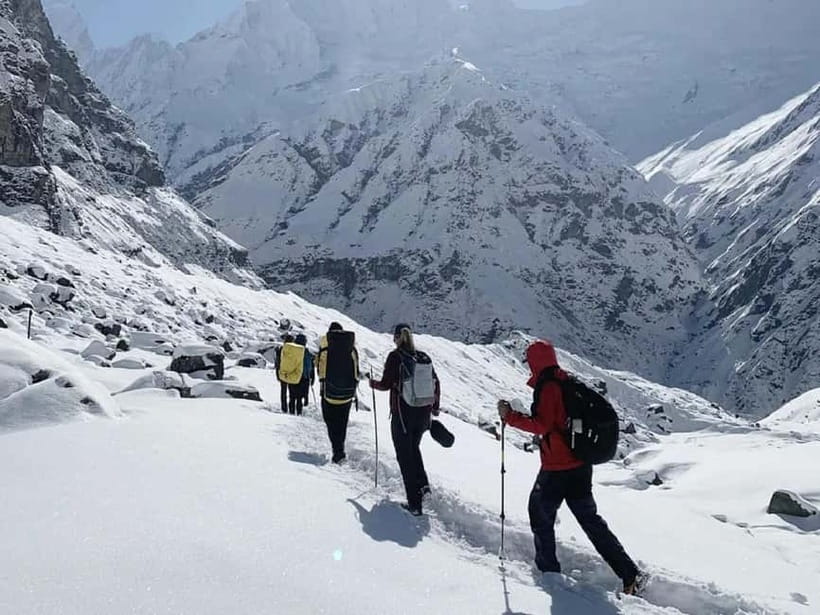
Later, you reach Himalaya at about 2,920m after roughly 6–7 hours of hiking. The trail shifts: you descend toward a river section, then climb again through bamboo and rhododendron forest. That kind of plant-and-shade change is more than scenery—it also changes your effort. Forest stretches can be cooler, and the bamboo sections often feel slower and steadier.
Small drawback to plan for: forest hiking can still be slippery, and mornings can feel colder than you expect. Bring gloves and keep a rain layer accessible.
Into the alpine zone: Himalaya to Machhapuchhre Base Camp and Annapurna Base Camp
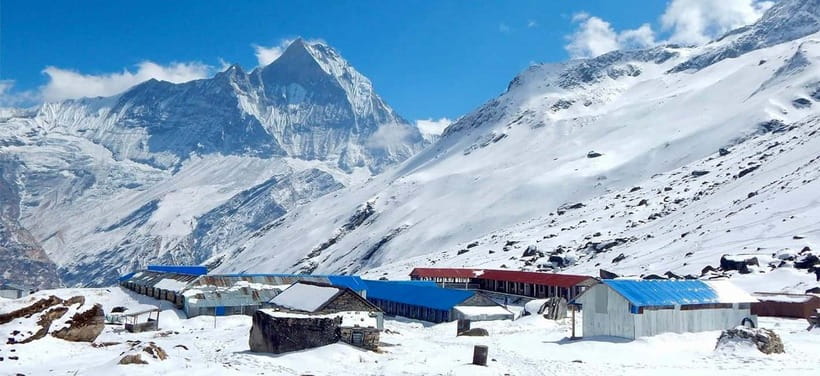
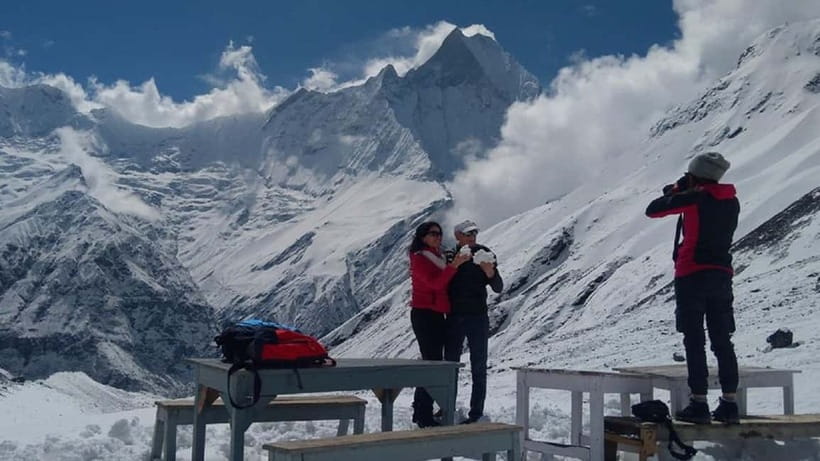
This is the day your photos will come from. You’ll trek for about 6–7 hours, moving from Himalaya up through Machhapuchhre Base Camp and finally to Annapurna Base Camp, at 4,130m.
What I like about this approach is that it doesn’t just throw you into base camp. You get that in-between feeling—first you’re still climbing, then you’re in the alpine zone, then the valley around base camp starts to feel like an amphitheater. The walk-in matters because you’re not arriving after a vehicle ride. You earn it one hour at a time.
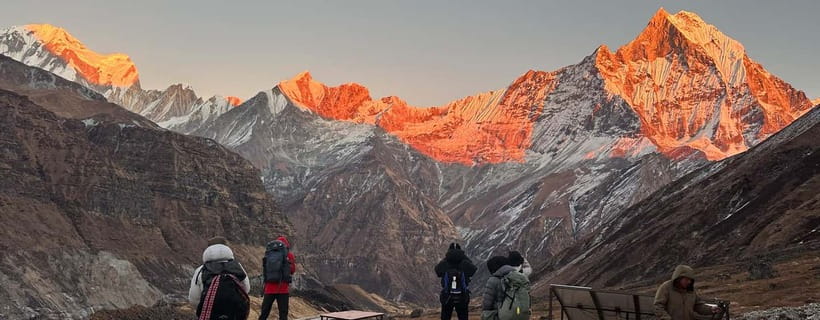
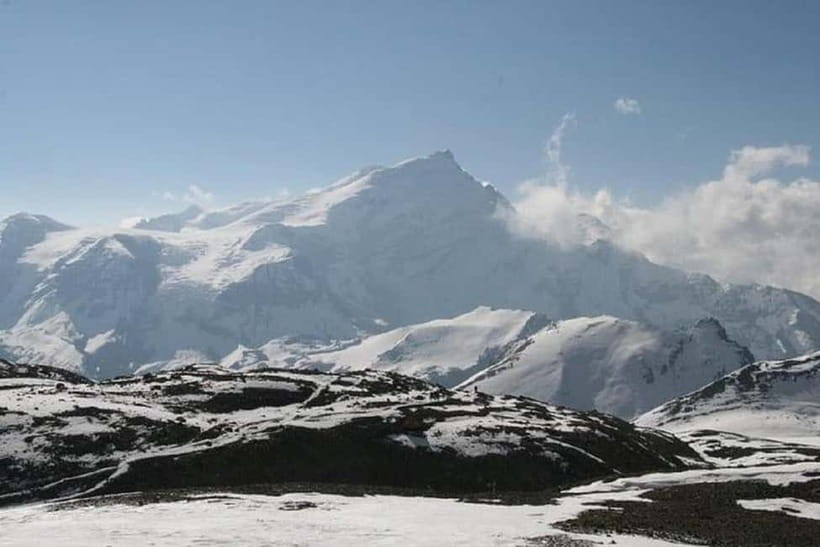
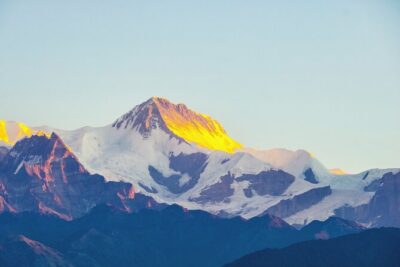
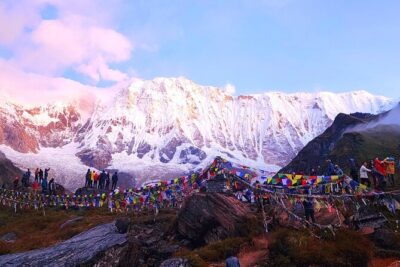
When the weather is good, the view is the whole point: giant peaks surrounding the Sanctuary, with the kind of sunrise/sunset scenes people talk about for a reason. Even when the sky is partly clouded, you’ll still feel the altitude and scale in the way the mountains dominate everything around you.
Altitude reality check: base camp is high enough that you need a slow pace for the last push. If your breathing gets ragged, stop, breathe, and let your guide adjust the timing. The route is challenging, but it’s doable with steady effort.
More treks and hikes across the Annapurna region.
From base camp down to Bamboo: the best kind of tired
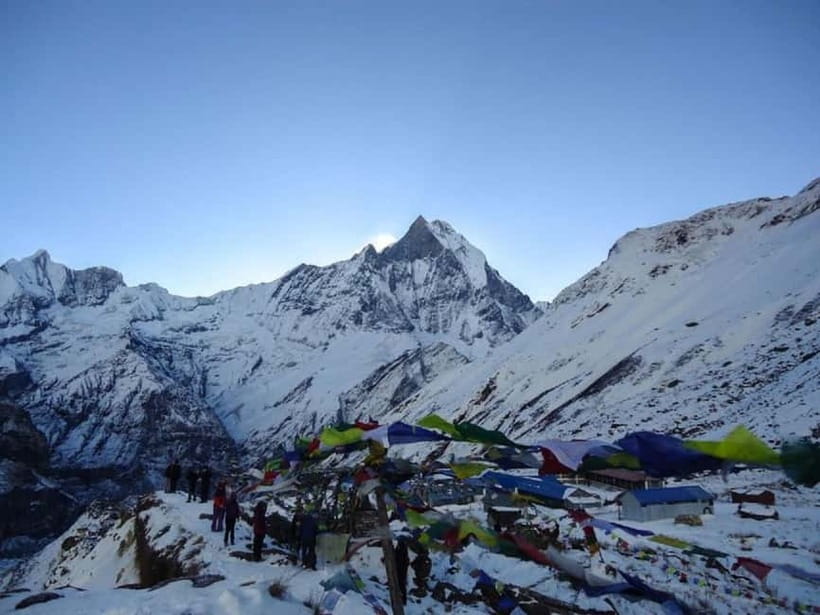
After reaching base camp (and taking the moment in), you’ll head to Bamboo at about 2,335m. Plan on roughly 6–7 hours walking.
This is a classic “descend and enjoy” day. You’re not climbing high again; you’re moving down and letting your body recover a bit while still getting those huge, backward views of the range. The trail also includes waterfalls and the satisfying switch from high-alpine awe to something more grounded.
Why this day matters: going down is easier on your heart and lungs, but it can be rough on your knees. Keep steps short on rocky sections and use trekking poles if you have them. If you don’t, your guide can often suggest a technique that fits your legs.
Jhinu Danda hot springs: the river-day finish that feels earned
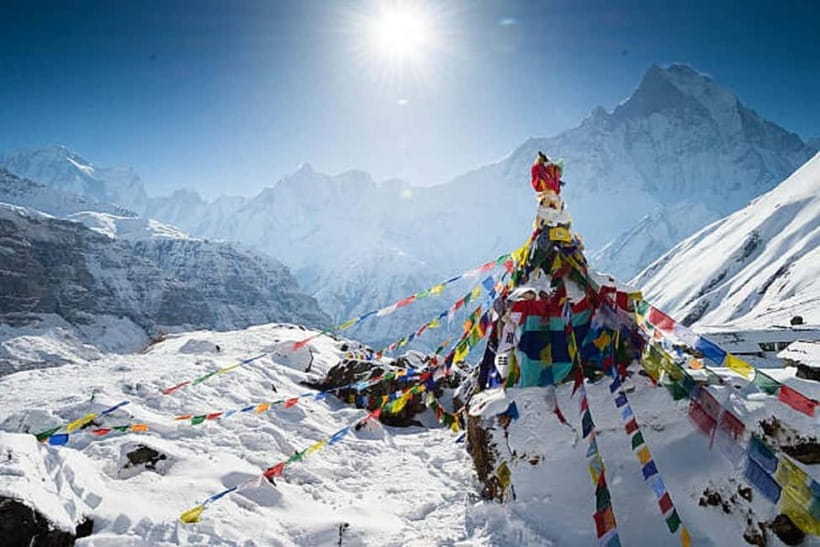
Next you trek to Jhinu Danda (about 1,610m) for roughly 5–6 hours. This is the day most people remember for a different reason: after the effort and altitude fatigue, you’re rewarded with a natural hot spring soak near the riverside.
This works because it’s not just “relaxing.” It’s targeted recovery. Your muscles have done the work; warm water helps you feel human again. Then you get one more night at a lower altitude before heading back.
If you’re sensitive to cold after hiking, this is a great day to plan properly: bring a dry towel and change clothes. You’ll thank yourself when you’re done.
Heading back to Nayapool and Pokhara: close the loop
Your final day is shorter: about 4–5 hours trekking to Nayapool, plus a ~1-hour drive back to Pokhara.
This section is your decompression. You’re still moving, but the trek’s intensity has already passed. In my view, it’s the right kind of ending—enough walking to feel like the trip continues, without turning the last day into another test.
Also, the overall loop matters for value. You start in Pokhara, you end in Pokhara. That’s simple logistics for a trek that otherwise lives at the other end of Nepal’s “big mountain” world.
Guides make or break it: the care factor you should look for
This trek runs with a professional, friendly English-speaking guide (English, Hindi, and Nepali). Most important: the guide is responsible for safety and pacing, and you’re also covered with a first-aid kit.
From praised guide experiences on this route, certain patterns show up again and again:
- Guides like Chaundra and Bishnu Giri are praised for being attentive to your needs and keeping you feeling safe every day.
- Anil is noted for help with practical stuff like walking support and food guidance.
- Jeet Bhadur and Laxman come up in the reviews for being personable and supportive when motivation dips.
- Chandra and Sun are praised for clear English and for adjusting overnight stays based on progress, which can be the difference between a trek you enjoy and one you just survive.
One thing to watch: you’re in a private group. That means you can ask for a pace that matches your fitness level. If you want the trek to feel steady and controlled, tell your guide early how you want to walk—slow and sure, or more brisk.
What the $181 price means for value (and what it doesn’t cover)
At $181 per person for 7 days, the value here is mainly in what you don’t have to source yourself: permits/paperwork, a guide, tea-house lodging along the way, and transportation between Pokhara and the trek starting point. The route also includes luggage storage in Pokhara, which makes life easier.
Here’s what the price includes, in plain terms:
- Round-trip transportation between your hotel/airport area in Pokhara and the trek starting point
- Required trekking permits plus TIMS fees
- Accommodation in simple tea houses/lodges
- Meals throughout the trek depending on your selected option
- A certified English-speaking trekking guide
- A first-aid kit
- Government and local taxes
- Guide insurance and expenses
- Trekking gear such as a trekking stick and/or sleeping bag as needed
- Luggage storage in Pokhara
And what’s not included:
- Travel insurance (they state it’s mandatory for your safety)
- Personal expenses like snacks and beverages
- Emergency rescue services
- Porter option if you want one (listed as $20 per day)
My take: if you’re budget-minded and you’re ready to hike without paying extra for a porter, this can be solid value. If you want lots of extras (extra snacks, upgrades, or a porter from day one), the real cost climbs.
What to expect from the “tea-house life” along the trail
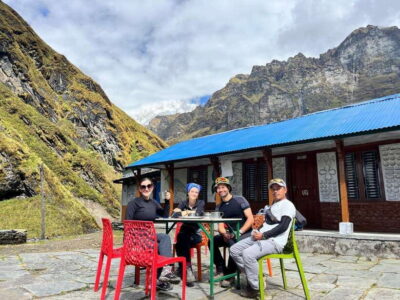
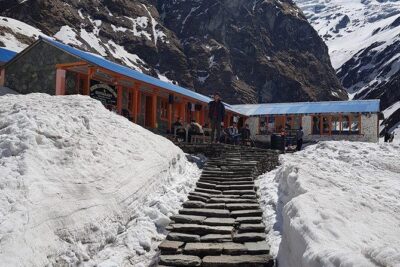
This trek is built around tea houses and lodges. That means you get basic beds, hot drinks, and meals without hauling a full kitchen or cooking gear.
The upside is comfort. You can focus on walking, hydration, and rest, not on logistics. The downside is that tea-house facilities can be simple and variable. Plan to dress in layers, be flexible with shower availability, and treat evenings as recovery time more than downtime with luxury amenities.
Also, because meals are included only depending on your selected option, check your package carefully. If meals aren’t fully included, you’ll rely more on buying snacks and drinks along the way.
Altitude and fitness: the part you should plan for honestly
This trek’s top altitude is 4,130m at Annapurna Base Camp. That means:
- You’ll likely feel breathier on the climb day
- Sleep can feel different at night
- Your energy might dip if you push too hard early
The tour itself warns that the trek may be challenging, so your best move is to start in decent shape and keep your pace conservative.
A practical strategy I like on high treks: walk slower than you think you need to. Stop when you need to, sip water often, and don’t treat the climb day like a race. The guides and the route are built for steady progress, and that’s how you get the best views, not just the finish.
What to pack so you don’t lose time or comfort
You’ll want clothing and gear for sun, cold, and rain. The essentials listed for this trek include:
- Comfortable shoes and warm clothing
- Sunglasses and sun hat (sun exposure is real at elevation)
- Rain gear and gloves
- Change of clothes and a towel
- Camera, sunscreen, and a power bank
- A flashlight
- Trekking gear, plus a sleeping bag if you’re not provided one as needed
- Cash and a passport (copy accepted, but submit a copy at least one day prior for permits)
Hot springs day tip: pack a towel and extra clothes so you can change comfortably right after soaking.
Weather tips: why January can feel calmer
One of the clearest signals from recent experiences is that January can be a great time for this trek. A verified booking highlighted clear skies and also noticeably quieter trails and teahouses.
Even if you don’t plan for January, the big idea stays the same: choose a season where you expect colder, clearer days rather than constant rain. When visibility is good, the trek feels like it’s working for you instead of fighting you.
Who this trek is best for (and who should reconsider)
This is a great fit if you:
- Want a classic Annapurna Base Camp goal in a 7-day window
- Like village trails, forest sections, and that gradual “mountains getting bigger” feeling
- Want tea-house comfort rather than camping logistics
- Are okay with a real hike at altitude and you can pace yourself
Consider a different plan if you:
- Have trouble with sustained 4–7 hour hikes most days
- Know you struggle with altitude and can’t follow a slow pace
- Want a low-effort vacation rather than a hands-on mountain experience
Should you book this Annapurna Base Camp and Jhinu Danda hot-spring trek?
I’d book this if your priority is the combo: Annapurna Base Camp in a week plus a memorable recovery finish at Jhinu Danda. The route structure makes sense for most fit hikers, and the included guide support is a big deal at 4,130m.
Before you click confirm, do three things:
- Make sure you’re physically ready for long trekking days and altitude pacing
- Plan for travel insurance and understand that porter support is optional
- Double-check what your chosen option covers for meals, so you aren’t surprised mid-trek
If that all checks out, this is one of those trips that leaves you with more than photos. It gives you a clear story: climb, reach the amphitheater of the Sanctuary, then soak the fatigue out of your legs.
FAQ
What is the altitude at Annapurna Base Camp on this trek?
Annapurna Base Camp is listed at 4,130m (13,550ft).
How long is the Annapurna Base Camp trek?
The trek is 7 days.
Where does the trek start from in Pokhara?
You’ll be driven from Pokhara to the trek starting point near Nayapool, then trek to Ghandruk on the way up. On the last day you trek back to Nayapool and drive to Pokhara.
Are permits included?
Yes. Required trekking permits, TIMS fees, and necessary paperwork are included.
Is a guide included?
Yes. A professional, English-speaking trekking guide is included, and the guide is certified by the Nepal Government.
Are meals included?
Meals are included depending on the option selected. The tour includes accommodation in simple tea houses or lodges.
Do I need travel insurance?
Yes. Travel insurance is stated as mandatory for your safety and peace of mind.
Is a porter available, and how much does it cost?
A porter is optional. The listed porter cost is $20 per day if you need one.
Where are the natural hot springs?
The hot springs are at Jhinu Danda, which is reached on the penultimate day.
Can I get pickup from my hotel or the airport?
Yes. Pickup is optional from Pokhara International Airport or any hotel in the Lakeside area. Drop-off locations include several Pokhara hotels/areas and also Sarangkot.
How much flexibility do I have if my plans change?
Free cancellation is available up to 24 hours in advance for a full refund, and there is a reserve-now, pay-later option.
More Treks in the Annapurnas
Also Reviewed Around Pokhara

More Annapurna Base Camp Routes
Newer Pokhara reviews to browse before you decide
Annapurna Sanctuary Treks, compared.
 ★ 4.9Kathmandu/Pokhara: 5-Day Annapurna Base Camp (ABC) TrekFrom $9672 reviews
 ★ 5.0Private 7 – Day Annapurna Base Camp TrekkingFrom $62550 reviews
 ★ 5.0Annapurna Base Camp Trek (8 days)From $65045 reviews
 ★ 4.97 Day Annapurna Base Camp TrekFrom $21538 reviews
 ★ 4.95-Day Annapurna Basecamp Trek with Hot SpringsFrom $15526 reviews
 ★ 5.0Annapurna Base Camp Trek from Pokhara 7 DaysFrom $39519 reviews
 ★ 5.06 days Annapurna Basecamp TrekFrom $45016 reviews
 ★ 5.010 Days Private Guided Annapurna Basecamp Trek via Poon HillFrom $80015 reviews
Browse the lists this tour appears in