
Reviewed · ANNAPURNA SANCTUARY TREKS
6 days Annapurna Basecamp Trek
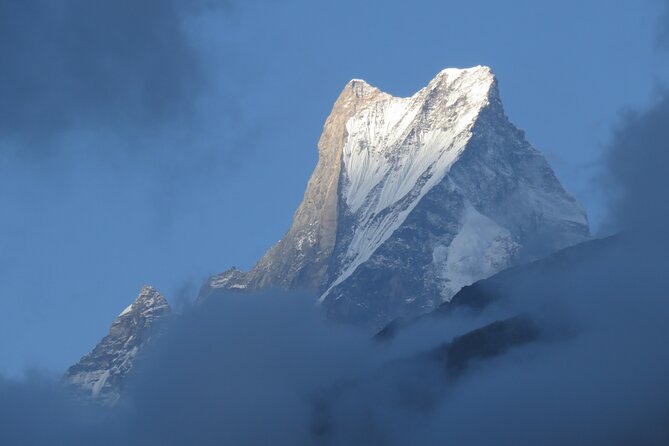
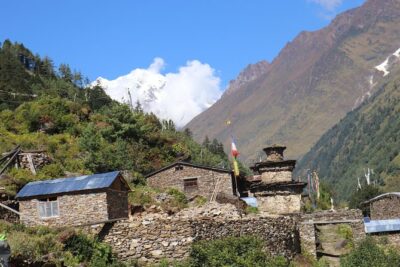
One of the best views in Nepal starts small. This 6-day Annapurna Base Camp trek from Pokhara focuses on big mountain moments with a manageable timeline, colorful rhododendron walks, and teahouse comfort along the way. You’ll move through classic Gurung village scenery and spend real time around the Annapurna region’s famous viewpoints.
I especially like the balance of structured guidance (a licensed, insured guide and private transportation) plus the freedom to enjoy the walking days at your own pace. And the itinerary leans hard into what matters most on this trek: sunrise and peak views, including 360-degree moments at Base Camp.
One thing to keep in mind: it’s only 6 days, so the hiking days are long enough that you’ll want a moderate fitness base and a good attitude toward cold mornings and altitude. If you hate long days in the mountains, you might feel it.
In This Review
- Key highlights that make this ABC trek worth your time
- Pokhara to Chhomrong: getting your Annapurna fix fast
- Jhinu Danda suspension bridge: the 135-meter version of bravery
- Day two into Annapurna Sanctuary: foothills walking that sets the rhythm
- Dovan and the Modi River valley: rhododendron forest climbing to Machhapuchchhre views
- Deurali to Annapurna Base Camp: the day the peaks come close
- Sunrise and the 360-degree color shift at Base Camp
- Day six down to civilization: why greenery feels better after cold valleys
- Price and value: what $450 covers (and what to budget for)
- Guides, groups, and the safety feel that you can actually sense
- Gear and teahouses: comfort without turning it into a hotel
- Who this ABC trek suits best—and who should be cautious
- Should you book this 6-day Annapurna Base Camp trek?
- FAQ
- What is the duration and where does the trek start?
- How much does the Annapurna Basecamp trek cost?
- What is included in the package?
- Are lunch and dinner included?
- Do I need a porter?
- Is pickup offered and is the group size limited?
- What physical fitness level is needed?
Key highlights that make this ABC trek worth your time
- Chhomrong viewpoint timing: a strong first look at Annapurna South, Huinchuli, and Mt Fishtail from about 2,150 m.
- Jhinu Danda suspension bridge: 285 m long and hanging 135 m above the Kimrong River for a real “hang in there” moment.
- Rhododendron forest walking: the route passes through forests with 30+ rhododendron species.
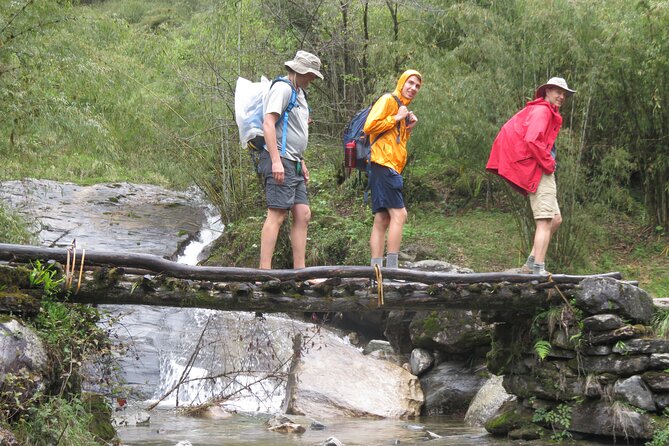
- Modi River valley climbs: steady upstream walking through forested river basins and clear stream crossings.
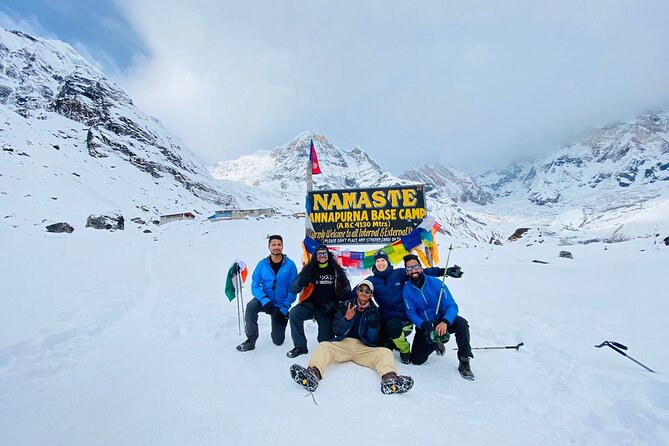
- Base Camp sunrise focus: early light on Annapurna I and that dramatic color shift people come for.
- Max group size of 20: enough structure to feel safe, without turning it into a parade.
Other ways up to Annapurna Base Camp from Pokhara.
- Kathmandu/Pokhara: 5-Day Annapurna Base Camp (ABC) Trek★ 4.9 · 72 reviews
- Private 7 – Day Annapurna Base Camp Trekking★ 5.0 · 50 reviews
- From Pokhara: 5-Day Annapurna Basecamp Trek with Hot Springs★ 4.9 · 26 reviews
- Annapurna Base Camp Trek from Pokhara 7 Days★ 5.0 · 19 reviews
Pokhara to Chhomrong: getting your Annapurna fix fast
Most ABC trips start with a long “warm-up” before you really feel the Himalaya. This one compresses that feeling by getting you to Chhomrong area on day one after a few hours of driving near Jhinu Danda suspension bridge.
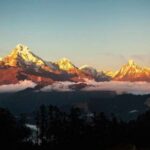
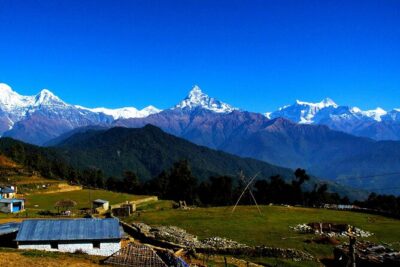
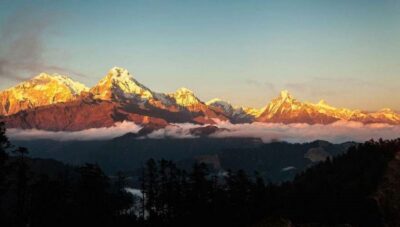
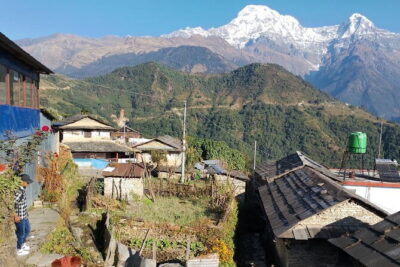
Chhomrong sits at about 2,150 m, and it’s treated like a first big tasting spoon. From here, you get close, practical viewpoints of Annapurna South (7,219 m), Huinchuli (6,441 m), and Mt Fishtail. Even if the rest of the trek is about pushing higher, I like that you’re not waiting days for your first payoff.
What to expect on day one
You’ll spend time in the walking stretch after the drive, then finish the day with village scenery rather than just staring at a trail. This helps because ABC trekking is as much rhythm as it is altitude—your body learns the tempo when you start with real views.
Possible drawback
Because day one is about positioning you for the rest of the week, it can feel like you’re “on the move” from the start. If you’re the type who needs a slow first day, plan to stay mentally flexible.
Jhinu Danda suspension bridge: the 135-meter version of bravery
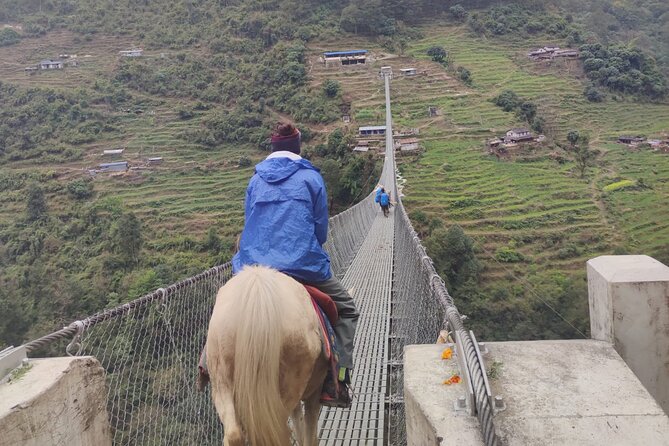
Jhinu Danda is not just a photo stop. The suspension bridge is listed as one of the longer ones at 285 m, and it hangs roughly 135 m above the Kimrong River. That means you’ll feel it, in a good way.
This is one of those moments where the trek turns into an experience, not just transport from one altitude marker to the next. Crossing bridges is often where you learn what to do with your nerves: breathe, look slightly ahead, keep your step steady, and let the team guide the pace.
Why this matters for your trek
On Annapurna treks, weather and conditions can change. When you have a thrilling landmark early, it’s easier to stay positive later if the sky is dull or you’re tired. It gives you a memory anchor.
Small consideration
If you’re afraid of heights, you’ll want to decide beforehand. You can still do the trek, but commit to a calm crossing strategy—don’t “white-knuckle” it without a plan.
Day two into Annapurna Sanctuary: foothills walking that sets the rhythm
Day two is built around morning views and then a long walking push that moves you into the Annapurna Sanctuary area. You start with a morning look at Annapurna South and Mt Fishtail, then the trail swings up and down through Annapurna foothills.
The value here is the rhythm. You’re not immediately thrown into the highest altitude drama. Instead, you learn how your legs react to repeated uphill and downhill—because that pattern continues most days on this trek.
What makes this day feel meaningful
You’ll be transitioning from village-to-village energy into the “sanctuary” feeling where the scenery gets more dramatic and enclosed. Even without dramatic snowfall visuals, the route is designed so you keep getting that sense of walls of mountain forming around you.
One thing to watch
Long days add up. The itinerary has day segments listed as around 12 hours, so bring endurance habits—snacks, water, and a steady pace that doesn’t spike your breathing.
Dovan and the Modi River valley: rhododendron forest climbing to Machhapuchchhre views
On day three, the route heads toward Machhapuchchhre and passes through Dovan in the Modi River valley basin. You’ll be walking in an area wedged between Hiunchuli and Mardi Himal, and you gradually climb upstream along the Modi River.
The big nature win is the rhododendron forest. The trek is described as walking through colorful rhododendron forests with 30+ species, which is exactly the kind of detail that makes a trek feel different from day to day. When forests are part of your route, you also get some shade relief during the day and a more varied walking feel than just open slopes.
Why you’ll probably enjoy this day
Forest sections change your “focus.” Instead of staring at the next peak the whole time, you’re managing footing, enjoying the changing light under trees, and watching stream crossings. That’s mentally easier, especially when altitude fatigue sets in.
A practical consideration
Forest walking can be slower than open areas. If you’re someone who likes to check boxes quickly, expect the pace to feel more deliberate today.
More treks and hikes across the Annapurna region.
Deurali to Annapurna Base Camp: the day the peaks come close
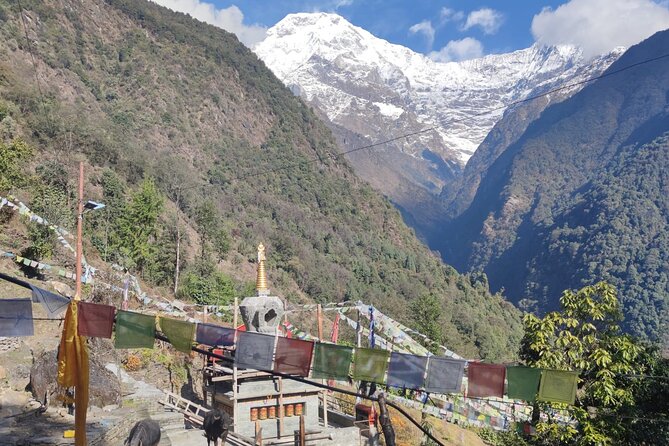
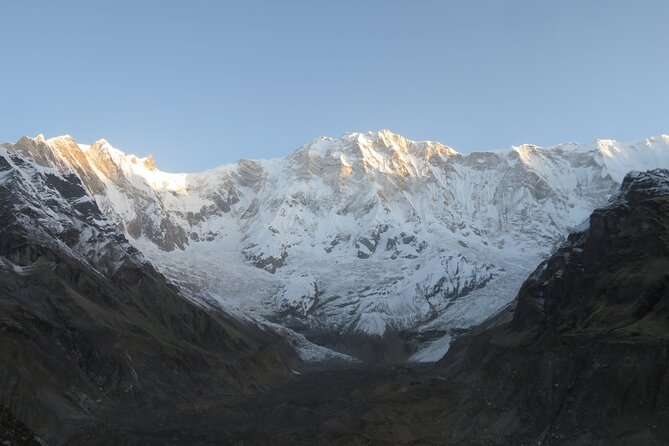
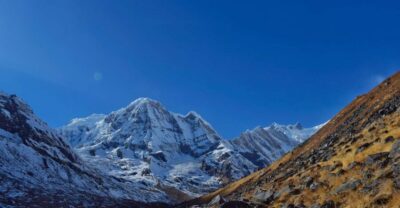
Day four is your Base Camp approach. The trek highlights the walk from Deurali, saying it becomes especially scenic with undisturbed views of Mt Fishtail, Annapurna III, Annapurna South, and Annapurna I, plus other peaks.
And then there’s the Modi Khola angle: you follow the Modi Khola upstream. That’s important because rivers often mark the geography of your day. When you track a river valley, your body gets a consistent sense of direction, which can reduce that “where are we going?” stress that hits on long trekking days.
What this day feels like
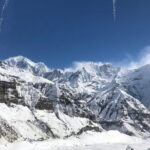
This is where the scenery stops being “nice” and turns into “I can’t believe it’s real.” The trek description focuses on the undisturbed views, which usually means fewer obstructions and more time in the open where you can actually take in the full set of peaks.
Possible drawback
Base Camp days can be physically demanding even when the route is scenic. If you’re prone to getting cold, plan for the long hours—mountain temperature can drop fast, especially with early starts.
Sunrise and the 360-degree color shift at Base Camp
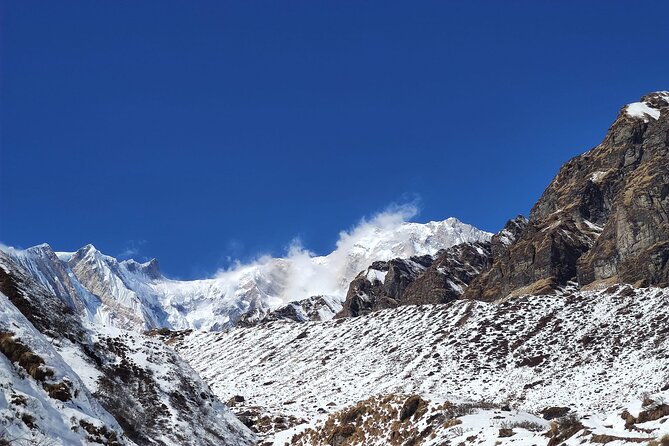
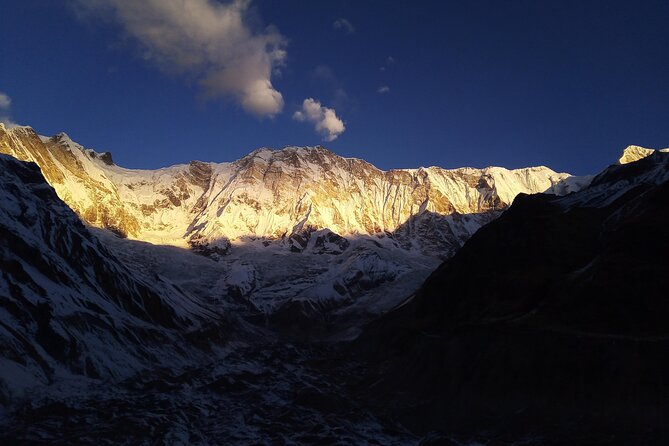
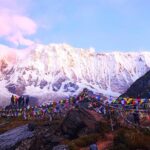
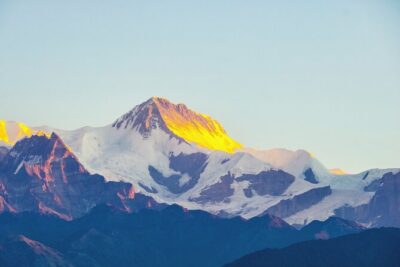
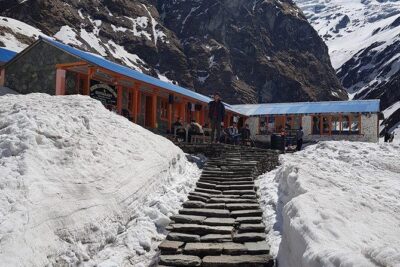
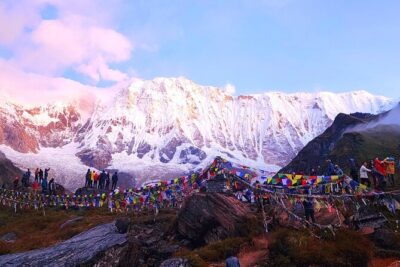
Day five is the reason many people choose ABC in the first place. You’ll enjoy early rays hitting the snow peaks, and the trek description calls out the 360-degree view around Annapurna Base Camp. Annapurna I’s color shift during sunrise is listed as the most popular moment.
Here’s why this matters beyond the dramatic payoff: sunrise at Base Camp is usually clearer than later in the day. Even if you don’t get perfect skies, early light tends to bring out depth—shadows, texture, and the way the mountain shapes layer into the horizon.
How to make this morning work
Start with the right expectations: sunrise takes patience. You might be waiting in cold air while others scramble for the best angle. A good strategy is to bundle up first, then focus on where the peaks come into view, not just where the crowd stands.
Practical note
Your itinerary lists this as an easy morning after sunrise. That’s a smart design choice. You get the big moment, then you’re not forced into immediately wrecking your legs on another heavy push.
Day six down to civilization: why greenery feels better after cold valleys
Day six brings you back to the feel of Greenland-like comfort in contrast to the deep valley cold—more greenery and more civilization. The plan includes breakfast with far-reaching views of layered hills and the Modi River valley.
This “return” day is underrated. After several days of altitude and narrow focus, a slower finish helps your body recover and your mind decompress. Plus, it gives you one last time to look at the mountains without the pressure of “we have to reach the next place today.”
What to do on the final day
Keep it simple: eat well, hydrate, and don’t treat the descent like a race. Your knees will thank you, and you’ll appreciate the scenery more when you’re not rushing.
Price and value: what $450 covers (and what to budget for)
At $450 per person for about 6 days, the price looks low compared to the typical cost of guided trekking in Nepal, especially when guide and transportation are included. The key is what’s actually covered.
Included items in this package:
- Private transportation
- Teahouse accommodation (so you’re not carrying everything)
- Breakfast x 5
- A licensed, experienced and insured guide
- Duffle bag / sleeping bag / anti-slip crampon as required
- All fees and taxes
Not included:
- Lunch and dinner (besides breakfast)
- Porter service at $30/day if you want one
- Insurance for clients
- Bottled drinks and coffee from machines
- Extras like toiletries, Wi-Fi, and gadget charging in teahouses
- Tips for the guide and porter (noted as service charges being included in hotels/restaurants, but tips are still expected in the usual way)
My value take
You’re paying mostly for safety, logistics, and the parts that make life easier: guide, transport, and lodging. The tradeoff is straightforward—meals beyond breakfast, plus any personal extras. If you budget for lunch/dinner and keep snacks on hand, the trek stays predictable.
One more thing
Porters can be a smart buy if you want to keep the trek enjoyable instead of exhausting. If you carry your own pack the whole time, you’ll need to be more disciplined with pacing.
Guides, groups, and the safety feel that you can actually sense
This trek caps at 20 travelers, with group discounts and pickup offered in Pokhara. A smaller group helps a lot on narrow paths and at busy viewpoints, where crowding can turn a peaceful morning into stress.
On the “who runs the show” side, the package includes a licensed guide who’s insured. From the team’s past ABC experiences, names like Rabi (owner/planning) and Saroj (guide) show up, along with porters such as Samir on some outings. Even if you never meet the owner, it’s a good sign when the company ties the operation together with identifiable people rather than a vague structure.
What you’ll like about the group style
You get enough organization to feel steady, but not so many people that you can’t breathe. That matters when you’re tired and your brain wants to move slowly.
Gear and teahouses: comfort without turning it into a hotel
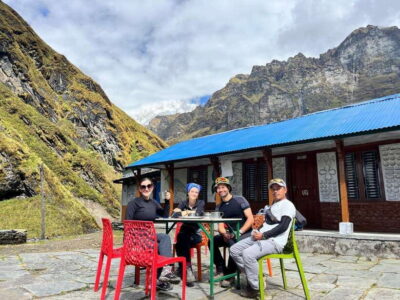
Teahouse trekking is a simple system: basic beds, communal meals, and a lot of shared mountain etiquette. This trek includes teahouse accommodation and also lists anti slip crampon as required, plus sleeping bag and duffle bag. That helps you avoid major gear rentals or last-minute shopping.
What you should still plan for
The itinerary explicitly doesn’t include lunch and dinner, and it notes that charging, Wi-Fi, and toiletries may carry small extra charges in teahouses. So bring cash, and don’t assume you’ll always find what you want.
Cold reality check
Even with included sleep gear, mornings near Base Camp can feel sharp. Pack layers you can actually use, and don’t rely on one bulky jacket that only works while you’re standing still.
Who this ABC trek suits best—and who should be cautious
This trek is described for travelers with moderate physical fitness. That’s realistic for many people, but it still assumes you can handle long hiking days and altitude effects.
You’ll likely love this trek if:
- You want a shorter ABC plan with big payoff views
- You value a guide-led pace and clear logistics
- You enjoy villages, river valleys, and forest walking, not just peak-chasing
You might want to reconsider or choose a slower itinerary if:
- You get wiped out by long days
- You dislike cold mornings and waiting for sunrise conditions
- You’re very uncomfortable with heights and might struggle on suspension bridges
Should you book this 6-day Annapurna Base Camp trek?
If you want a guided ABC trek that focuses on the moments that matter—Chhomrong viewpoints, the Jhinu Danda bridge, rhododendron scenery, and Base Camp sunrise—this one makes a strong case. The $450 price is appealing because it includes transportation, teahouse stays, a licensed insured guide, and key gear support like crampons when needed.
I’d book it if you’re ready for long hiking days and you like the idea of teahouse travel without pretending it’s luxury. If you’re unsure about altitude or stamina, think about using the optional porter at $30/day to protect your energy.
One last practical check: the trip is commonly booked around 40 days in advance, so if you’re traveling in peak season, early planning helps you get the dates you want.
If you want, tell me your fitness level, travel month, and whether you prefer carrying your own pack. I’ll help you sanity-check if this 6-day plan matches your style.
FAQ
What is the duration and where does the trek start?
The trek is listed as 6 days and it starts from Pokhara, Nepal.
How much does the Annapurna Basecamp trek cost?
The price is $450.00 per person.
What is included in the package?
The package includes all fees and taxes, private transportation, breakfast x 5, teahouse accommodation, a licensed insured guide, and duffle bag/sleeping bag/anti-slip crampon as required.
Are lunch and dinner included?
No. Lunch and dinner are not included, and meals besides breakfast may be purchased at teahouses.
Do I need a porter?
A porter is optional. Porter service is available for $30/day if you want help carrying your pack.
Is pickup offered and is the group size limited?
Yes, pickup is offered, and the tour has a maximum of 20 travelers.
What physical fitness level is needed?
The trek notes that you should have a moderate physical fitness level.
More Treks in the Annapurnas
Also Reviewed Around Pokhara
More Annapurna Base Camp Routes
Newer Pokhara reviews to browse before you decide
Annapurna Sanctuary Treks, compared.
 ★ 4.9Kathmandu/Pokhara: 5-Day Annapurna Base Camp (ABC) TrekFrom $9672 reviews
 ★ 5.0Private 7 – Day Annapurna Base Camp TrekkingFrom $62550 reviews
 ★ 5.0Annapurna Base Camp Trek (8 days)From $65045 reviews
 ★ 4.97 Day Annapurna Base Camp TrekFrom $21538 reviews
 ★ 4.95-Day Annapurna Basecamp Trek with Hot SpringsFrom $15526 reviews
 ★ 5.0Annapurna Base Camp Trek from Pokhara 7 DaysFrom $39519 reviews
 ★ 5.010 Days Private Guided Annapurna Basecamp Trek via Poon HillFrom $80015 reviews
 ★ 5.07-Day Trek to Annapurna Base Camp from PokharaFrom $34512 reviews
Browse the lists this tour appears in