
Reviewed · ANNAPURNA SANCTUARY TREKS
7-Day Trek to Annapurna Base Camp from Pokhara
Seven days here change your pace fast. This trek to Annapurna Base Camp from Pokhara blends big mountain days with the slower rhythm of village Nepal. I really like the English-speaking guide who keeps things practical on trail, and I like the way the route threads through places like Ghandruk and Sinuwa rather than treating the trek like a single scenic photo stop. One thing to plan for: meals and drinks are not included, so your daily budget depends on how much you buy at the tea houses.
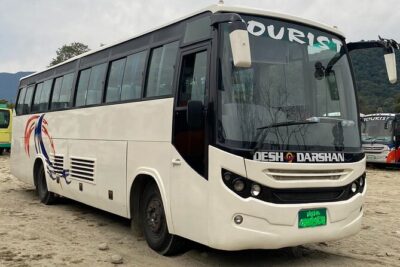
You’ll also get real support logistics: permits and official documents are included, guest-house stays are handled, and Pokhara transfers are covered by shared jeep or bus for the long in-between stretches. Just note the listed start time is 2:15 pm, while the day-by-day walk schedule describes morning departures—so confirm timing the day before so you know what the first day looks like.
In This Review
- Key highlights that matter
- Annapurna Base Camp from Pokhara: the real payoff
- Price and what $345 really buys you
- Getting fit for 7 days: pace, altitude, and the reality of long trails
- Day 1: Ghandruk and the Modi River start into village Nepal
- Day 2: Upper Sinuwa hilltop hike and the long uphill day
- Day 3: Deurali, cooler air, and the approach to Annapurna Sanctuary
- Day 4: Machhapuchhre Base Camp and climbing to Annapurna Base Camp
- Day 5: Bamboo and the careful descent after base camp
- Day 6: Jhinu Danda, forest trails, and Chomrong Khola
- Day 7: Samrung Khola, a suspension bridge, and back to Pokhara
- Guides, guest houses, and the small touches that make it work
- What to bring (so the trek feels easier, not harder)
- Should you book this Annapurna Base Camp trek with CAN Travels?
- FAQ
- How long is the Annapurna Base Camp trek from Pokhara?
- Where does the trek start and where does it end?
- Is hotel pickup and drop-off included?
- Are trekking permits included?
- Are meals and drinks included?
- Do I have to hire a porter?
- Are trekking poles provided?
- What is the cancellation policy?
Key highlights that matter
- Ghandruk and Sinuwa village nights: you get culture and overnight lodging that feels more like local Nepal than a transit stop
- Permits and documents included: you don’t scramble for paperwork right before hiking
- Guest-house trekking style: comfortable enough to recover, basic enough to feel authentic
- English-speaking guidance with first-aid kit: useful when altitude or weather gets unpredictable
- Trek poles included: a small thing that makes long days easier on knees and ankles
Other ways up to Annapurna Base Camp from Pokhara.
- Kathmandu/Pokhara: 5-Day Annapurna Base Camp (ABC) Trek★ 4.9 · 72 reviews
- Private 7 – Day Annapurna Base Camp Trekking★ 5.0 · 50 reviews
- From Pokhara: 5-Day Annapurna Basecamp Trek with Hot Springs★ 4.9 · 26 reviews
- Annapurna Base Camp Trek from Pokhara 7 Days★ 5.0 · 19 reviews
Annapurna Base Camp from Pokhara: the real payoff
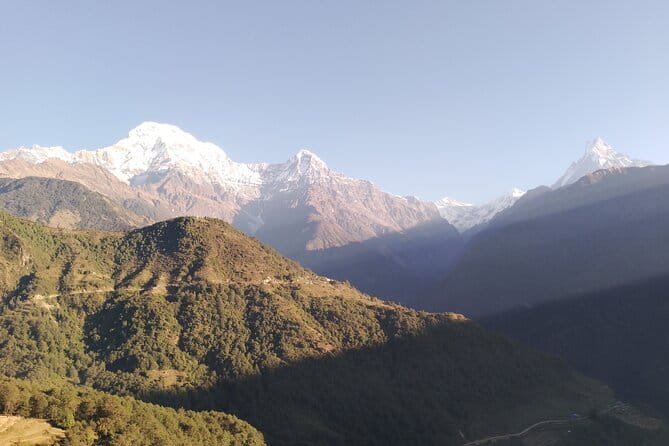
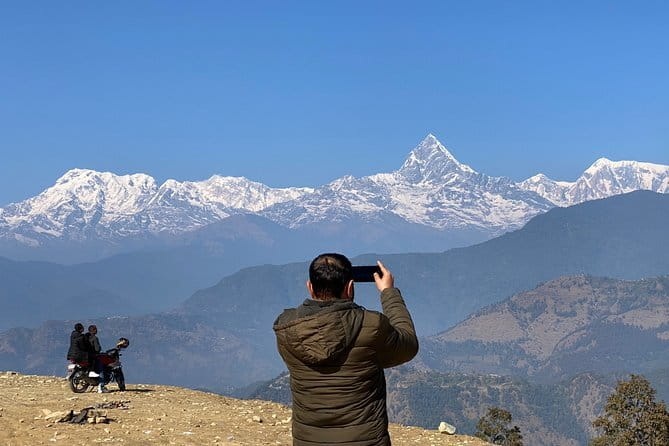
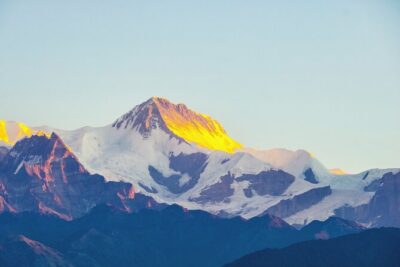
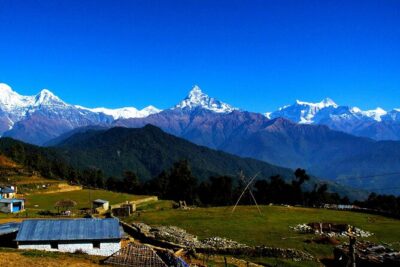
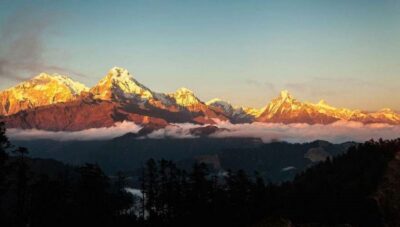
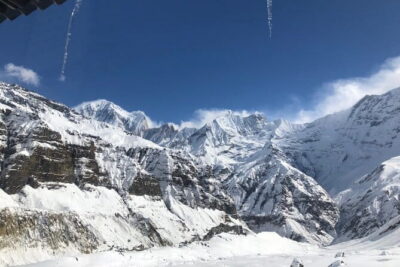
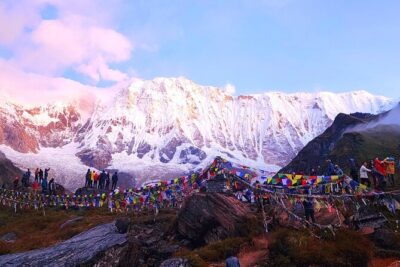
Annapurna Base Camp is famous for a reason: the mountain mass gives you that “how is this even real?” feeling. But what you’ll remember more than the single view is the build-up. Day by day, the trail climbs out of village valleys and into a cooler, thinner-air zone where the mountains start to feel close—then the trail funnels you toward the sanctuary and base camp area like a natural story.
I also like that this trek doesn’t feel like a sealed bubble. You pass through communities tied to the Gurung and Magar cultures, and you’ll likely notice how the tea houses, greetings, and everyday routines shape the walking experience. It’s not a museum visit; it’s day-to-day village interaction while you trek.
Price and what $345 really buys you
$345 per person is not cheap if you’re thinking only in terms of “walking days.” But for Nepal trekking, it can be good value when the big essentials are included. Here’s what stands out as value in your favor:
- Guide + permits + documents are included. That’s time saved and fewer hassles.
- Guest-house accommodation during the trek is included, so you’re not hunting for rooms each night.
- Pokhara to Siwai and Samrung Khola to Pokhara transfers are covered by shared jeep or bus.
What’s not included is also important because it can change your final cost:
- Food and drinks are for purchase along the route.
- Porter is not included. If you want one, it’s listed as $25/day for one porter for two people.
- Gratuities are optional but still something to plan for culturally.
If you’re the type who wants a smooth process—transport, paperwork, and lodging organized—this price can feel fair. If you’re trying to minimize spending and you plan to self-organize everything, you might find cheaper ways to do ABC. But you’d likely give up some of the structured support.
Getting fit for 7 days: pace, altitude, and the reality of long trails
This trek is described for people with a strong physical fitness level, and the daily hiking times support that. Several days land around 6–7 hours of walking, with climbs and descents that feel very different from flat city exercise.
Altitude is the other big factor. The trek reaches the Annapurna Base Camp area around the 3900 m region (the schedule notes Machhapuchhre Base Camp at that elevation and a climb of about 730 m toward Annapurna Base Camp on Day 4). Plan for slower steps, more frequent rests, and a steady effort. Don’t treat “7 hours” like a fitness challenge timer—treat it like a slow climb where breathing changes.
A practical tip: if you have knee issues, use the included trekking poles from day one. Your downhill days will thank you.
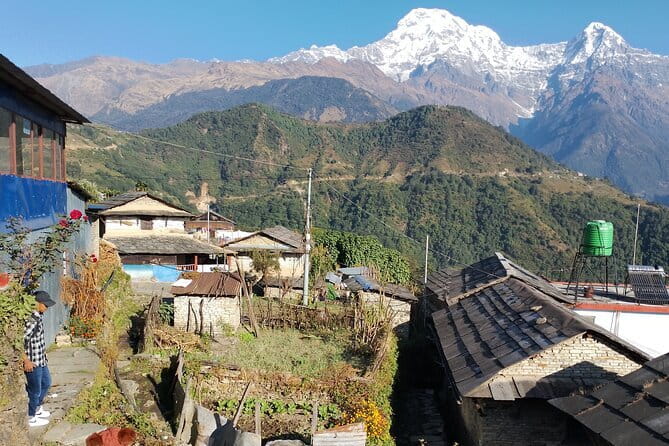
Day 1: Ghandruk and the Modi River start into village Nepal
Day 1 begins with pickup within the Pokhara Lakeside area, then a drive toward Siwai before you start walking to Ghandruk. The route is described as following the Modi River and passing authentic villages and hill trails with views into the Annapurna valley.
This day is your “get your legs under you” phase. You’re not just hiking for distance; you’re getting used to trail footing, changing weather, and the rhythm of guest houses (where you’ll refuel, reset, and repeat).
What I like about starting here is the mix: villages early, mountains gradually. You’re building confidence for the later days without feeling like you started by sprinting into altitude. The possible snag is time on your feet—your day is scheduled around about 7 hours of trekking—so if you’re coming in tired from travel, sleep well the night before.
More treks and hikes across the Annapurna region.
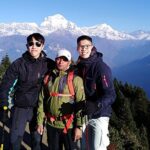
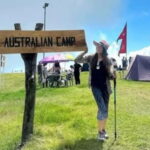
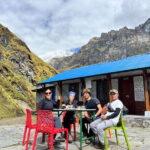
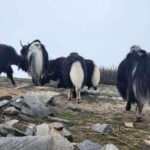
Day 2: Upper Sinuwa hilltop hike and the long uphill day
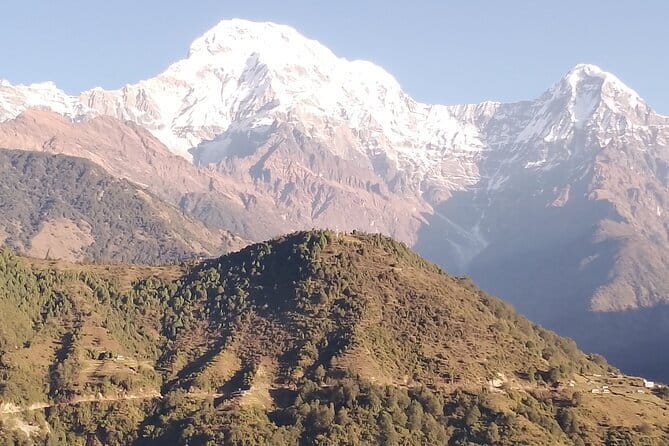
After breakfast in Ghandruk, you head toward Upper Sinuwa. The trail is described as fluctuating, with a strenuous walk included in the timing—around 7 hours plus lunch.
Upper Sinuwa is where the air starts to feel different. Even before you reach the higher zones, you’ll likely notice a shift in temperature and how your body breathes on the climb. This day sets up Day 3, so pacing matters. Go slow enough that you can keep your rhythm. If you rush early, you’ll pay later.
Also pay attention to how you manage energy. Tea houses along the way can help, but you still need to plan: bring water, take snack breaks, and don’t assume you’ll feel fine just because the view is good.
Day 3: Deurali, cooler air, and the approach to Annapurna Sanctuary
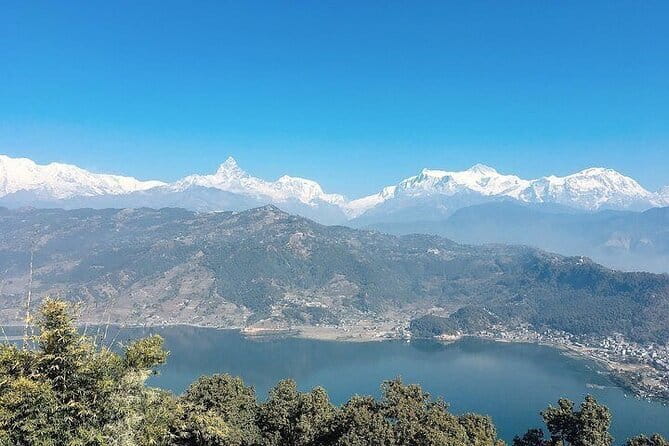
Overnight in Upper Sinuwa, you continue uphill toward Deurali. The schedule describes cooler, fresher air as you move toward the Annapurna Sanctuary, with a winding path and scenic points along the trail. The day is timed at about 6 hours.
This is a mental day as much as a physical one. Sanctuary approaches tend to make you feel like something is “closing in,” especially when the mountains start to dominate the horizon. I find these days are where travelers either settle into the slower tempo—or try to fight the climb.
A small consideration: as temperatures drop, you’ll feel it more during pauses. Keep a light layer accessible so you can stop without freezing. If you tend to get cold easily, this is the day to plan for it.
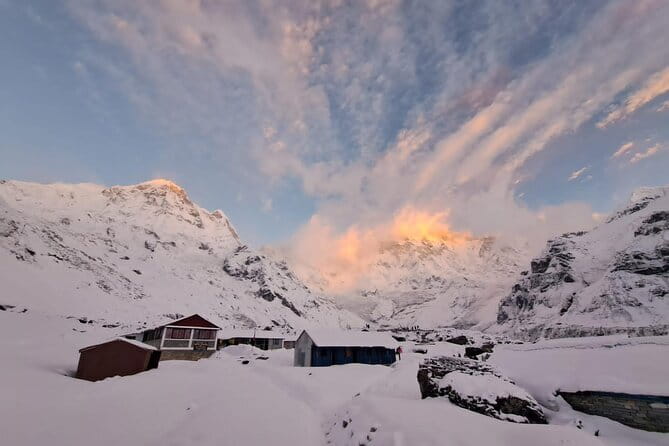
Day 4: Machhapuchhre Base Camp and climbing to Annapurna Base Camp
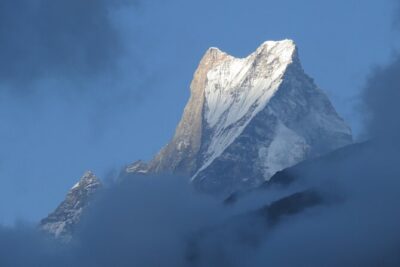
Day 4 is the big one. After breakfast, the route goes up toward Machhapuchhre Base Camp. The schedule notes 3900 m at that stage, then highlights a 730 m climb to Annapurna Base Camp.
This day is where your effort turns into reward. Expect a longer, steeper feel with plenty of pauses. You’re gaining height, and the air can feel thin enough that you want to focus on breathing and foot placement more than on speed. Once you reach the base camp area, the whole trip clicks into place.
The balance point here is this: you don’t want to treat it like a race, but you also don’t want to stop too long and then rush. Save energy. Spend time at the base camp area so the moment is yours, not just something you pass through quickly.
Day 5: Bamboo and the careful descent after base camp
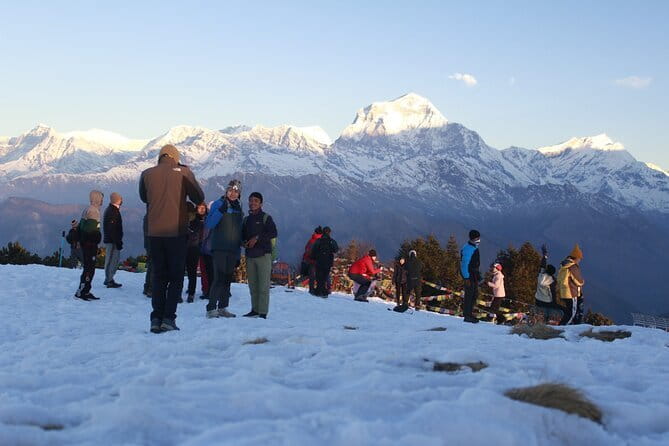
After spending time at Annapurna Base Camp, you head back down to Bamboo. The schedule says the trail is decent, but you should walk carefully on the descent. Timing is about 6 hours.
This is the day people underestimate. Even if the walking time feels similar to other days, downhill can be harder on knees and ankles. That’s exactly why the included trekking poles matter. Use them to take pressure off your joints.
The route passes via spots including Deurali, Himalaya, and Dovan (as described), which helps the descent feel like a trail with structure, not just a drop. You’re still in trekking rhythm—just in reverse.
Day 6: Jhinu Danda, forest trails, and Chomrong Khola
Day 6 takes you from Bamboo toward Jhinu Danda. The schedule describes a short steep section up to KhuldiGhar, then a downhill path through the forest to reach Sinuwa-Danda, followed by descent to Chomrong Khola and a village area near Chomrong (timing around 6 hours).
This is a nice contrast day: forests and shadows can make the hike feel cooler and more comfortable, and the walking can feel calmer than the steeper push days. Reviews also mention stretches with rhododendron forest, which fits the seasonal feel of this region.
Keep an eye on footing, though. Forest trails can be slick, especially when the light changes. Take your time on the downhills so you arrive feeling good—not scraped up.
Day 7: Samrung Khola, a suspension bridge, and back to Pokhara
Your last day includes a final walking section with short downhill sections and a key crossing: a long suspension bridge to reach the area near Samrung Khola. From there, you catch a local jeep to Pokhara, with the transfer time described as taking a while on the schedule.
This day feels like a transition from trek mode to city mode. You’re finishing on your feet, but you’re also moving toward comfort—real showers, real meals, and a chance to stretch out without calculating elevation gain.
I like ending this way because it keeps closure. The bridge crossing is a clear milestone: you’re no longer just walking through the hills, you’re leaving the trekking corridor behind. Then Pokhara Lakeside gives you a natural decompression zone.
Guides, guest houses, and the small touches that make it work
This is set up as a private trek, meaning only your group participates. It also includes a friendly English-speaking trekking guide, plus an emergency normal first aid kit with the guide. That matters because on a trek, information and calm decision-making can be as valuable as the views.
From recent trips associated with this operator, guides such as Biru, Amrit, and Shiva show up in names tied to excellent experiences—patient guidance, safety-minded pacing, and a positive attitude that helps when the day feels long.
Accommodation is guest-house style during the trek. You’re not expecting hotel luxury, but you are getting built-in lodging so you can focus on hiking. A practical win: the itinerary and documents are handled, which removes the “what do we do next?” stress.
What to bring (so the trek feels easier, not harder)
The data doesn’t list a packing list, so I’ll keep this to essentials that match what this itinerary asks of you:
- A daypack and water for each walking segment
- Warm layers for the cooler air as you climb
- Good traction shoes for descents
- Any personal meds or altitude aids you already use
- Cash for food and drinks (since they’re not included)
If you plan to add a porter, you’ll want to decide early. The listing notes a porter costs $25/day and suggests one porter for two people. If you’re carrying light, you might skip it. If you’re carrying more than you should, a porter can make a big difference on fatigue.
Should you book this Annapurna Base Camp trek with CAN Travels?
I’d book this trek if you want:
- a structured ABC plan with permits, guest-house stays, transfers, and an English-speaking guide handled
- a village-forward route through places like Ghandruk and Sinuwa
- a price that includes the big operational pieces, with flexibility on meals and optional porter
I might think twice if:
- you prefer fully self-guided trekking (since this is private and organized)
- you have a very limited budget for daily purchases, because food and drinks add up
- you want zero ambiguity on timing—because the listed meeting/start time (2:15 pm) should be confirmed against the first-day drive/trek schedule
If you’re ready for 6–7 hour days, you can walk steadily at altitude, and you enjoy real village Nepal along the way, this is a solid way to do ABC without turning your trip into a logistics project.
FAQ
How long is the Annapurna Base Camp trek from Pokhara?
It’s listed as a 7-day trek (approx.).
Where does the trek start and where does it end?
The trek starts in Pokhara and ends back in Pokhara Lakeside, after walking to Samrung Khola and taking a jeep/bus transfer.
Is hotel pickup and drop-off included?
Yes. Hotel pick up and drop off within the Lakeside area is included.
Are trekking permits included?
Yes. Trekking permit and all official documents are included.
Are meals and drinks included?
No. Food and drinks are not included and are available for purchase along the trek.
Do I have to hire a porter?
No. A porter is not included, but you can hire one at $25 per day (noted as one porter for two people).
Are trekking poles provided?
Yes. Trekking pole per each one is included.
What is the cancellation policy?
It offers free cancellation. You can cancel up to 24 hours in advance for a full refund; if you cancel within 24 hours, the amount paid is not refunded.
More Treks in the Annapurnas
Also Reviewed Around Pokhara

More Annapurna Base Camp Routes
Newer Pokhara reviews to browse before you decide
Annapurna Sanctuary Treks, compared.
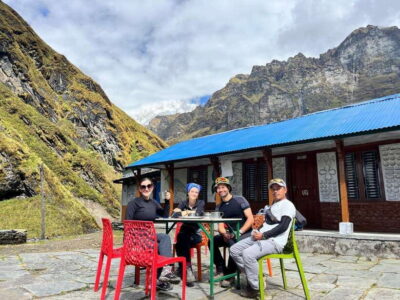 ★ 4.9Kathmandu/Pokhara: 5-Day Annapurna Base Camp (ABC) TrekFrom $9672 reviews
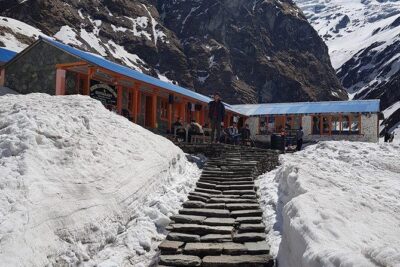 ★ 5.0Private 7 – Day Annapurna Base Camp TrekkingFrom $62550 reviews
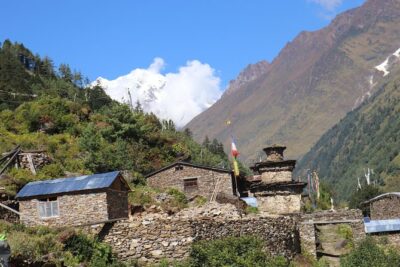 ★ 5.0Annapurna Base Camp Trek (8 days)From $65045 reviews
 ★ 4.97 Day Annapurna Base Camp TrekFrom $21538 reviews
 ★ 4.95-Day Annapurna Basecamp Trek with Hot SpringsFrom $15526 reviews
 ★ 5.0Annapurna Base Camp Trek from Pokhara 7 DaysFrom $39519 reviews
 ★ 5.06 days Annapurna Basecamp TrekFrom $45016 reviews
 ★ 5.010 Days Private Guided Annapurna Basecamp Trek via Poon HillFrom $80015 reviews
Browse the lists this tour appears in