
Reviewed · MARDI HIMAL BASE CAMP TREKS
5 Day Mardi Himal Base Camp Trek in Pokhara
A short trek, big Himalayan payoffs. The Mardi Himal Base Camp route gives you thick rhododendron trails, Gurung and Magar villages, and classic Annapurna views like Machhapuchhre (Fishtail) without needing a long expedition. You’ll also get the practical comfort of guesthouses and an organized guide team to keep the days flowing.
I especially like two things: the plant-and-peak variety—forest walking, then higher ridges—and how the trek is timed to help you reach the base camp area with good morning energy. I also liked the human touch: guides such as Amrit (and others like Biru, plus Bikram on longer CAN Travels trips) get praised for being friendly and for keeping logistics smooth, so you can focus on walking and looking.
One thing to consider: your hiking days run about 5 to 7 hours, and food and drinks are not included (they’re available to purchase, around US$25 per person). Also, the listed start time is very early, so double-check the exact timing in your confirmation.
In This Review
- Key highlights I’d plan around
- Mardi Himal Base Camp in 5 days: the value idea
- Getting there from Pokhara: pickup, Kande start, and the Lumre finish
- Day 1: Pokhara to Kande, then Australian Camp via Pitam Deurali
- Day 2: Rhododendron forests from Pitam Deurali to Low Camp
- Day 3: Low Camp to High Camp through Middle Camp
- Day 4: Leaving High Camp early to reach Mardi Himal Base Camp
- Day 5: Siding village descent to Lumre, then back to Pokhara
- What you’re paying for: $230 value check
- The guide factor: Amrit, Biru, and Bikram as proof points
- Guesthouses and meals: what to expect day to day
- Fitness reality check: moderate means active, not couch-to-peak
- Who this trek suits best
- Should you book this 5-day Mardi Himal Base Camp trek with CAN Travels?
- FAQ
- How long is the Mardi Himal Base Camp trek?
- Where does the trek start and end?
- What is included in the price?
- Are food and drinks included?
- Is the tour private or shared?
- What kind of accommodation do you use?
- What transfers are provided from Pokhara?
- How fit do you need to be?
- What time does it start?
- What is the cancellation policy?
Key highlights I’d plan around
- Forest-to-alpine change fast: rhododendrons and wildflowers early, steeper narrow trail near base camp.
- A base-camp morning that matters: leaving High Camp early helps you beat the day’s fatigue.
- English-speaking guide plus permits handled: official documents and paperwork are included, so you’re not juggling admin.
- Guesthouse accommodation during the trek: simple lodging built for trekking schedules.
- Pickup and transfers from Pokhara area: lakeside pickup plus shared bus/jeep for Kande and Lumre.
- Private tour for your group: you hike with only your group, with group discounts available.
More Mardi Himal itineraries worth comparing.
- Pokhara: 4-Day Mardi Himal Trek★ 4.9 · 59 reviews
- Private Mardi Himal Trek★ 5.0 · 42 reviews
- From Pokhara: 4-Day Mardi Himal Base Camp Trek★ 4.9 · 31 reviews
- Mardi Himal Trek★ 5.0 · 30 reviews
Mardi Himal Base Camp in 5 days: the value idea
This trek hits a sweet spot: long enough to feel real and varied, short enough to stay focused. With a 5-day schedule (about), you get multiple distinct walking days: starting in the hills, pushing up through forested stretches, and then going after Mardi Himal Base Camp.
The big value for me is not just the views (though they’re the headline). It’s the support. Your guide leads the route, carries responsibility for permits and official documents, and stays with you through each walking day. That matters because in the Annapurna region, the difference between a good trek and a messy one is often planning and timing, not just motivation.
Logistics are also handled in key transitions. You get pickup within the Pokhara lakeside area, a drive to Kande to begin trekking, and a jeep ride back from Lumre to Pokhara at the end. If you’ve ever tried to stitch together a trek after arriving, you’ll appreciate a plan that doesn’t leave you scrambling.
Getting there from Pokhara: pickup, Kande start, and the Lumre finish
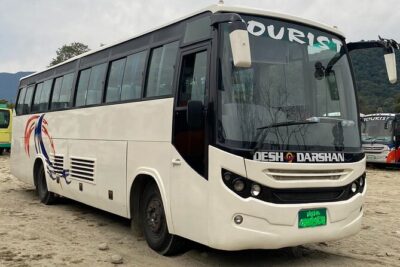
You’ll start with hotel pick up and drop off in the lakeside area. From there, you’re driven toward Kande to begin the trek. Transfer is by shared bus or jeep (depending on what’s practical), which keeps costs down while still getting you where you need to go.
On the last day, you descend down to Lumre, then use a local jeep to reach Pokhara. The transport back is again by shared bus/jeep. It’s a relief on the final day to have someone else manage the timing, especially after a full day of downhill.
One odd detail you should pay attention to: the listed start time is 12:15 am. That sounds like a very early departure for the day. Your confirmation should clarify the exact time, so check it right after booking and plan on a very early start.
Day 1: Pokhara to Kande, then Australian Camp via Pitam Deurali
Day 1 is about getting your bearings and easing into trekking rhythm. You drive from Pokhara to Kande while taking in countryside views and mountain glimpses. Then the trail starts from Kande and heads through hills and into forested sections.
The day’s signature stop is the Pitam Deurali View Point area. This is the kind of stop that helps you get your bearings fast. After that, the trek continues onward to Australian Camp. You’re not just walking for mileage—you’re walking to set up the next days. By the time you reach the camp area, your body is warm enough to handle the following altitude climb without feeling like you were thrown into the steep parts too early.
Practical note: Day 1 runs about 6 hours. If you’re the type who wants a slower start, plan to pace yourself early. The forested sections can feel deceptively easy until you hit real grade.
Day 2: Rhododendron forests from Pitam Deurali to Low Camp

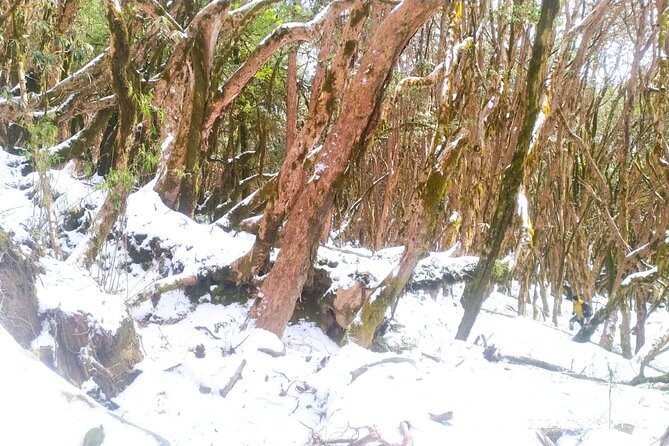
Day 2 begins with breakfast, then trekking from Pitam Deurali to Low Camp. This is one of the trek’s most atmospheric days because the trail enters dense forest covered with rhododendrons and other wildflowers.
That plant-focused section isn’t just pretty. Forest trails often mean more shade and more stable footing than bare ridges. You’ll likely feel it as you move—less sun punch, more consistent walking under tree cover.
The day duration is listed at about 6 hours. That’s a good length for a trek like this: long enough to feel like progress, short enough that you can still arrive with enough energy to settle into guesthouse-style lodging and rest well.
One consideration: forest paths can still be uneven. Bring trekking poles if you use them. Even one person in your group relying on poles can make the difference between comfortable steps and constant grip-and-go fatigue on a long forest day.
More treks and hikes across the Annapurna region.

Day 3: Low Camp to High Camp through Middle Camp

Day 3 is the climb-focused day. You leave Low Camp and ascend toward High Camp. The route goes through an oak and rhododendron forest, which is similar to Day 2 in the sense of vegetation, but different in how it feels—because you’re higher and the effort stacks up.
You’ll reach Middle Camp in about 1 to 2 hours, then continue to High Camp. This “middle checkpoint” structure matters. It breaks the day into chunks so you can manage breathing and energy. If you tend to burn out when the climb is longer than you planned, the Middle Camp break helps you reset.
Day 3 runs about 5 hours. It might sound shorter than Day 2, but expect it to feel harder because it’s more about uphill work than steady walking.
Day 4: Leaving High Camp early to reach Mardi Himal Base Camp
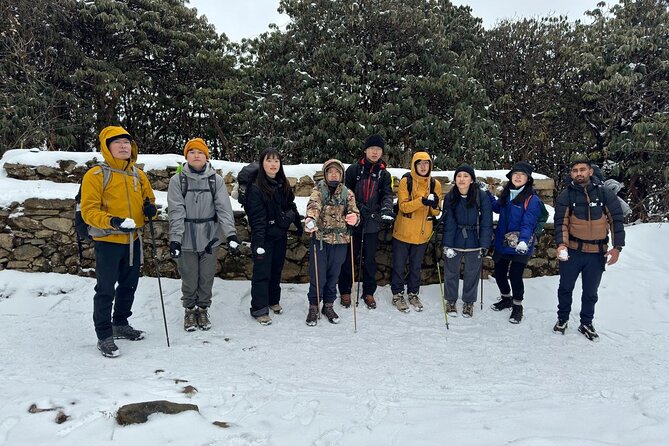
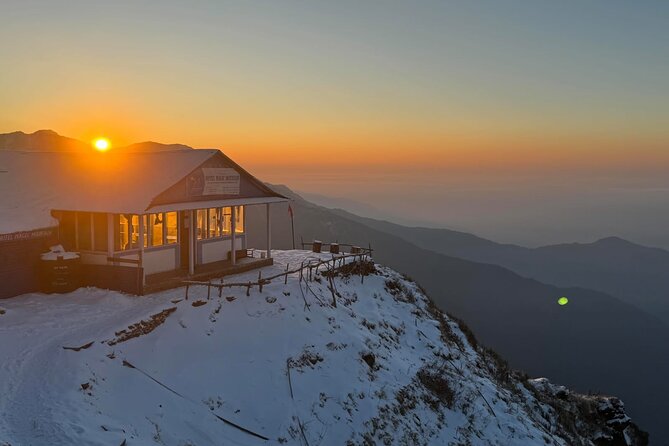
This is the day your planning should orbit. You leave High Camp early in the morning and follow a narrow, steep trail up to Mardi Himal Base Camp.
The push to base camp is described as steep and on a narrow route. That means foot placement matters. Go slow early. Don’t treat this like a race day, even if other people speed up. On narrow trails, you’ll want room for careful steps, especially in busier moments.
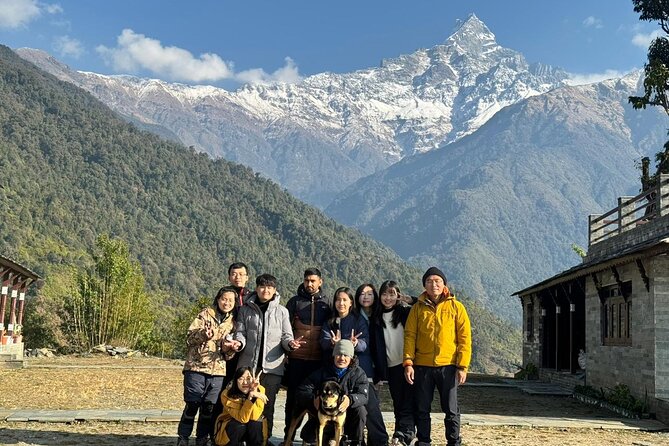
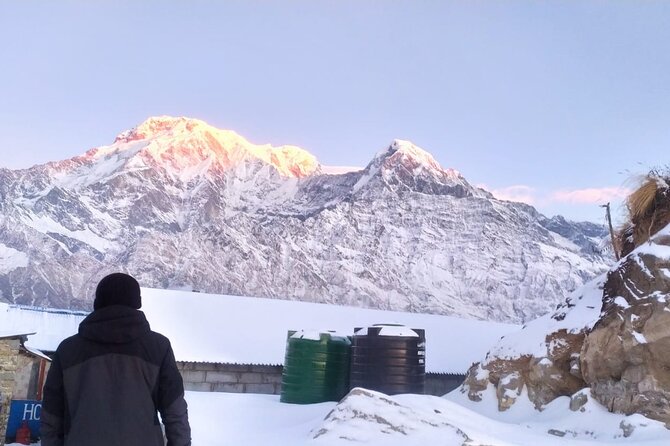
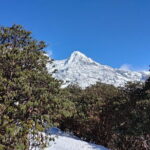
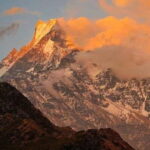
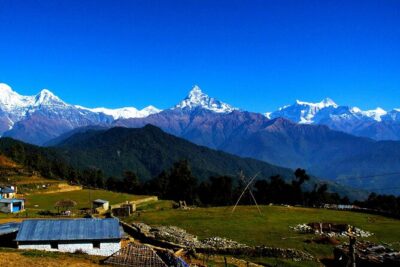
Once you arrive, the reward is the kind of view day trekkers talk about for a reason: you get sweeping sights across the Annapurna range. Key peaks highlighted include Machhapuchhre (Fishtail), Annapurna South, and Hiunchuli.
Day 4 runs about 7 hours. Even if you feel strong at the beginning, plan for time on the trail, time to stop for photos, and time to simply stand there and take in the views before the return push. Base camp days can tempt you to rush—try not to. The whole point is to arrive and actually absorb what you earned.
Day 5: Siding village descent to Lumre, then back to Pokhara
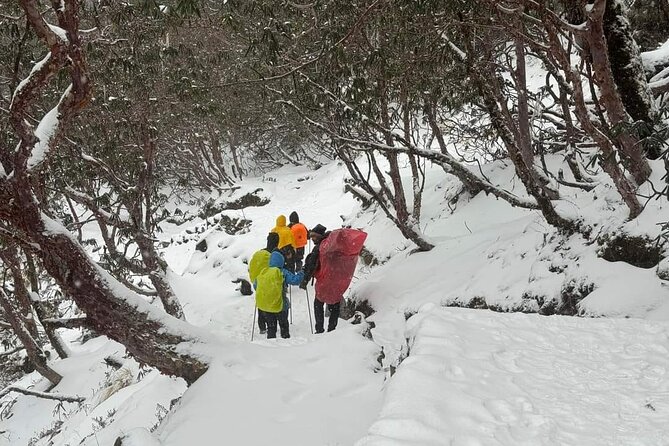
Day 5 is a return-to-Pokhara day disguised as a final trek day. From Siding village, you descend to Lumre, where the trek ends. Expect lush forest walking and small settlements along the way.
This final day is about letting your legs recover while still enjoying the last stretches. Descending uses different muscles than climbing, so it’s not always easy on tired knees. Pace down carefully and take breaks when you need them.
After Lumre, you use a local jeep to drive back to Pokhara. With a listed duration of about 7 hours, it’s a full day, but you get closure: you’re not endlessly hiking toward an unknown endpoint. You can also look forward to being back near the lakeside after the last walking stretch.
What you’re paying for: $230 value check
At $230 per person, you’re paying for more than just a guided walk. The included items are doing real work:
- English-speaking trekking guide
- Trekking permit and all official document handling
- Guesthouse accommodation during the trek
- Pokhara to Kande transfer and Lumre to Pokhara transfer (shared bus or jeep)
- Hotel pick up and drop off within the lakeside area
- Emergency normal first aid kit with the guide
- Private tour, meaning it’s your group only
Then there’s what you’ll need to budget separately: food and drinks. The cost is listed as available to purchase, about US$25 per person. That number is a guide, not a guarantee, but it’s enough to plan your spending. Also remember gratuities are optional.
So is $230 a good deal? For me, it looks solid if you value organization and don’t want to handle permits and route coordination yourself. If you already know the route and can independently book tea houses and permits, you could possibly DIY at a lower cost. But for most people, the included guide and permits are where the money saves you stress.
The guide factor: Amrit, Biru, and Bikram as proof points
The quality of a trek guide is hard to measure until you’re walking. Here, the setup includes an English-speaking guide, plus emergency support via a first aid kit.
From the experience details, guides linked with CAN Travels have earned strong praise for being friendly, attentive, and organized. Amrit comes up as a standout for smooth planning and a clear sense of what makes the day work. Biru is noted for being professional and for showing real passion for mountain and culture. Bikram is mentioned in longer CAN Travels trekking context for arranging tea houses with good views.
Even if you don’t get those exact names, the key takeaway for you is the pattern: the guide role isn’t just pointing ahead. The best guides manage timing, pacing, and where you stop so the trek feels enjoyable rather than chaotic.
Guesthouses and meals: what to expect day to day
Accommodation is in guesthouses during the trek. That usually means simple rooms, basic comforts, and the kind of lodging designed for trekkers who are out walking all day.
The big variable is your appetite and meal timing. Since food and drinks are not included (though they’re available for purchase), you’ll need cash and a flexible mindset. In practice, this affects when you eat and how much you spend. If you’re someone who wants predictable meals at set times, you might have to manage expectations and communicate preferences clearly with your guide.
My practical advice: buy snacks you can handle easily for the trail. Also bring water purification options if you use them—nothing is listed explicitly here, so you’ll want to plan based on your personal habits and what your guide recommends.
Fitness reality check: moderate means active, not couch-to-peak
The trek asks for moderate physical fitness. The daily hiking time ranges from about 5 to 7 hours, and Day 4 includes a narrow, steep ascent to base camp.
So yes, you don’t need to be an ultra-athlete. But you should be ready for:
- hours of uphill walking
- some steep sections
- a long final day with descent to Lumre
If you can walk briskly for an hour or two with breaks, and you’ve done some hill work or stair training, you’re likely in the right zone. If you’re coming off a long travel day, don’t underestimate how different trekking feels after sitting in transit.
Who this trek suits best
This 5-day Mardi Himal trek fits you best if you want:
- a shorter Annapurna-region trek with meaningful trekking days
- big viewpoint payoff (Machhapuchhre, Annapurna South, Hiunchuli)
- a guide-led experience with permits and documents handled
- guesthouse lodging instead of camping or complicated logistics
It might not fit as well if you:
- hate steep narrow trail sections
- want all meals included with no budgeting on your end
- need an extremely slow pace every day
Should you book this 5-day Mardi Himal Base Camp trek with CAN Travels?
I’d book it if you want a well-supported, time-efficient way to see the Annapurna range from the Mardi Himal route. The combination of English-speaking guidance, permits handled, guesthouse stays, and practical transport makes this feel like the kind of trek where you spend your energy on the walk—not on admin.
You should think twice if budgeting for food is tough for you, or if the Day 4 steep, narrow base-camp approach would stress your knees or pacing style. And because the listed start time is extremely early, confirm the exact day schedule before you commit fully.
If you’re ready for steady hiking (5–7 hours) and you care about views that match the effort, this is a strong choice.
FAQ
How long is the Mardi Himal Base Camp trek?
It’s listed as 5 days (approx.).
Where does the trek start and end?
You start in the Pokhara area (with transport to Kande). The trek ends at Lumre, then you return to Pokhara.
What is included in the price?
The price includes hotel pick up and drop off within the lakeside area, an English-speaking trekking guide, trekking permit and official documents, guesthouse accommodation during the trek, transfers (Pokhara to Kande and Lumre to Pokhara), and an emergency first aid kit with the guide. It’s also described as a private tour.
Are food and drinks included?
No. Food and drinks are available to purchase, approximately US$25 per person.
Is the tour private or shared?
It’s private. Only your group will participate.
What kind of accommodation do you use?
Accommodation is in guest houses during the trek.
What transfers are provided from Pokhara?
You’ll be transferred from Pokhara to Kande by shared bus or jeep, and from Lumre back to Pokhara by shared bus or jeep. Pickup and drop off are included within the lakeside area.
How fit do you need to be?
It’s recommended for travelers with moderate physical fitness.
What time does it start?
The listed start time is 12:15 am. You’ll receive confirmation at booking, so check the confirmed schedule.
What is the cancellation policy?
You can cancel for free up to 24 hours in advance for a full refund. If you cancel less than 24 hours before the start time, you won’t receive a refund.
More Treks in the Annapurnas
Also Reviewed Around Pokhara

More Mardi Himal Treks
Newer Pokhara reviews to browse before you decide

Mardi Himal Base Camp Treks, compared.
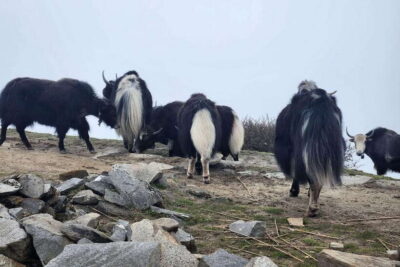 ★ 4.94-Day Mardi Himal TrekFrom $13959 reviews
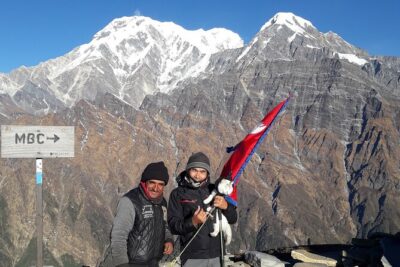 ★ 5.0Private Mardi Himal TrekFrom $39942 reviews
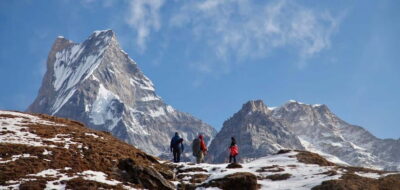 ★ 4.94-Day Mardi Himal Base Camp TrekFrom $13831 reviews
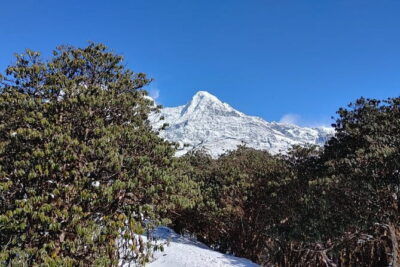 ★ 5.0Mardi Himal TrekFrom $39930 reviews
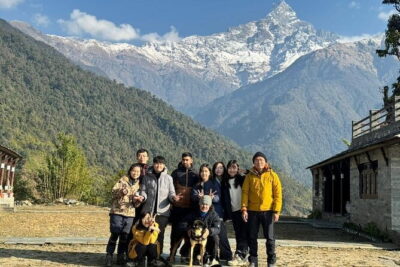 ★ 5.04 Day Mardi Himal Base Camp Trek from PokharaFrom $29018 reviews
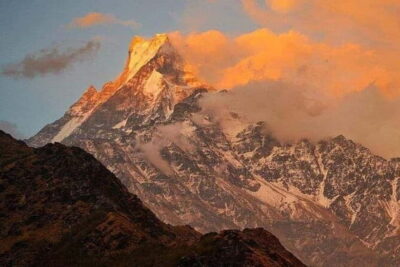 ★ 5.05-Day Mardi Himal Base Camp TrekFrom $18110 reviews
 ★ 5.04 Days Mardi Himal Base Camp Trek from PokharaFrom $2909 reviews
★ 5.04 Days Mardi Himal Base Camp Trek from PokharaFrom $2998 reviews
★ 5.04 Days Mardi Himal Base Camp Trek from PokharaFrom $2909 reviews
★ 5.04 Days Mardi Himal Base Camp Trek from PokharaFrom $2998 reviews
Browse the lists this tour appears in