
Reviewed · ANNAPURNA SANCTUARY TREKS
Pkr/Kathmandu: 5-Day Annapurna Base Camp & Hot spring Trek
Five days to Annapurna Base Camp hits fast. This route from Kathmandu or Pokhara strings together forests, rivers, waterfalls, and village tea houses, with the payoff at Annapurna Base Camp.
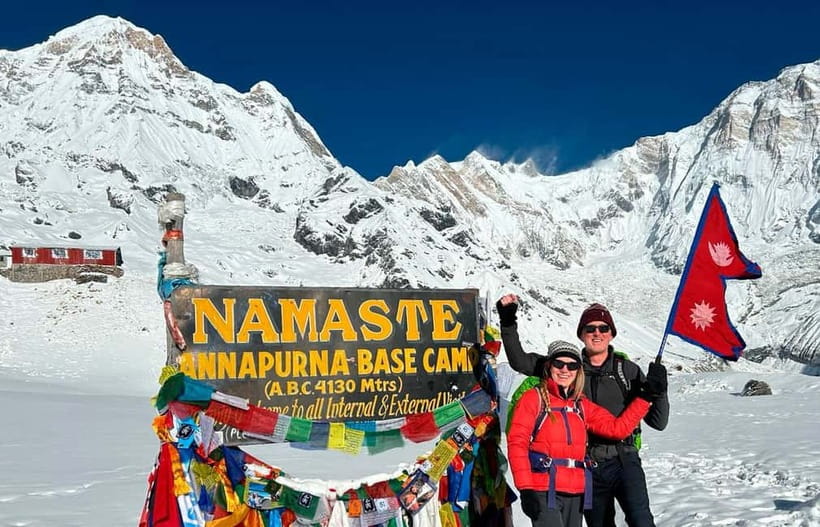
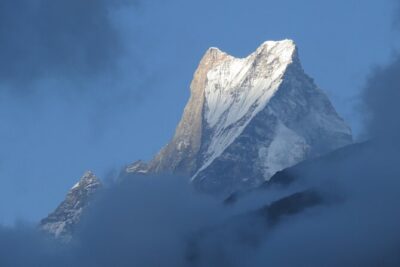
I love the climbing rhythm here: you gain altitude step-by-step, topping out around 4,130 m while still having time to take in big views of Annapurna I, Machapuchare, and Hiunchuli. I also love that the trail doesn’t skip people—expect real village life, including Gurung communities along the way.
One consideration: it’s short for the altitude, and weather can turn fast. The trek runs moderate to challenging, and if you’re not used to cold rain or snow, you’ll want to be ready—especially around the higher sections and mornings.
In This Review
- Key highlights you’ll feel on this trek
- Why this 5-day Annapurna Base Camp route feels different
- Getting to the trail: Kathmandu vs Pokhara, and why you’ll care
- Day 1: Pokhara to Simrung, then Sinuwa under towering trees
- Day 2: Deurali via Himalaya tea-house hopping and waterfall country
- Day 3: Machhapuchhare Base Camp and the big moment at Annapurna Base Camp
- Day 4: Sunrise on the way down through Deurali, Himalaya, and Dobhan
- Day 5: Jhinu Danda hot springs, then drive back to Pokhara
- Guides and porters: the human factor behind safety and comfort
- Guest houses and meals: what your days are built around
- Altitude reality: why acclimatization is the real route skill
- Gear checklist that keeps you comfortable (and moving)
- Price and value: is $60 realistic for what you get?
- Best seasons and weather: plan like the mountains are in charge
- Should you book this Annapurna Base Camp and hot spring trek?
- FAQ
- How long is the Annapurna Base Camp and hot spring trek?
- Do I start from Kathmandu or Pokhara?
- What is the highest altitude on the trek?
- Are hotel pickup and drop-off included?
- Is a trekking guide included?
- How do I get to the trailhead?
- Are hot springs at Jhinu Danda included?
- What languages are available for the guide?
- What should I bring?
- Is travel insurance included?
Key highlights you’ll feel on this trek
- Annapurna Base Camp in 5 days without a long, slow acclimatization slog
- Machhapuchhare Base Camp for early-morning magic and major mountain drama
- Gurung village life plus tea-house stops that keep the days human-sized
- Jhinu Danda hot springs (optional) for a warm body reset after trekking days
- Guides like Raj, Sagar, Shiva, and Nareen (and porters including Naron, Visnu, Azis) who handle pace and safety well
Other ways up to Annapurna Base Camp from Ghandruk.
- Pokhara: 7 Day Annapurna Base Camp Trek★ 4.9 · 38 reviews
- From Pokhara: 10-Day Poon Hill and Annapurna Base Camp Trek★ 5.0 · 7 reviews
Why this 5-day Annapurna Base Camp route feels different
Most ABC treks feel either slow and scenic or fast and intense. This one sits in the middle: five days total, with enough time to reach Base Camp and still enjoy the trail’s variety.
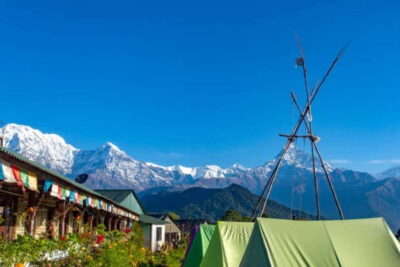
What makes it work is the mix of natural texture and human rhythm. You’ll walk through dense forests, cross past rivers and waterfalls, and pass through small tea-house settlements where you can warm up, refill, and regroup. Then, on Day 3, the mountains go from background to the main event. One moment you’re thinking about footing on a steep section; the next, you’re staring at the Annapurna range from a height where it feels unreal.
It also helps that this trek is built around big visual moments. You’re trekking up toward Annapurna Base Camp (around 4,130 m), but the route also includes Machhapuchhare Base Camp and a sunrise-focused return. That’s a lot of “look up” time for such a short trip.
Getting to the trail: Kathmandu vs Pokhara, and why you’ll care
Your start depends on where you sleep the night before.
If you begin in Kathmandu, you take a ~30-minute flight to Pokhara, then continue overland to the trailhead. If you start in Pokhara, you skip the flight and go straight to the drive. Either way, you’ll be picked up from your hotel area, and you’ll transfer by shared jeep for the route segment around Simrung.
This matters more than it sounds. The ABC region is remote enough that your trekking day starts after you’ve already spent time traveling. A clean plan means less stress on day one: you’re not trying to solve transport questions with cold fingers and a tight schedule.
Day 1: Pokhara to Simrung, then Sinuwa under towering trees
Day 1 is where you settle into the Annapurna tempo.
You’ll start with a drive from Pokhara to Simrung via Nayapul (about 2–3 hours). After that, you begin the trek from Simrung to Sinuwa for about 4–5 hours. The highest altitude for the day is around 2,340 m, so you’re not yet in full “high altitude mode.”
What I like about this day is that it gives you a warm-up body day. You start low enough to focus on walking technique—steady steps, good breathing, and getting used to how the trail feels underfoot. It’s also your first chance to clock how cold mornings might get later in the week.
For the night, you’ll stay in a mountain guest house in Sinuwa. Guest houses here are basic by design: expect simple rooms and a setup geared toward trekkers, not luxury. Still, after a long travel day, that soft bed rhythm is priceless.
Day 2: Deurali via Himalaya tea-house hopping and waterfall country
Day 2 is a real step upward.
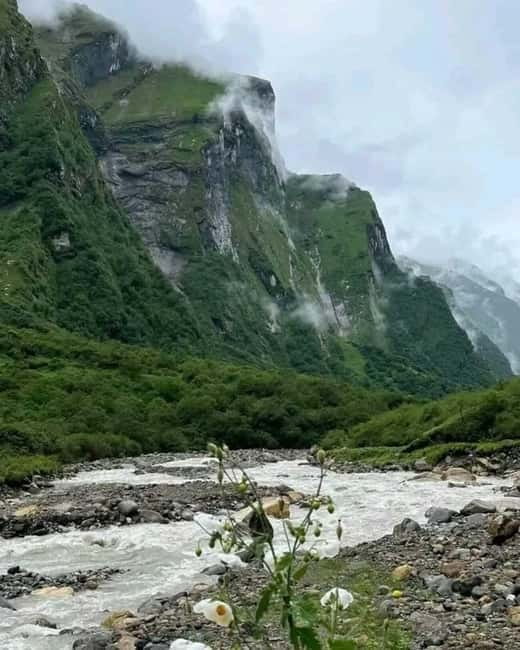
You’ll trek from Sinuwa to Deurali for about 5–6 hours, passing through Himalaya, a small settlement known for tea houses. This is also where the trail leans into nature—dense forest sections and many waterfalls along the way.
The maximum altitude today is around 3,230 m. That’s high enough that your pace will probably slow a touch, even if you feel strong. The goal isn’t to win the trail; it’s to arrive feeling functional, with energy left for tea, dinner, and sleep.
A practical thought: take your breaks seriously today. Short stops in the tea-house areas help your breathing and reduce that late-afternoon exhaustion that can mess with your next morning.
You’ll sleep again in a guest house in Deurali, where the mountain view may be limited by weather, but the air gets noticeably thinner.
More treks and hikes across the Annapurna region.
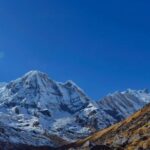
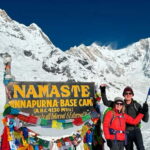
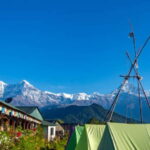
Day 3: Machhapuchhare Base Camp and the big moment at Annapurna Base Camp
This is the day you came for.
You trek from Deurali to Annapurna Base Camp for about 5–6 hours, going via Machhapuchhare Base Camp (MBC). Expect another climb and a steady change in scenery as the trail funnels you deeper into the sanctuary feeling of the Annapurna region.
A standout here is the stretch around MBC valley. It has that “you can’t fake this” quality—when the mountains start closing in and the trail gets steeper, the whole hike shifts into a different gear. You’ll feel your effort more clearly, and you’ll also feel why ABC is famous.
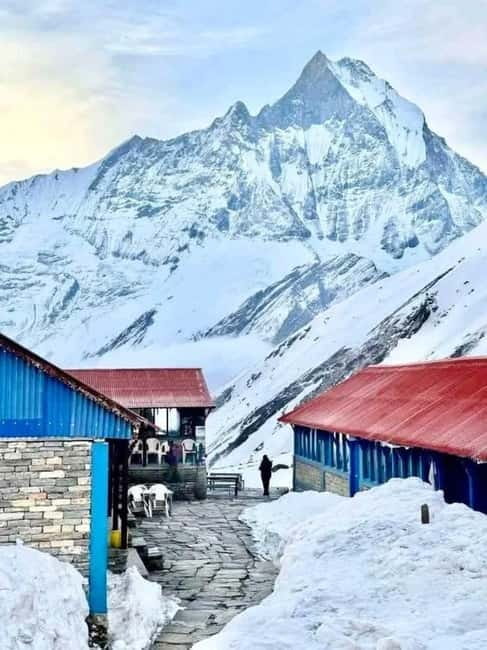
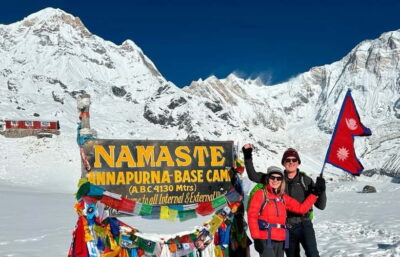
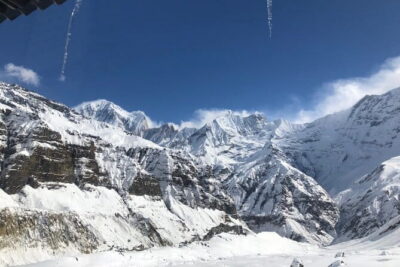
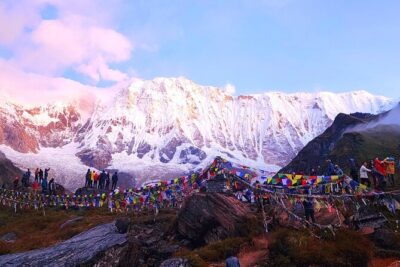
You’ll reach Annapurna Base Camp around 4,130 m, then overnight at tea-house facilities at ABC. The view is the headline: you’re looking at the Annapurna range, and there’s also a famous sunset direction toward the west that can make the mountains look dramatically different from what you saw earlier in the week.
Also, based on what I’ve seen from real guide-led experience on this route, the guide matters a lot on Day 3. In the best cases, guides keep you calm, manage pace, and help you time stops so you don’t miss the best light.
Day 4: Sunrise on the way down through Deurali, Himalaya, and Dobhan
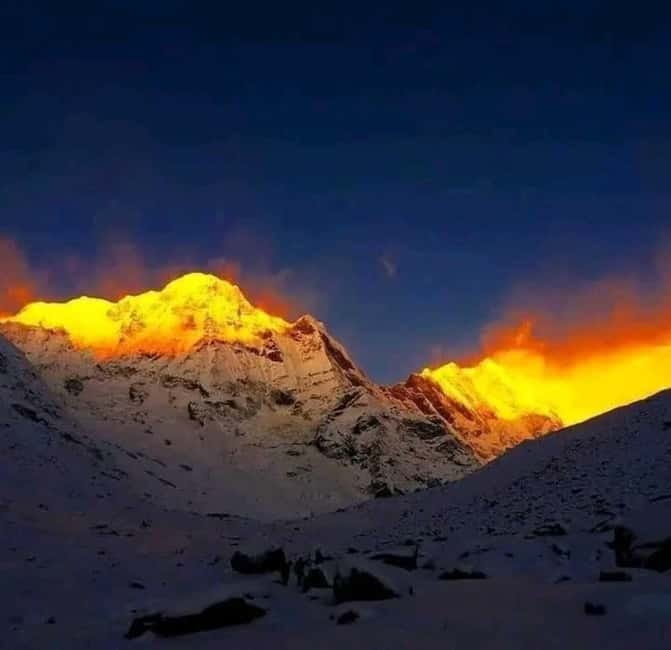
Day 4 is often where people feel the hike in a new way: you’ve tasted altitude, and now you’re bringing your body back down while staying steady.
You trek back to Bamboo or Sinuwa for about 6–7 hours, passing through Deurali, Himalaya, and Dobhan. The idea is to return without wasting the scenery you earned yesterday. The minimum altitude listed is around 2,340 m, so you’re not plunging to low elevation fast—you’re still in the trekking altitude zone.
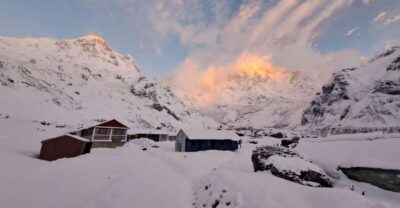
You’ll also do something that sounds small but helps emotionally: a spectacular sunrise in the morning before you start descending. Sunrise hikes in the Himalayas don’t happen because they’re convenient. They happen because the light can make the mountains look almost unreal, and because the air is often clearer early.
This is also the day where good guidance becomes very practical. A guide who manages pacing well can protect your knees and keep you from slipping into a sloppy, rushed descent late in the day. A strong porter team helps too, especially if you’re carrying less and moving more efficiently.
Day 5: Jhinu Danda hot springs, then drive back to Pokhara
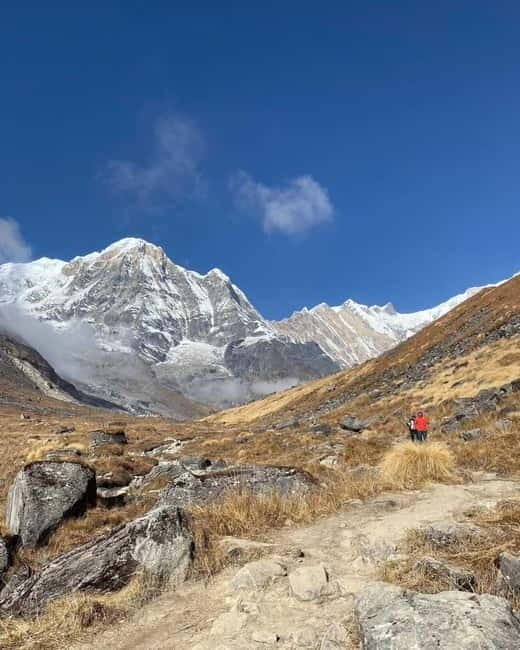
Your last day has a satisfying “finish strong” rhythm.
You trek to Simrung via Jhinu Danda, where the hot springs are optional, for about 3–4 hours. Then you drive back to Pokhara for 2–3 hours, with drop-off around by 17:00 (late afternoon).
The minimum altitude today is around 830 m, so you get a noticeable descent. That helps your body feel more normal again. And if you choose Jhinu Danda hot springs, you’ll likely feel the payoff immediately—warm water after cold trekking days is one of those simple joys that sticks with you.
If you’re debating the hot springs part: I’d treat it as the emotional reward at the end. The trek is hard enough that you’ll appreciate anything that helps you recover without turning the day into a grind.
Guides and porters: the human factor behind safety and comfort
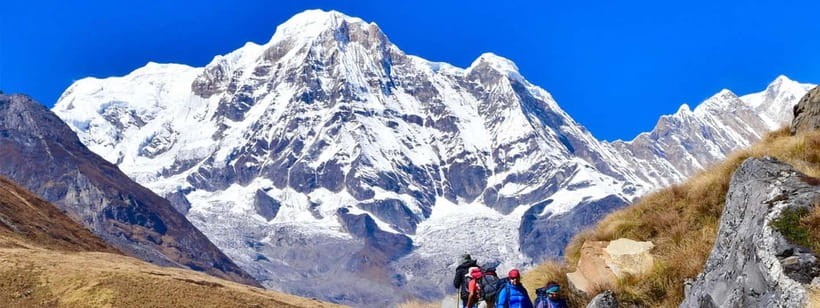
On this trek, your guide and porter aren’t optional extras. They’re the system that keeps you walking safely and sleeping well.
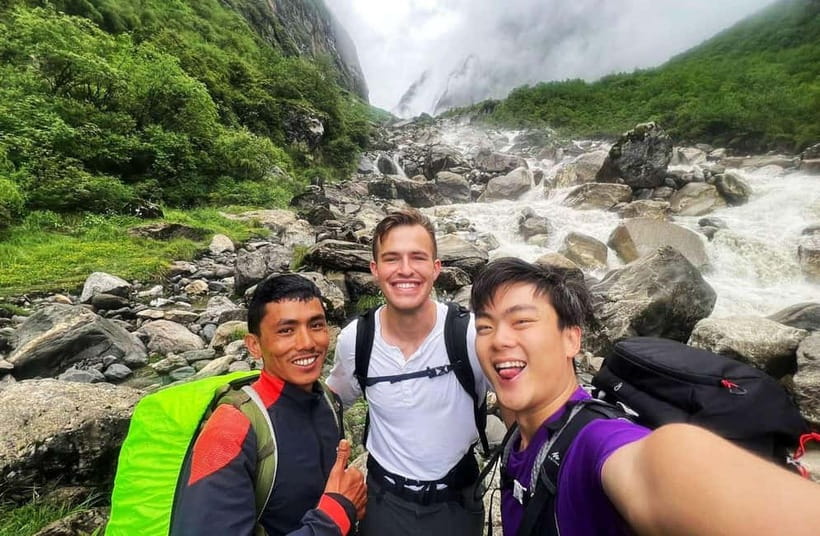
In the strongest experiences, guides are professional, attentive, and focused on safety. People have praised guides like Raj, Sagar, Shiva, and Nareen (spelled that way for one group), plus the supporting porters Naron, Visnu, and Azis. The common thread is pace control and smooth logistics—arranging guest houses and meals so you’re not constantly negotiating details on the trail.
One more practical point: languages matter. This trek offers tour guidance in English, French, Japanese, and Chinese. That can change the whole feel of the trip if you want clear weather and trail explanations rather than guesswork.
There’s also a useful caution from a less-perfect experience: ask questions early about what gear is provided. Equipment is listed as borrowable (including sleeping bags, duffle bags, and trekking poles), but on at least one case, trekking poles weren’t ready as expected. In that situation, bamboo poles were made. It worked out, but it’s a reminder to double-check the basics before you set off.
Guest houses and meals: what your days are built around
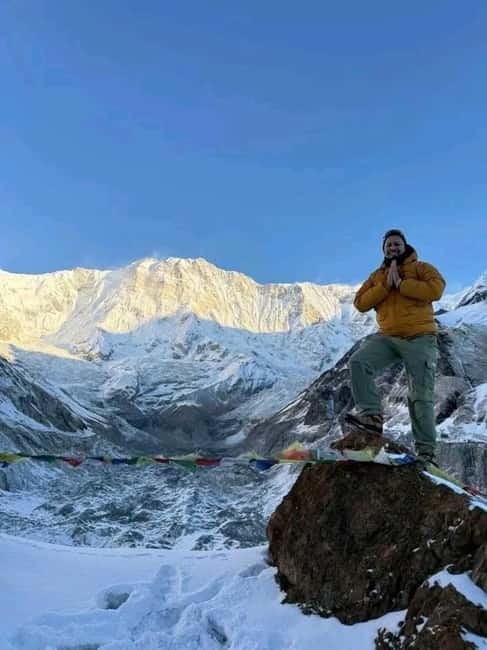
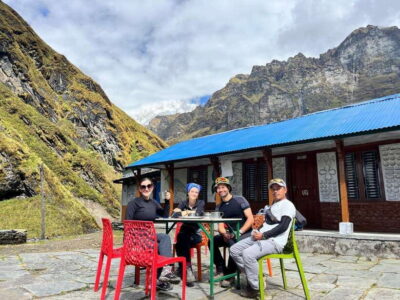
This trek is built around 4 nights of mountain guest house accommodation. Tea houses typically function as both your food stop and your night-stop system at higher points.
Meal inclusion depends on your package. If you select an all-inclusive option, you’ll have meals included and a porter included. If you’re on a budget or Kathmandu-based option, meals and porter support may require add-ons.
Either way, plan to treat food as part of your training. When the air gets thinner, you need steady energy. Don’t skip breakfast because you’re rushing. Don’t treat lunch like a snack either. You’ll hike longer than you might think when you’re managing altitude and cold.
Altitude reality: why acclimatization is the real route skill
The trek is rated moderate to challenging, and altitude is the main reason.
The route goes from around 2,340 m on Day 1 up to 3,230 m on Day 2, then to 4,130 m at Annapurna Base Camp on Day 3. That’s a big jump in a short time. The good news is you’re not alone—you’ll have a guide, equipment support, and structured days.
But the not-so-fun news is weather and cold at height can hit hard. The trip notes that weather can be unpredictable and that temperatures can run cold. Even if you’re fit, you still have to manage basics: warm layers, water intake, and sensible pacing.
If you’ve ever had altitude sickness, have heart issues, respiratory issues, or you’re not currently active at a hiking level, this trip may not be a good match. The trek is also marked as not suitable for people with mobility impairments.
Gear checklist that keeps you comfortable (and moving)
This is not a pack-light luxury climb. You need practical cold-weather hiking gear and a way to stay hydrated.
Bring:
- Warm clothing (layering matters)
- Hiking shoes with grip for uneven trail
- Sunscreen (even if it’s cloudy)
- Water
- Camera if you love early light and wide mountain views
- Travel insurance (not included)
- Trekking gear as advised by your operator
Also note: you can borrow items like trekking poles and a sleeping bag. That’s useful if you’re traveling light. Still, don’t assume everything will be perfectly matched on the day—check fit and comfort early.
And remember the rules: alcohol and drugs are not allowed.
Price and value: is $60 realistic for what you get?
A $60 per person price is low enough that it makes you ask, what’s the catch?
The answer is in the included items. You’re paying for a full guided trek structure: trekking guide, permits, 4-night guest house accommodation, borrowed equipment, and first aid. You also get hotel pickup and drop-off in Pokhara, plus Kathmandu support if the flight option is selected. For the trailhead approach, there’s also shared jeep transfer between Pokhara/Sajrung and back.
The big value driver is that you’re not doing the planning yourself—permits, guides, and accommodation are handled. That can be worth a lot in Nepal because delays and unclear arrangements cost energy.
The trade-off is that some costs depend on the option you pick. If meals and a porter are important to you, check whether your package includes them. If you’re starting from Kathmandu and not selecting flights, you might also need different add-ons.
Bottom line: this can be good value if you want a structured, guide-led trek and you’re okay managing cold-weather basics. If you want luxury meals and private lodge upgrades, this price is not designed for that.
Best seasons and weather: plan like the mountains are in charge
The best trekking seasons listed are:
- March to May
- September to November
Even in those windows, plan for weather uncertainty. The trek notes that conditions can turn cold, rainy, and even snowy. This is why the same route can feel very different from year to year.
If you’re going in shoulder-season or you’re very temperature-sensitive, you’ll want to pack more warmth than you think. The trail’s beauty doesn’t pause because you’re chilled.
Should you book this Annapurna Base Camp and hot spring trek?
I’d book it if you fit these boxes:
- You want Annapurna Base Camp (4,130 m) in a focused 5-day window.
- You like a route that mixes big mountain moments with waterfalls, forests, and village tea-house life.
- You want a guide-led experience and you appreciate that safety and pacing matter as much as views.
- You’re comfortable hiking at a moderate to challenging level and you can handle cold mornings.
I would hesitate if:
- You’re at higher risk for altitude issues or have heart or respiratory concerns.
- You need mobility-friendly routing.
- You expect full comfort regardless of rain or snow.
If you do book: communicate early, confirm the gear you’ll receive (especially if you care about poles and fit), and treat acclimatization and slow steady walking as your superpower. That’s when the whole trek—especially the sunrise and the ABC view—lands the way it’s supposed to.
FAQ
How long is the Annapurna Base Camp and hot spring trek?
The trek lasts 5 days.
Do I start from Kathmandu or Pokhara?
You can start from either Kathmandu or Pokhara. If you start in Kathmandu, you take a flight to Pokhara.
What is the highest altitude on the trek?
The highest altitude listed is around 4,130 m at Annapurna Base Camp.
Are hotel pickup and drop-off included?
Yes. Hotel pickup and drop-off are included in Pokhara. Hotel pickup in Kathmandu is included if you select the flight option.
Is a trekking guide included?
Yes. A trekking guide is included.
How do I get to the trailhead?
You use transfer by shared jeep for the Pokhara–Simrung–Pokhara route segment.
Are hot springs at Jhinu Danda included?
Jhinu Danda hot springs are listed as optional. The trek includes trekking to Jhinu Danda via Simrung on Day 5.
What languages are available for the guide?
The tour guide can speak English, French, Japanese, or Chinese.
What should I bring?
Bring warm clothing, hiking shoes, sunscreen, water, a camera, trekking gear, and travel insurance.
Is travel insurance included?
No, travel insurance is not included.
More Treks in the Annapurnas
Also Reviewed Around Pokhara
More Annapurna Base Camp Routes
Newer Ghandruk reviews to browse before you decide
Annapurna Sanctuary Treks, compared.
 ★ 4.9Kathmandu/Pokhara: 5-Day Annapurna Base Camp (ABC) TrekFrom $9672 reviews
 ★ 5.0Private 7 – Day Annapurna Base Camp TrekkingFrom $62550 reviews
 ★ 5.0Annapurna Base Camp Trek (8 days)From $65045 reviews
 ★ 4.97 Day Annapurna Base Camp TrekFrom $21538 reviews
 ★ 4.95-Day Annapurna Basecamp Trek with Hot SpringsFrom $15526 reviews
 ★ 5.0Annapurna Base Camp Trek from Pokhara 7 DaysFrom $39519 reviews
 ★ 5.06 days Annapurna Basecamp TrekFrom $45016 reviews
 ★ 5.010 Days Private Guided Annapurna Basecamp Trek via Poon HillFrom $80015 reviews
Browse the lists this tour appears in