
Reviewed · POON HILL SUNRISE TREKS
Pokhara: 4-Day Poon Hill and Ghandruk Guided Trek
A trek where the hardest part might be waking up early. The Poon Hill sunrise plus Ghandruk village makes this 4-day guided Himalayan trek feel both scenic and human-scale, not just about mountains.
What I like most is the mix: one day is for views, and the next is for trail texture and local life. I also like that the route is short enough to keep your energy for the big moments—like the long, step-heavy days that build toward dawn at Poon Hill.
One drawback to weigh: you’ll climb a lot of steps, and Day 3 is long. If you’re hoping for a laid-back walk, bring patience and plan for sore legs, especially if you’re new to trekking.
In This Review
- Why this 4-day Poon Hill and Ghandruk trek works
- From Pokhara to Ulleri: warming up with the Modi River and a big step climb
- Ulleri to Ghorepani: rhododendron forests, step rhythm, and tea house calm
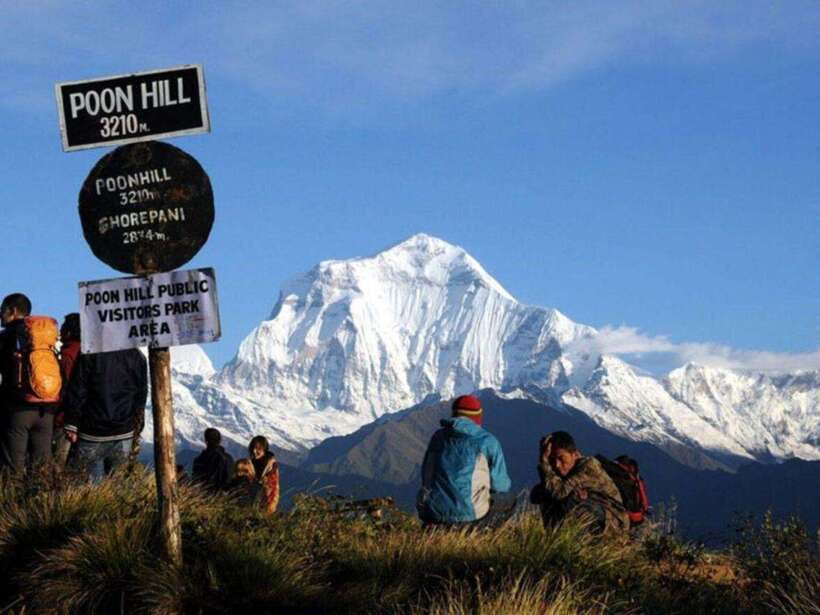
- Poon Hill sunrise over Annapurna and Dhaulagiri: the early-morning payoff
- Ghandruk village and Gurung culture: why this stop feels more than a photo stop
- Day 4 from Ghandruk back to Pokhara: guided village time and an easy finish
- How hard is it, really? Steps, altitude at 3,210m, and what to prepare
- Price and value: what $226 includes and where you may spend extra
- Best time to go: spring blooms, autumn clarity, and the sunrise gamble
- Who should book this trek?
- Should you book this 4-day Poon Hill and Ghandruk trek?
- FAQ
- How long is the trek?
- Where does the trek start and end?
- What’s included in the price?
- Do I need to bring trekking equipment?
- What language is the guide?
- Is this a private group trip?
- What’s the best time of year to go?
- Will I get to see sunrise at Poon Hill?
- What if the weather is bad during sunrise?
- What is not included besides personal equipment?
Why this 4-day Poon Hill and Ghandruk trek works
- Magical sunrise at Poon Hill: early start, then huge panoramic reward
- Rhododendron forests: especially strong in spring (March–May)
- Ghandruk + Gurung hospitality: culture, food, and village rhythm
- Tea house nights: simple comfort after daily hiking effort
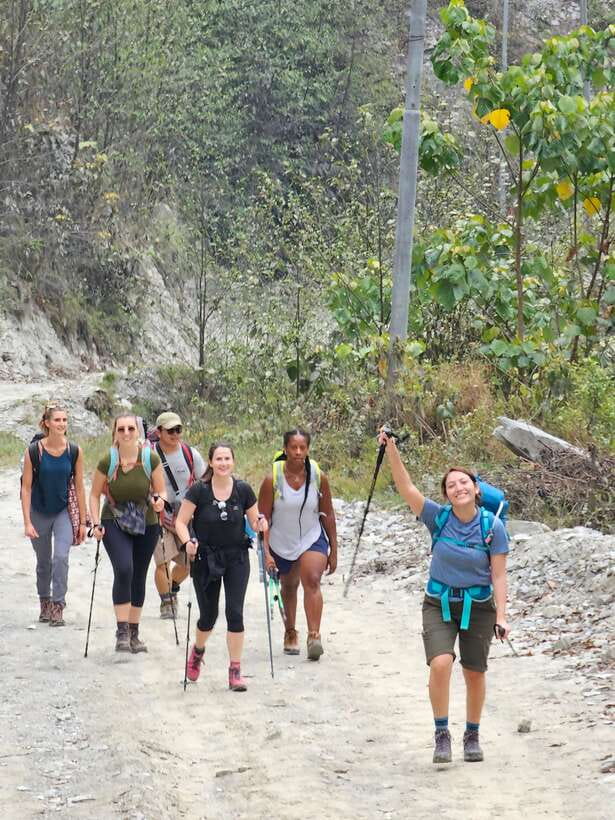
- English-speaking local guides: pacing and support matter on step climbs
- Full package value: permits, TIMS, transportation, plus meals/accommodation during the trek (for full package)
More Poon Hill and Ghorepani routes, weighed by nights and effort.
- Poon hill Trek 3 days★ 5.0 · 176 reviews
- Pokhara: 4-Day Ghorepani, Poonhill & Ghandruk Mountain Trek★ 5.0 · 132 reviews
- Ghorepani – Poon Hill Trek 3N-4D★ 5.0 · 125 reviews
- From Pokhara: 3-Day Ghorepani Poon Hill Trek with Guide★ 4.9 · 68 reviews
From Pokhara to Ulleri: warming up with the Modi River and a big step climb
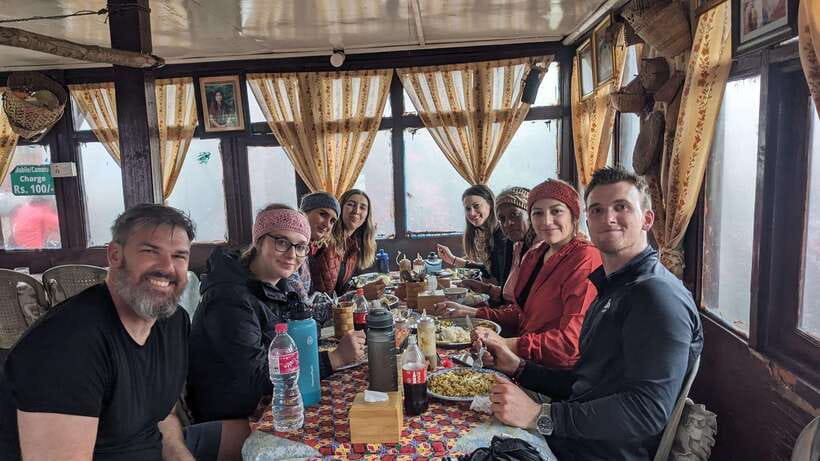
The journey starts in Pokhara, with round-trip transportation connecting you to the trek. You drive to Naya Pul, then begin walking along the Modi River, where you can start spotting Annapurna South views and get your bearings before the steep stuff.
Day 1’s main event is the ascent to Ulleri. Expect many steps. It’s not just “a little incline”—it’s that stair-step Nepal trekking classic that can be surprisingly tiring even when the distance isn’t huge. I like this setup because it gets your body into trekking mode quickly, and it also sets a realistic tone for the rest of the trip.
When you reach Ulleri, you finish at a tea house and settle in with a quiet, mountain-calm evening. This matters more than people think: you need a good night after a step day, because the next morning brings forest trails and a lot more movement.
Practical tip: pace yourself. Short steps, steady breathing, and stopping briefly when needed will beat charging uphill and paying for it later.
Ulleri to Ghorepani: rhododendron forests, step rhythm, and tea house calm
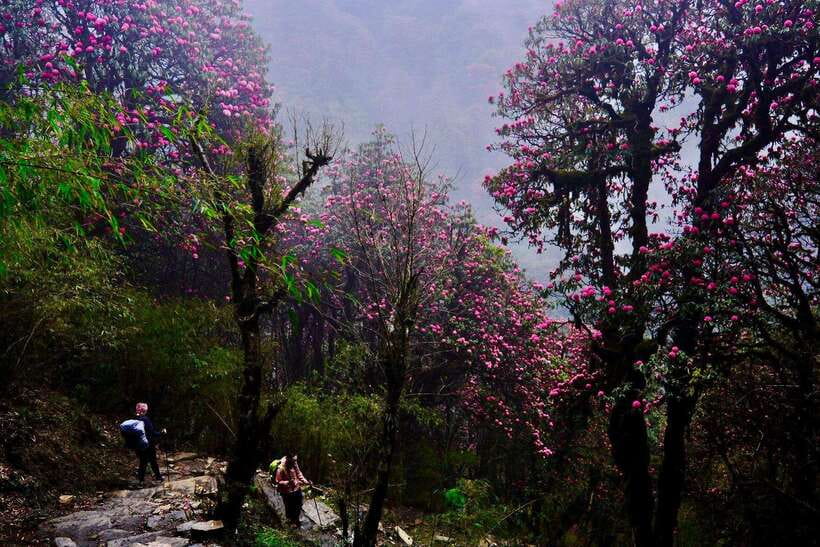
Day 2 continues the “steps plus scenery” formula, but the vibe changes. The trail cuts through rhododendron forests, and if you’re trekking in spring (March–May), that’s when the blooms can really brighten the walk.
This day is also a good way to understand what your trek will feel like. The going is repetitive in the best way: climb, breathe, pause, climb again. On top of that, you get chances to notice the day-to-day rhythm of Nepali life—how people work, cook, and live in these mountain communities.
You spend the night at a tea house in Ghorepani (you may also see it written as Ghode Pani). Tea houses are basic, but that’s the point: you’re trading luxury for simplicity and warmth. After long walking hours, having food and a bed handled by the package makes the trek feel smoother and less stressful.
Practical tip: keep your layers easy to adjust. Morning can feel chilly at altitude, and midday walking warms you up. You want to be able to strip off and put on clothing quickly without digging through a packed bag.
Poon Hill sunrise over Annapurna and Dhaulagiri: the early-morning payoff
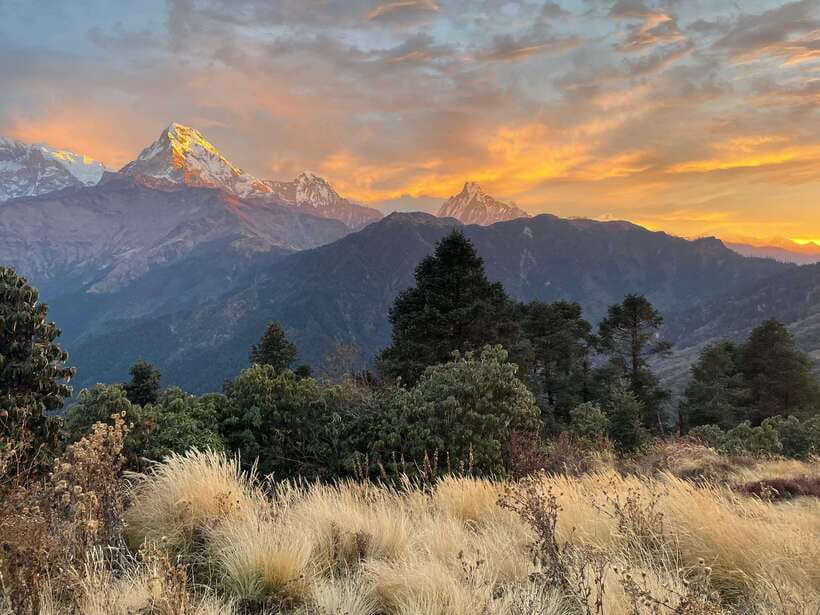
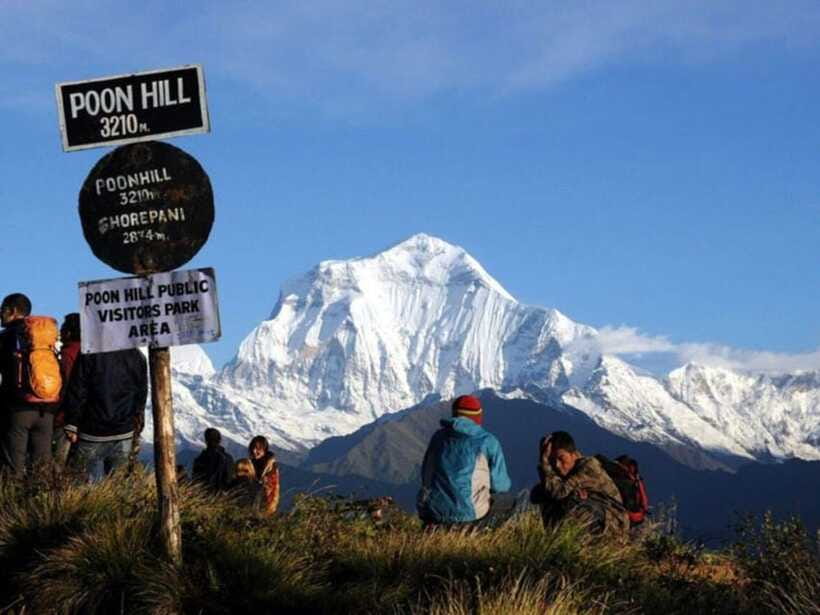
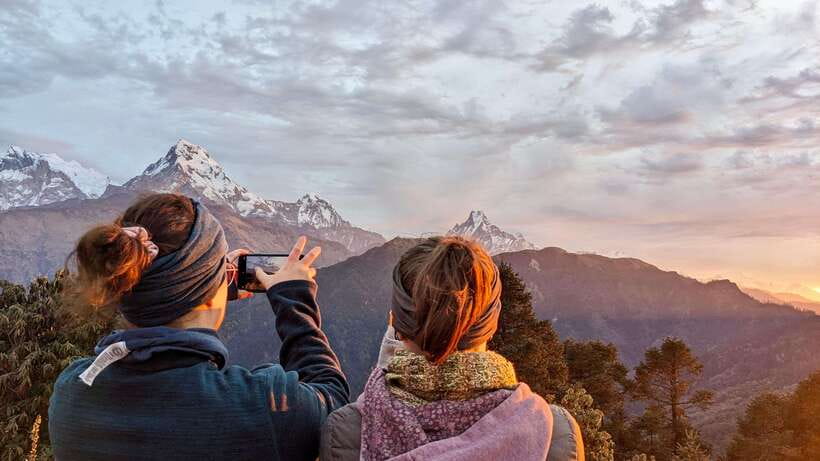
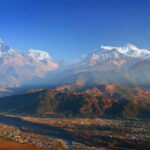
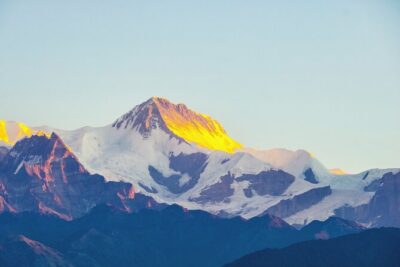
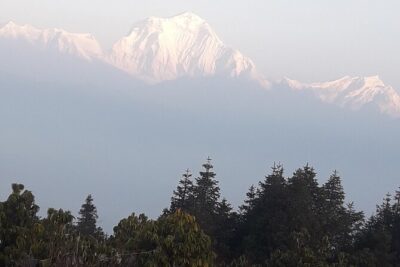
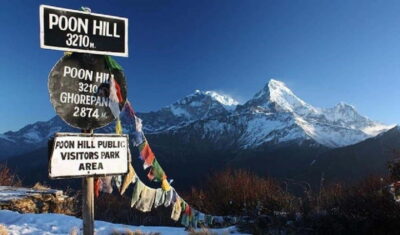
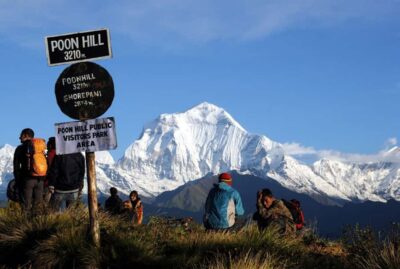
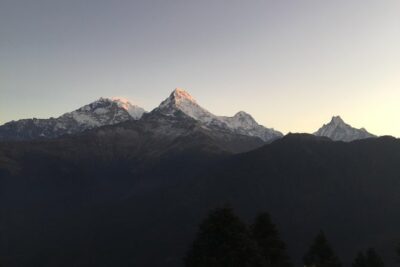
Day 3 is where this itinerary earns its reputation. You wake up early to head to Poon Hill for sunrise. Then you get expansive views—Annapurna and Dhaulagiri in the same sunrise scene.
The exact order on the ground is simple: early start, viewpoint time, then trekking onward toward Ghandruk. After sunrise, you continue to Ghandruk on a long day. The “long day” warning is worth taking seriously because you’re still moving after you’ve already been up for dawn.
This is the day where pacing becomes a sanity tool. If you hike too fast trying to make up for lost sleep, you’ll arrive to Ghandruk worn out. If you hike too slow, you’ll still be climbing when your body would rather be done. The best approach is steady and controlled—enough to keep energy for the final stretch without arriving angry.
I also like that the day blends two kinds of satisfaction:
- the sky show at Poon Hill
- the human scale of village trekking as you descend toward Ghandruk
One more reality check: sunrise depends on weather. The tour notes that autumn (September–November) often brings clearer skies, and spring can add bloom season. If you go in a gray patch of weather, the mountains may be shy—so treat the forecast as a suggestion, not a guarantee.
Ghandruk village and Gurung culture: why this stop feels more than a photo stop
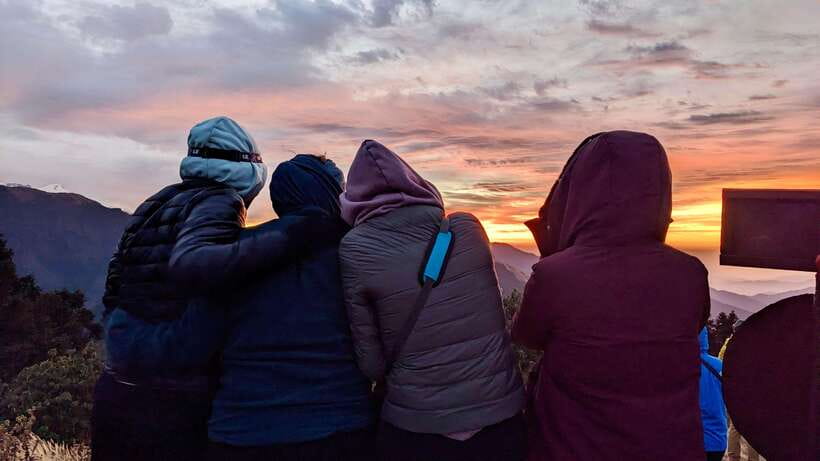
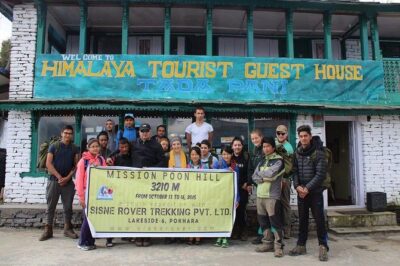
When you reach Ghandruk, the experience shifts from “trail achievement” to “village connection.” You’ll have time to enjoy and explore the Ghandruk village and its traditions, including a guided tour later on Day 4.
This is where the itinerary earns points for being more than a scenic route. The Gurung community is part of what makes Ghandruk special: you’re not just walking through scenery, you’re seeing everyday life in a place that has its own identity and hospitality.
From the people you meet—tea house staff, locals, and your guide—you’ll get a feel for cultural details that don’t show up in a quick postcard stop. Some groups specifically highlight trying Gurung food and even experimenting with traditional dress during the village experience. Even when you don’t do those extras, Ghandruk is the kind of place where the atmosphere makes you slow down and pay attention.
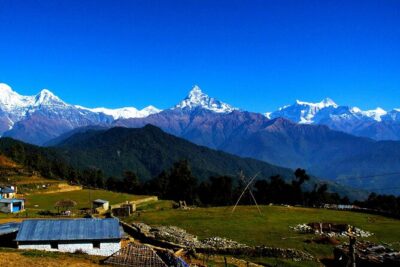
And yes, the views are still there. But they feel different from Poon Hill. At Ghandruk, you get a calmer sense of the valley and peaks around you, plus the comfort of a community-sized destination.
Practical tip: bring a little patience and politeness for cultural interactions. A short conversation goes farther in village Nepal than trying to “collect” experiences.
More guided departures worth a look.


Day 4 from Ghandruk back to Pokhara: guided village time and an easy finish

Day 4 is the smooth landing. You start with more time in Ghandruk and then get a guided village tour. That tour timing is built in (about 2 hours), so you’re not just rushing through town before the drive.
After the village time, you hike back toward Nayapul, then take the jeep/SUV back to Pokhara. The feeling here is practical: you get closure on the village part of the trip, and then the transport handles the travel stress so you can recover in Pokhara.
This also means your overall energy stays balanced. After a long Day 3, it helps to have Day 4 organized and lighter on the climbing compared to what you likely did earlier.
How hard is it, really? Steps, altitude at 3,210m, and what to prepare
This trek climbs up to around 3,210m as you head into the Himalaya zone. That’s not Everest-level altitude, but it’s still enough to take breathing and pace seriously.
The bigger challenge is often the rhythm of the stairs:
- Day 1 includes a heavy step climb to Ulleri
- Day 2 keeps the step climbing going
- Day 3 includes sunrise duty plus a long trek day
If you’re fit but new to trekking, you’ll likely do fine if you move steadily and rest when needed. If you’re not in shape yet, plan for slower pace and extra breaks.
What to pack isn’t listed in detail, but the activity clearly notes that personal trekking equipment is not included. So you’ll want to bring the basics you’d normally use for Nepal tea house trekking:
- sturdy footwear for stone steps
- a warm layer for early mornings
- sun protection for higher exposure
- a small daypack for water and snacks
Also, remember that your guide is English-speaking and locally licensed. In the best cases, guides like Prabit, Ramit, or Sishir are described as attentive and tuned into the group—steady pacing, support when you need it, and even help capturing the moment (one guide is called out as a strong photographer).
Price and value: what $226 includes and where you may spend extra
At $226 per person for 4 days, the best value is that a lot is bundled:
- round-trip transportation
- a local licensed guide
- permits and TIMS
- emergency rescue assistance
- and, for the full package, accommodation and meals during the trek
That combination matters because it removes big, annoying planning tasks. Permits and TIMS can be confusing when you’re trying to self-organize, and on a short trek you don’t want to waste half your trip sorting logistics.
What’s not included is also clear:
- personal trekking equipment
- expenses if accidents or natural disasters occur during the trek
So your main “extra cost” bucket is what you bring (gear and personal items), plus any optional spending on the side.
If you want a trek that feels organized from start to finish—without losing spontaneity—this package structure is a strong match.
Best time to go: spring blooms, autumn clarity, and the sunrise gamble
The tour guidance is straightforward:
- Spring (March–May) for rhododendron blooms
- Autumn (September–November) for clear skies
This lines up with what you’ll actually experience. Spring makes Day 2’s forest walk more special. Autumn makes Day 3’s sunrise better odds, though nothing is guaranteed—clouds can always show up.
If sunrise is your top priority, I’d lean autumn for clearer mountain visibility. If you care more about the trail experience and color, spring becomes very appealing.
Either way, you should be ready for early mornings and cool air around dawn. That’s part of the deal with Poon Hill.
Who should book this trek?
This fits you if:
- you want a short trek with real mountain payoff
- you care about both views and culture, not just one or the other
- you prefer a private group with an English-speaking guide
- you like the tea house style of trekking
It may not fit you as well if:
- you want a minimal-step walk
- you dislike long travel days (Pokhara to Naya Pul and back are included, but there’s still driving time)
- you’re extremely sensitive to early mornings
Should you book this 4-day Poon Hill and Ghandruk trek?
Yes, I’d book it if you want a practical introduction to the Annapurna region that still delivers real moments: the step climb into Ulleri, rhododendron trail energy, a Poon Hill sunrise with big names like Annapurna and Dhaulagiri, and then a Ghandruk village experience that adds meaning beyond photos.
Before you commit, be honest about your comfort with stairs and your willingness to start early. If you’re good with that, this is a strong value trek where the guide and included logistics do the heavy lifting—so you can focus on walking, watching the mountains wake up, and connecting with the Gurung community along the way.
FAQ
How long is the trek?
It’s a 4-day trek, with a full itinerary that includes hiking days, Poon Hill sunrise time, a guided village tour in Ghandruk, and return transport to Pokhara.
Where does the trek start and end?
It starts in Pokhara, and you drive to Naya Pul for the trek. At the end, you hike back toward Naya Pul and then drive back to Pokhara.
What’s included in the price?
The package includes round-trip transportation, a local licensed guide, permits and TIMS, and emergency rescue assistance. For the full package, it also includes accommodation and meals during the trek.
Do I need to bring trekking equipment?
Yes. Personal trekking equipment is not included, so you’ll need to bring your own gear.
What language is the guide?
The live tour guide is English.
Is this a private group trip?
Yes, it’s listed as a private group.
What’s the best time of year to go?
The tour guidance says spring (March–May) is best for rhododendron blooms, and autumn (September–November) is best for clear skies.
Will I get to see sunrise at Poon Hill?
Yes. The itinerary includes Poon Hill sunrise as a key part of the trek.
What if the weather is bad during sunrise?
The tour notes that spring and autumn are best for conditions, but sunrise visibility can vary. You should be ready for the possibility of clouds.
What is not included besides personal equipment?
It specifically excludes expenses incurred due to accidents or natural disasters during the trek.
More Guided Departures
Also Reviewed Around Pokhara

More Poon Hill Sunrise Treks
Newer Pokhara reviews to browse before you decide

Poon Hill Sunrise Treks, compared.
 ★ 5.0Poon hill Trek 3 daysFrom $230176 reviews
 ★ 5.04-Day Ghorepani, Poonhill & Ghandruk Mountain TrekFrom $181132 reviews
 ★ 5.0Ghorepani – Poon Hill Trek 3N-4DFrom $321125 reviews
 ★ 4.93-Day Ghorepani Poon Hill Trek with GuideFrom $16268 reviews
 ★ 5.03-Day Ghorephani and Poon Hill Private TrekFrom $12658 reviews
 ★ 5.04-Day Private Poon Hill Trekking TourFrom $35958 reviews
 ★ 4.62-Day Ghorephani and Poon Hill Private TrekFrom $10450 reviews
 ★ 5.03-Day Poon Hill Trek from Pokhara.From $41045 reviews
Browse the lists this tour appears in