
Reviewed · POKHARA CITY & VALLEY SIGHTSEEING
Pokhara Sightseeing By Bus: Day Trip
Pokhara on a bus sounds simple. That’s the point: this day trip strings together the Valley’s top stops without making you micromanage. I especially like the value (it’s priced for tight budgets) and the way it packs in major sights in one 7-hour sweep.
One thing to factor in: English-style guidance can be light. A local assistant is on the bus, but you may get more help from your fellow passengers than from detailed explanations at every stop.
In This Review
- Key things I’d watch for
- A budget bus day around Pokhara’s main sights
- Pickup from Lakeside and the 7-hour rhythm
- What the bus setup means for you
- Pumdikot Mahadev View Point: quick skyline views
- Practical tip
- Bindyabashini Temple: devotion mixed with daily life
- Respect note
- Mahendra Cave: cool air and cave-side intrigue
- Seti River Gorge and the Peace Stupa combo
- Timing reality
- Devi’s Fall: where water does the plot twist
- How to enjoy it
- Gupteshwor Mahadev Cave: faith in the dark
- What to plan for
- Fewa Lake: your late-day breather
- A smart way to use your time
- Price and value: what $19 gets you (and what you should budget)
- The guidance trade-off
- Who this Pokhara bus trip suits best
- Tips to get more out of the day (without adding stress)
- A little social strategy that helps
- What’s the vibe on this sharing reserve bus tour?
- Should you book this Pokhara bus sightseeing trip?
- FAQ
- What time does the Pokhara sightseeing bus day trip start?
- Where do I get picked up?
- How long is the tour?
- What major sights are included on the day?
- Are meals included in the price?
- What about entrance or monument fees?
- Is there an English-speaking host or greeter?
- Is a drone allowed?
- Is the tour suitable for wheelchair users?
- Can I cancel and get a refund?
Key things I’d watch for
- Early pickup and a full-day rhythm from Lakeside, with a 9:40 AM start.
- Big-ticket sights, fast: Peace Stupa, Devi’s Fall, Gupteshwor Cave, Seti Gorge.
- Bus-first format that’s easy on your legs, but not always rich in explanations.
- Cave and temple time means some walking and a more spiritual local vibe.
- Entrance fees likely extra (budget about $10 USD per person).
More ways to see the city and Pokhara Valley in a day.
- Pokhara: Full-Day Private Tour on 7 Iconic Destination★ 4.8 · 108 reviews
- Pokhara: Sarangkot Sunrise with Half or Full-Day City Tour★ 4.8 · 100 reviews
- The Best of Pokhara: Full-Day Private Tour with Sarangkot Sunrise★ 5.0 · 66 reviews
- Guided Tour to explore the entire Pokhara City★ 5.0 · 51 reviews
A budget bus day around Pokhara’s main sights
This is the kind of Pokhara day trip that makes sense when you want “greatest hits” without spending a fortune. The bus handles the travel between viewpoints, temples, and natural wonders, so you can focus on photos, short walks, and taking in the Valley.
The tour runs in the Pashchimanchal region, and it’s built around classic Pokhara priorities: dramatic water features, religious sites, and cave scenery. You’re also set up to meet people from different countries, which adds a fun social layer—especially on a bus that’s more practical than showy.
Pickup from Lakeside and the 7-hour rhythm
Your day starts at 9:40 AM, with pickup from Lakeside. From there, you’ll be on the bus for most of the day, hopping between stops that are spread across the Pokhara Valley.
A 7-hour schedule is long enough to feel like you did something, but short enough that you won’t get stuck anywhere too long. I like that pacing because it keeps the day moving, but it also means you should expect quick turns rather than slow wandering.
What the bus setup means for you
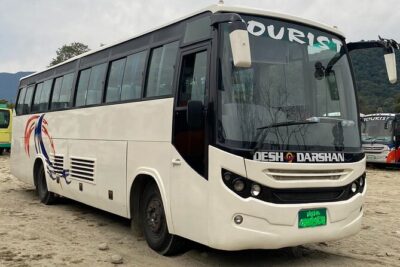
This is a shared group format. There’s a local assistant on board, and the host/greeter is listed as English, but don’t count on a deep, stop-by-stop lecture. If you want context, bring a little curiosity (or a few questions) and be ready to learn on the go.
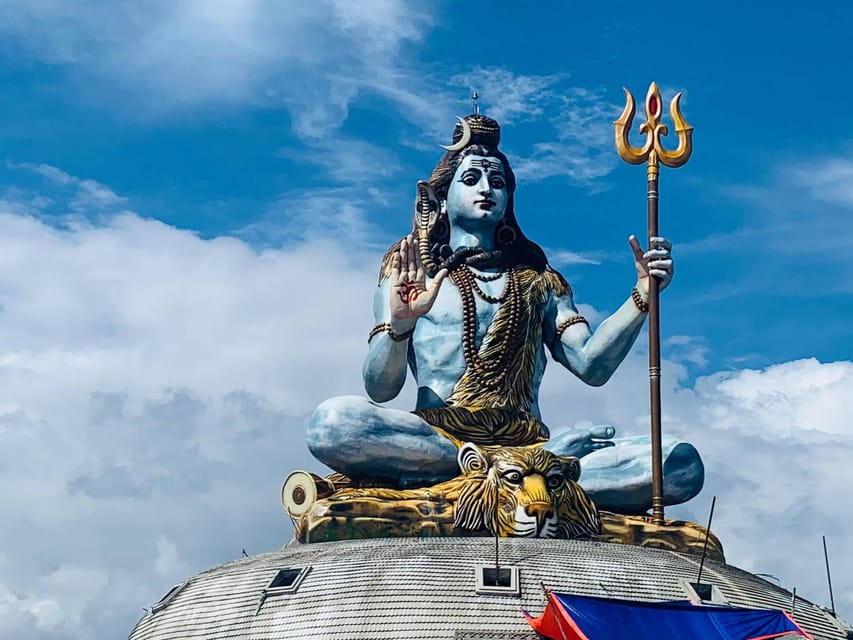
Pumdikot Mahadev View Point: quick skyline views
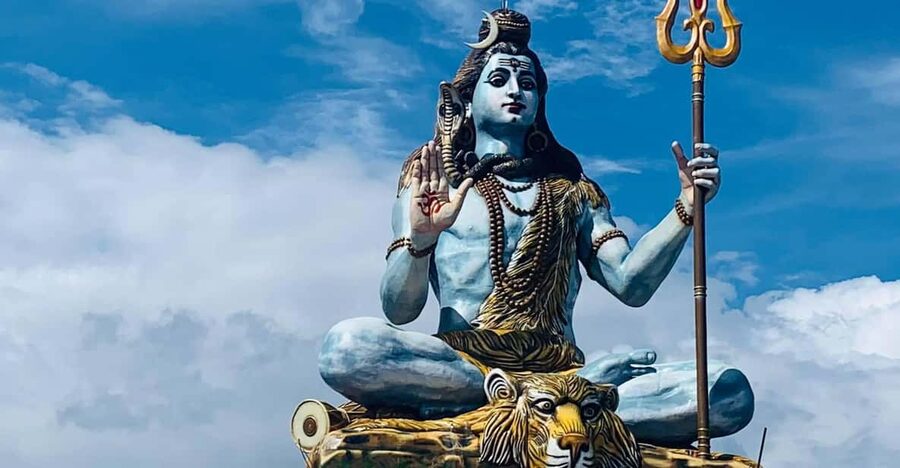
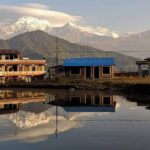
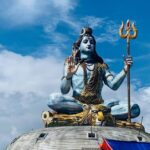
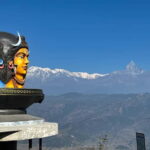
Pumdikot Mahadev View Point is all about angles. You’re going to the kind of viewpoint where the main payoff is the shot: Valley views and a sense of scale.
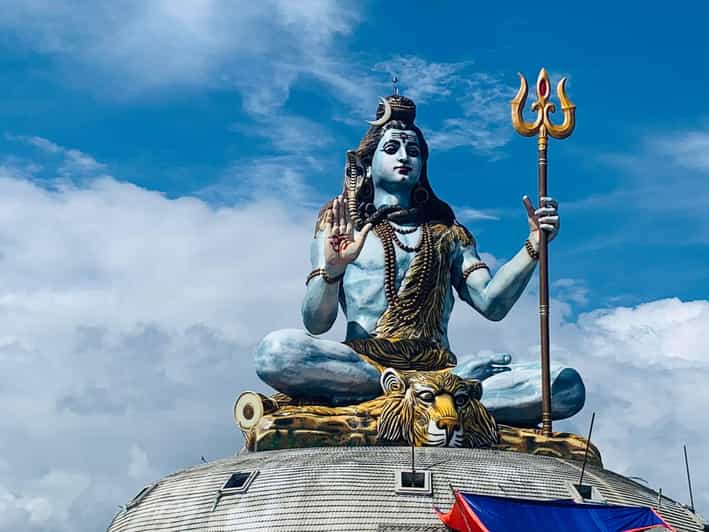
Mahadev sites also bring a spiritual feel that’s different from pure sightseeing. Even if you’re not doing a full ritual, you’ll see worshippers and notice how locals treat these places as part of everyday life.
A few more Pokhara trips worth comparing.
Practical tip
Bring your camera early. Viewpoints are one of those places where the best light can happen fast, especially when clouds shift.
Bindyabashini Temple: devotion mixed with daily life
Next up is Bindyabashini Temple. Temples in Pokhara aren’t just photo backdrops—they’re active places. You’ll likely see people coming and going, and the area tends to feel busy even when the tour day is moving.
This stop is a good example of why a bus day trip can feel more real than a polished “tourist bubble.” You’re not only looking at Nepal from afar; you’re watching how faith shows up in the day-to-day rhythm.
Respect note
Dress for temples and keep your movements calm. A viewpoint day can turn into a slightly more serious one when you’re standing where people pray.
Mahendra Cave: cool air and cave-side intrigue
You’ll also visit Mahendra Cave. Caves are a break from the open-air heat, and they tend to add a different mood to the day: dim light, rock textures, and a bit of mystery just from being underground.
Cave stops also come with practical considerations. Expect some uneven ground and limited space for lingering, since group tours keep moving.
Seti River Gorge and the Peace Stupa combo
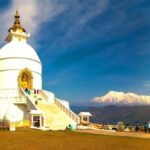
The tour hits both Seti River Gorge and Peace Stupa, which is a smart pairing.
Seti Gorge gives you the “how can that be real?” effect of a river cutting through the area. It’s one of those natural sights where you look down and instantly understand why Pokhara earned its reputation for scenery.
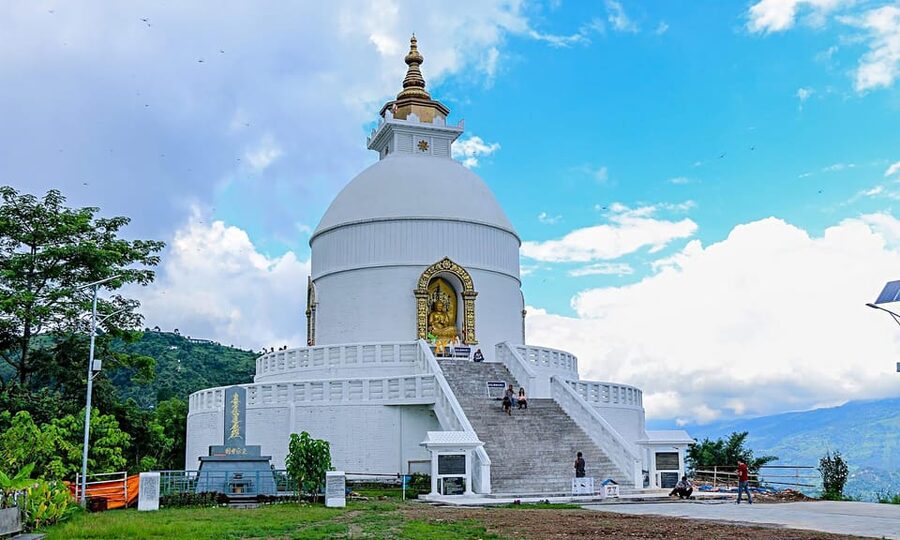
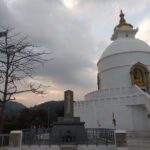
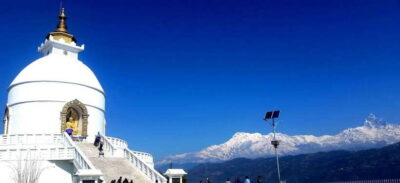
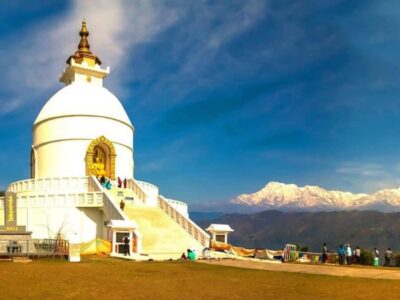
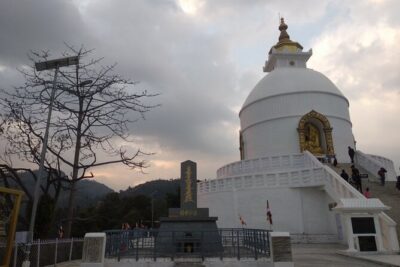
Then you shift up to Peace Stupa, which is a classic viewpoint-style stop. This is where the day feels calmer. The stupa is a place to slow down for a moment—part photo spot, part reflection area.
Timing reality
These two stops are visually different, so they help break up the day. But they can also eat your energy if you’re not dressed for walking. Comfortable shoes matter more than you’d think on a day like this.
Devi’s Fall: where water does the plot twist
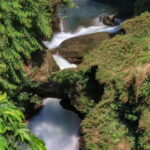
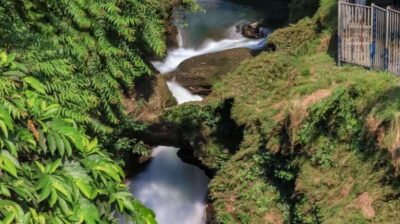
Devi’s Fall is the headline water stop. The name alone makes it sound dramatic, and the setting lives up to that.
It’s one of Pokhara’s best-known “watch the water” moments. You’re not just looking at a waterfall—you’re observing the flow and how it disappears and reappears in ways that feel surprising.
How to enjoy it
Take your time with this one, even if you have limited minutes. Water changes fast, and small shifts in viewing angles can make your photos look totally different.
Gupteshwor Mahadev Cave: faith in the dark
Gupteshwor Mahadev Cave adds a cave-and-devotion twist. Mahadev worship is central here, so you’ll likely see signs of ritual and reverence mixed with the natural cave setting.
This stop is ideal if you like your travel experiences to have more than one layer. The scenery matters, but so does the human side: people come to this place with purpose, not just for sightseeing.
What to plan for
Cave areas tend to be warmer than you expect once you’re inside, and they can feel tight depending on crowds. Keep your camera ready but avoid blocking walkways. It keeps the mood respectful.
Fewa Lake: your late-day breather
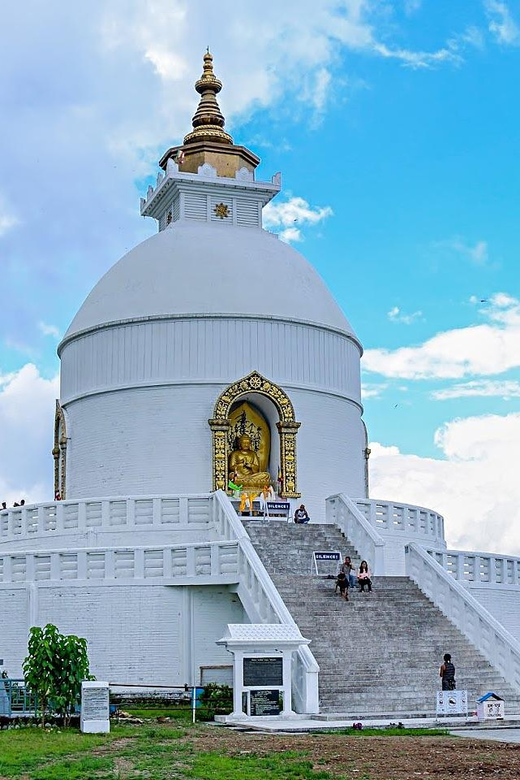
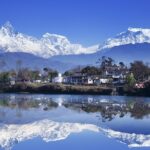
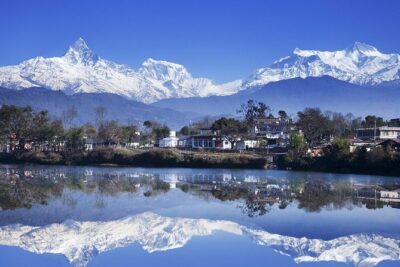
You’ll finish with Fewa Lake, which works as a gentle landing after caves, temples, and waterfalls. A lake stop is good because it resets your senses. It also gives you room to do small, low-effort choices—sit, watch, take a few photos, and let the day settle.
Even on a packed tour, Fewa tends to feel like you’re back to the classic Pokhara vibe. It’s where you can switch from “moving from stop to stop” to “just watching.”
A smart way to use your time
If you’re feeling tired, don’t fight it. Use this part of the day for calm photos and a quick sit. On a group bus schedule, that pause is more valuable than squeezing in one more viewpoint.
Price and value: what $19 gets you (and what you should budget)
At $19 per person for a full day, this is priced for travelers who want maximum sightseeing per dollar. The big value is transportation between multiple major sights and a group structure that makes the plan easy.
Still, budget for extras. Monument and entrance fees are listed at around $10 USD per person, and meals aren’t included (you’ll need to buy food as you go). If you’re calculating a true day budget, add those in right away so there are no surprises.
The guidance trade-off
The other “value” piece is how information is handled. The tour description points to a guide, but past experiences suggest explanations can be limited, with a local assistant and some support from fellow passengers filling in gaps. That’s not a deal-breaker if you’re comfortable reading your surroundings and asking questions.
If you want heavy, structured narration at every stop, you may feel shortchanged. If you’re happy with “see a lot, learn as you go,” this format can be a great fit.
Who this Pokhara bus trip suits best
This is a strong match for:
- Budget-minded travelers who want a complete Pokhara overview in one day.
- People who enjoy meeting others on shared transport.
- Travelers who like natural sights paired with temples and local atmosphere.
- Anyone who wants simple logistics: pickup, bus transport, and planned stops.
It may not be ideal for:
- Wheelchair users (it’s listed as not suitable).
- People who need lots of detailed English interpretation at each location.
Tips to get more out of the day (without adding stress)
A bus day trip can be effortless—or exhausting—depending on your prep. Here’s what I’d do to make it smoother.
- Wear comfortable clothes and shoes you can walk in without thinking.
- Bring a camera (and consider a power bank, because caves and evening light eat battery fast).
- Keep your expectations realistic: the day covers a lot of ground, so plan to enjoy each stop for what it is, not for what it could be with more time.
- Be proactive with questions. If the guide-style explanations feel thin, the local assistant is your best bet on practical info.
A little social strategy that helps
One common theme on group bus days is that you get the best human help from people nearby. On this kind of shared sightseeing bus, it’s smart to be friendly and ask simple things like where to stand for photos or how long to expect at each stop. You’ll move faster and feel more confident.
What’s the vibe on this sharing reserve bus tour?
The overall feel is casual and practical. This isn’t the kind of tour where every detail is choreographed. Instead, it’s a cost-friendly way to cover Pokhara Valley highlights with a group and a steady route.
That can be a plus. You spend less time planning and more time looking. You also get a human mix on the bus, which makes the long ride feel shorter.
Should you book this Pokhara bus sightseeing trip?
If your goal is to see Pokhara Valley’s main hits—Peace Stupa, Devi’s Fall, Gupteshwor Cave, Seti Gorge, and Fewa Lake—in one day while keeping costs down, this trip is worth strong consideration. The $19 starting price is the obvious draw, and the route gives you variety: nature, water, caves, and religious sites.
I’d book it if:
- You want an efficient sampler of Pokhara.
- You’re fine with guidance that may be light at times.
- You don’t mind buying meals and budgeting for entrance fees.
I’d skip it (or look for a different format) if:
- You need lots of detailed commentary in English throughout.
- You want slow, unhurried time at each location.
FAQ
What time does the Pokhara sightseeing bus day trip start?
You meet your tour guide at your hotel at 9:40 AM to begin the Pokhara tour.
Where do I get picked up?
Pickup is from Lakeside.
How long is the tour?
The duration is 7 hours.
What major sights are included on the day?
The tour includes Pumdikot Mahadev View Point, Bindyabashini Temple, Mahendra Cave, Seti River Gorge, Peace Stupa, Devi’s Fall, Gupteshwor Mahadev Cave, and Fewa Lake.
Are meals included in the price?
No. Meals are not included, but you can purchase food during the day.
What about entrance or monument fees?
Monument and entrance fees are not included and are listed as approximately $10 USD per person.
Is there an English-speaking host or greeter?
The host/greeter is listed as English.
Is a drone allowed?
No. Drones are not allowed.
Is the tour suitable for wheelchair users?
No. The tour is not suitable for wheelchair users.
Can I cancel and get a refund?
Yes. Free cancellation is available if you cancel up to 24 hours in advance for a full refund.
Done in a Day from Pokhara
Also Reviewed Around Pokhara

More City and Valley Sightseeing
Newer Pokhara reviews to browse before you decide
Pokhara City & Valley Sightseeing, compared.
 ★ 4.1Full-Day Sharing Bus Tour on 7 Iconic DestinationFrom $12179 reviews
 ★ 4.8Full-Day Private Tour on 7 Iconic DestinationFrom $53108 reviews
 ★ 4.8Sarangkot Sunrise with Half or Full-Day City TourFrom $8100 reviews
 ★ 5.0The Best of Pokhara: Full-Day Private Tour with Sarangkot SunriseFrom $6866 reviews
 ★ 5.0Guided Tour to explore the entire Pokhara CityFrom $7051 reviews
 ★ 4.1City Sightseeing Group Bus TourFrom $837 reviews
 ★ 5.0Pokhara Valley Mountain Bike Adventure Private TourFrom $18530 reviews
 ★ 5.0Best of Pokhara Must Visit 5 Himalayas viewpointsFrom $7520 reviews
Browse the lists this tour appears in