
Reviewed · PHEWA LAKE & PEACE PAGODA
Peace & Panorama: Stupa and Pumdikot Scenic Drive Tour
First time I see Peace Stupa views, I always slow down. This short scenic drive tour pairs the World Peace Pagoda with Pumdikot’s hilltop Shiva complex, and the payoff is big: Pokhara Valley and Phewa Lake from one side, then 360° mountain views from the other. I also love that the route feels intentionally paced—time for photos, a bit of walking, and quiet sightseeing rather than a rushed checklist.
One thing to plan for: it’s not wheelchair accessible, and both hills involve uphill roads and outdoor steps. If you’re traveling with limited mobility, you’ll want to think about comfort on climbs before you book.
In This Review
- Key things to catch before you go
- A 4-hour half-day that connects two spiritual viewpoints
- Getting to the World Peace Stupa: uphill roads and photo-friendly stops
- Shanti Stupa at World Peace: Japanese-built meaning and wide Pokhara panoramas
- Pumdikot Shiva Statue and the 51 ft Kailash Parbat design: what to look for
- Timing and comfort: how to make the most of the 4-hour plan
- Price and value: why $32 for a private car can make sense
- Season tips: when March–May and Sep–Dec usually deliver
- Pickup reliability and the guide factor: what to watch
- Who should book—and who should skip this half-day hill climb
- Should you book the Peace & Panorama tour?
- FAQ
- How long is the Peace & Panorama tour?
- What is the price per person?
- Is hotel pickup and drop-off included?
- What stops are included in the tour?
- Do I get time to take photos and walk around?
- What languages does the driver speak?
- Where does the pickup happen in Pokhara?
- Is the tour wheelchair accessible?
- What should I bring for the tour?
- When is the best time to go?
- What’s the cancellation and payment flexibility?
Key things to catch before you go
- Private hotel pickup in Pokhara lakeside areas with a driver using a name card
- World Peace Stupa: Japanese monks’ white pagoda plus panoramic viewpoints
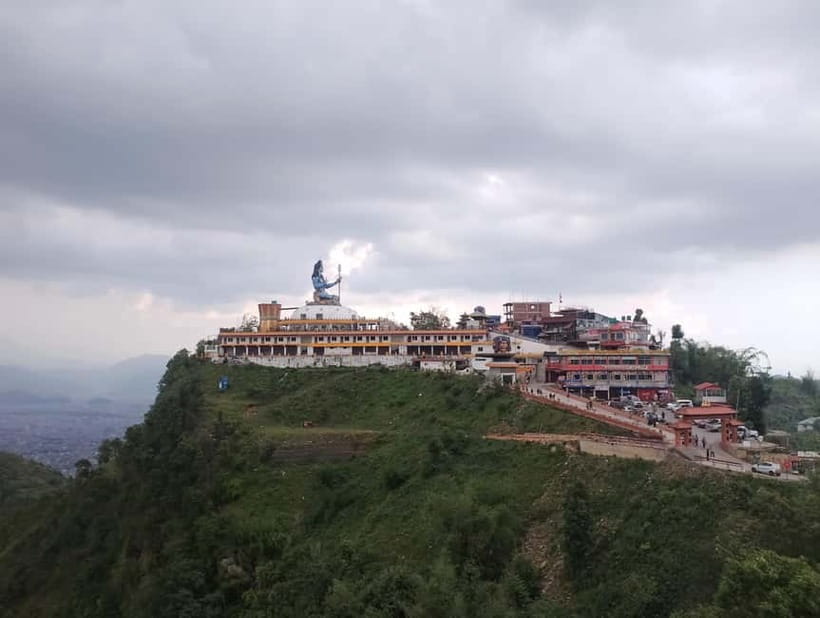
- Pumdikot’s 51 ft Shiva statue on a multi-tier platform designed like Kailash Parbat
- 360° observation decks at Pumdikot, with views of mountains and Pokhara city
- Spiritual park details like Nandi, Hindu gardens and fountains, and 108 Shiva lingams
- Half-day timing (about 4 hours) that works well when you want big scenery without a full day out
More viewpoint tours for Machhapuchhre and the Annapurnas.
- Pokhara: Sarangkot Sunrise & Panoramic Annapurna View Tour★ 4.8 · 10 reviews
- Pokhara: Annapurna Day Hike with Panoramic Views★ 4.3 · 7 reviews
- The Best Of Pokhara: Kahu Hill View Point Tour with Guide★ 5.0 · 6 reviews
- Pokhara: Full-Day Sightseeing & Viewpoints Tour – Private/Group★ 5.0 · 4 reviews
A 4-hour half-day that connects two spiritual viewpoints
This tour is built for people who want a satisfying change of pace, fast. In about 4 hours, you cover two major hilltop experiences: the calm, white World Peace Stupa outside Pokhara, and the more dramatic spiritual energy at Pumdikot with its massive Shiva statue. You’re not just riding from point A to point B—you’re stopping long enough to look, photograph, and reset your brain.
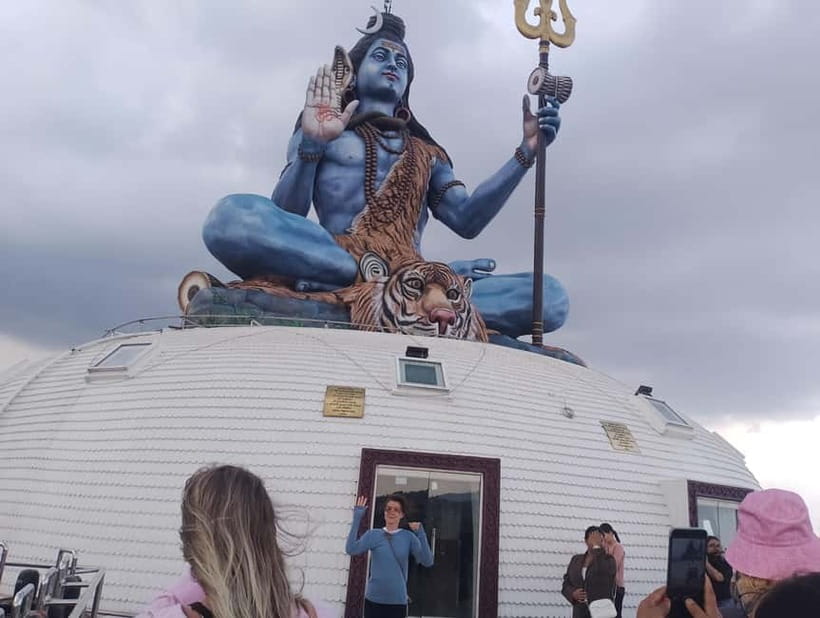
What makes it especially appealing is the contrast. The Stupa stop is about wide, airy views—Pokhara Valley, Phewa Lake, and key peaks in the Annapurna region. Then the Pumdikot stop shifts to a Hindu spiritual complex where details matter: the statue, the Nandi presence, the lingams, and the terrace viewpoints designed for looking out in every direction.
If you’re short on time (or you simply don’t want to commit to a full day tour), this is a strong “value for time” option. It also works well as a first Pokhara outing—scenery-wise, you’ll quickly understand why people fall for this area.
Getting to the World Peace Stupa: uphill roads and photo-friendly stops
Your day starts with a hotel pickup in Pokhara lakeside areas. The driver is experienced and English-speaking, and they’ll look for you with a name card at your hotel. Then the car heads uphill on forested hills and village roads—a practical way to get you out of busy lakeside streets without you needing to organize transport.
The World Peace Stupa portion is roughly 1 hour, including:
- a photo stop
- the visit and guided tour
- time for a walk (short trails, if you want them)
- sightseeing along the way
Here’s what matters for you: the drive itself sets you up for the views. As the road climbs, your angle on Pokhara changes, and that’s when photos start to get better. If you wear comfortable shoes and keep some sun protection handy (more on that later), you’ll feel relaxed instead of rushed.
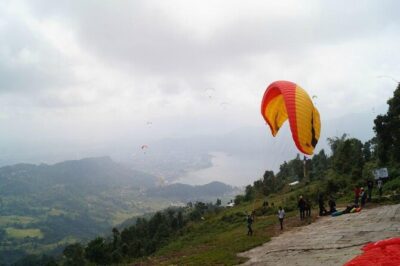
Potential drawback: because it’s a hill route, the weather and lighting can swing quickly. If clouds roll in, views of Annapurna peaks and Machapuchare may be less clear. The Stupa viewpoint is still meaningful even without perfect skies, but you’ll want to time your expectations accordingly.
Shanti Stupa at World Peace: Japanese-built meaning and wide Pokhara panoramas
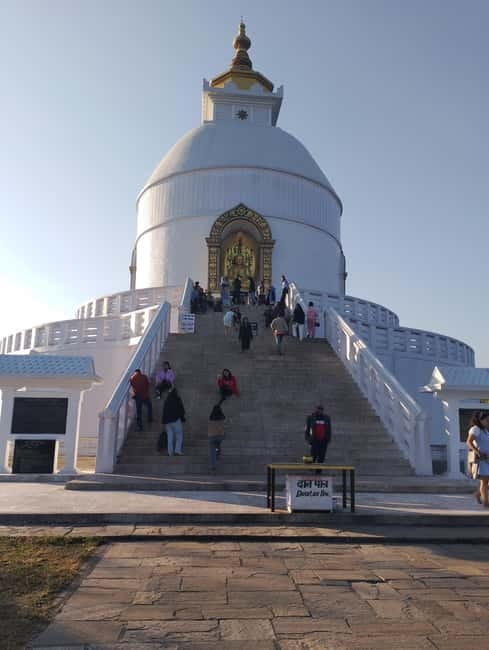
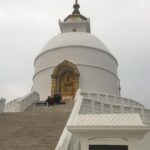
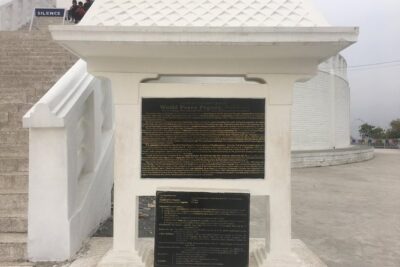
The World Peace Pagoda (often called Shanti Stupa) is the classic white landmark you came for. This stupa was built by Japanese monks, and it’s not just a pretty viewpoint—it’s tied to the stupa’s message of nonviolence and world harmony. That theme is easy to feel when you’re standing there with the valley spread out below you.
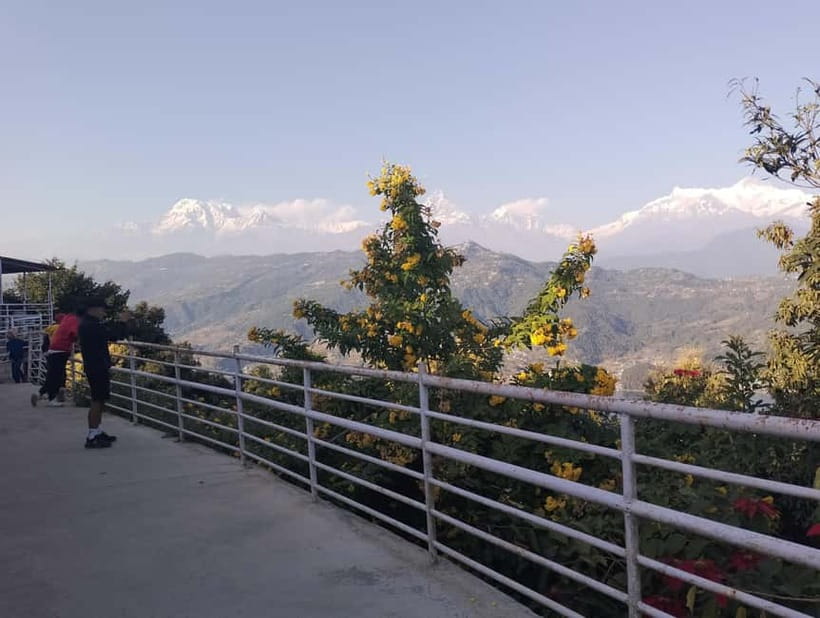
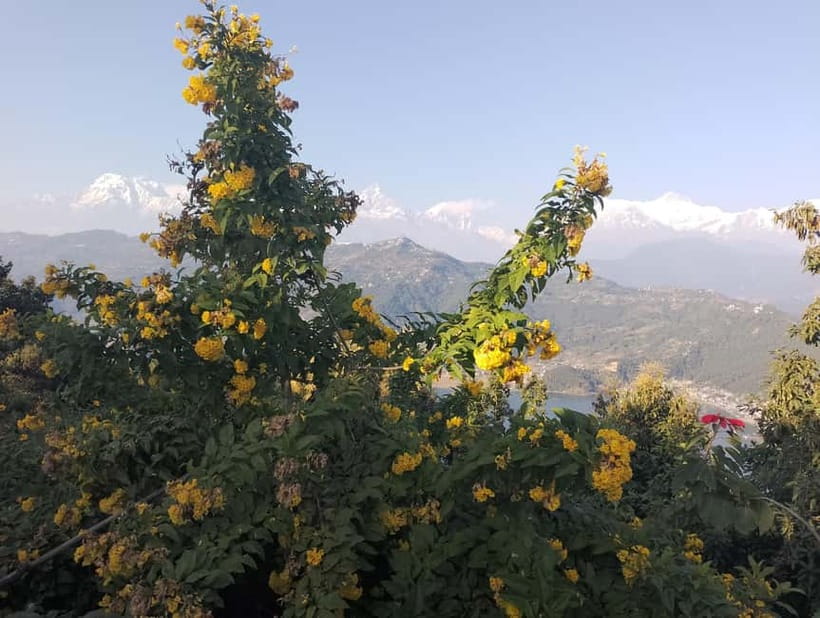
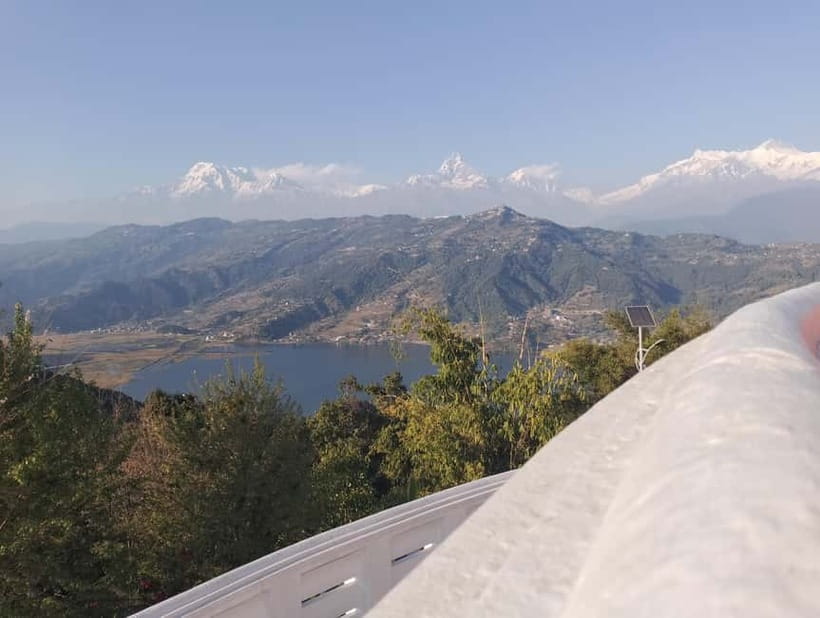
This stop is where the views become the story. From the pagoda viewpoint, you can take in:
- Pokhara Valley
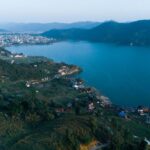
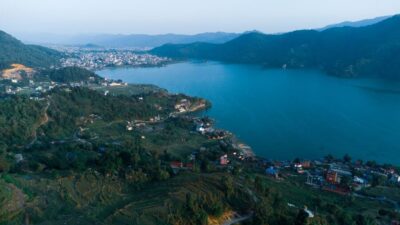
- Phewa Lake
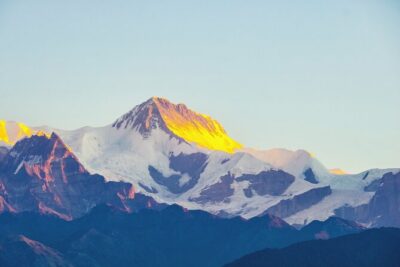
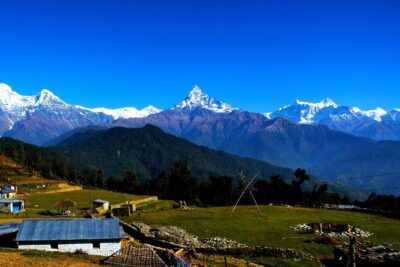
- the Annapurna range
- Machapuchare (Fishtail Peak)
I like how the experience doesn’t force you to do everything. You get time for photos, plus a chance for quiet reflection or a short walk. If you enjoy religious sites that feel calm rather than crowded and loud, this fits the mood.
One practical tip: plan for the photo moment and the “pause moment.” If you race through only for pictures, you’ll miss the point. Standing still for a few minutes helps you notice the scale—valley, water, peaks—without needing to frame every shot.
Pumdikot Shiva Statue and the 51 ft Kailash Parbat design: what to look for
After the Stupa, you head to Pumdikot, about a 15–20 minute uphill drive on winding roads. This is where the tour shifts from Buddhist-style calm to a Hindu spiritual park you can explore at your own pace.
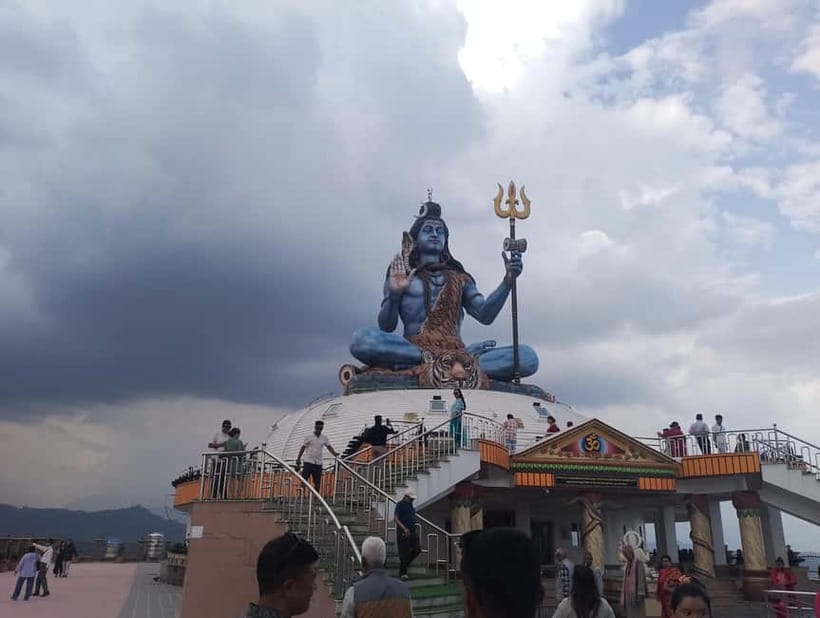
The main highlight is the huge Shiva statue—51 ft tall—positioned on a multi-tier platform designed to resemble Kailash Parbat. Even if you’re not deeply religious, that scale hits. It’s the kind of monument where your brain keeps recalculating size because it looks both monumental and carefully planned.
You’ll typically have around 1.5 hours here, with:
- a photo stop
- a visit and guided tour
- free time to explore
- scenic views along the way
What I really like is that the experience isn’t only the statue. The complex includes:
- a statue of Nandi (Shiva’s bull)
- Hindu-themed gardens and fountains
- 108 Shiva lingams
- observation decks with 360° views of mountains and Pokhara city
Those observation decks are your payoff for the climb. In a good view window, you get a full circle perspective—peaks and city in the same sweep. It’s also a great place to slow down because your surroundings keep changing as you move between decks.
Small consideration: the site is outdoors and you’re doing some walking on uneven ground. Comfortable shoes matter here more than at lakeside.
More Phewa Lake and World Peace Pagoda outings.
Timing and comfort: how to make the most of the 4-hour plan
This tour is short, so your choices matter. You’ll want to dress like you’re going for a hilltop walk, not just a car ride.
Bring:
- comfortable shoes
- sunglasses
- a sun hat
- sunscreen
- comfortable clothes
For me, the smartest “strategy” is simple: treat the first stop as your scenic warm-up, then commit to slower exploration at Pumdikot. The Stupa is about broad landscape views and symbolic calm. Pumdikot is more detailed—statue size, Nandi, lingams, garden fountains, and the observation deck angles.
Also, think about your photo priorities. If the peaks are visible, take your bigger wide shots at the Stupa and then return to Pumdikot for higher-angle views and 360° shots. When visibility is limited, lean into architecture and spiritual details at Pumdikot rather than chasing distant peak photos.
Price and value: why $32 for a private car can make sense
At $32 per person for a half-day, you’re paying for convenience plus guided time. The tour includes round trip transfer by private car and hotel pickup and drop off within lakeside area. It’s also a private group option, so you’re not stuck waiting around with a large group at each stop.
For value, I look at three things:
- Transport effort saved: you don’t have to figure out uphill rides on your own.
- Time efficiency: you cover both major hilltop stops in one outing.
- Guided context: both locations include visit time and guided tour components.
You also get an experienced English-speaking driver (English and Hindi spoken). That matters on scenic sites, because it helps you understand what you’re looking at beyond just the photo.
One note: personal expenses aren’t included, so keep some cash or a card plan ready for small extras like water.
Season tips: when March–May and Sep–Dec usually deliver
The best time is March to May and September to December. Those windows generally make sense for a hilltop, views-focused outing because conditions are more likely to cooperate for clear sightlines.
If you’re traveling outside those months, you might still enjoy the spirituality and monuments, but the Annapurna and Machapuchare views could be less consistent. In other words: the tour still works, but your “peak visibility odds” shift with weather.
Pickup reliability and the guide factor: what to watch
A tour like this lives or dies by the pickup. There’s one clear lesson from real-world experience: if the car doesn’t arrive, the whole day gets scrambled. I’d treat pickup confirmation as part of your prep, even if pickup is included.
On the positive side, the guide experience can be a highlight. One booking praised Amrit as an excellent guide who shared Nepal’s sights with love, understanding, and enthusiasm. That kind of guide energy can change the feeling of a short tour—you don’t just see things, you understand what you’re seeing.
My practical advice: message or confirm details the day before (especially pickup location and timing). And on the morning, be ready at the pick-up spot so the driver can find you fast.
Who should book—and who should skip this half-day hill climb
This tour is ideal if you want:
- a half-day escape from Pokhara lakeside
- a mix of views + spirituality
- an efficient way to see World Peace Stupa and Pumdikot
- private-car comfort without spending a full day out
You’ll likely enjoy it most if you’re the type who likes monument details, viewpoints, and short walks on scenic hills.
It’s not suitable for wheelchair users, and the overall experience involves uphill driving and outdoor walking. If mobility is a concern, you should consider the stairs/terrain and whether you can comfortably handle uneven areas at the viewpoints.
Also, pets aren’t allowed. If you’re traveling with an animal, plan a different arrangement.
Should you book the Peace & Panorama tour?
I’d book this if you’re in Pokhara with limited time and you want two high-impact hilltop stops in one go. The value is in the private transport, the guided visits, and the way the day is paced so you’re not just parked at viewpoints.
Skip it or reconsider only if you:
- need wheelchair accessibility
- expect a long, slow hike day
- rely on perfect weather for major peak photos (since visibility can change fast on hills)
If you’re ready for a calm, spiritual outing with serious panorama potential, this is a smart half-day choice. Bring the sun protection, wear good shoes, and take your time at the decks—you’ll get more from it than just a quick photo sweep.
FAQ
How long is the Peace & Panorama tour?
The duration is 4 hours.
What is the price per person?
The price is $32 per person.
Is hotel pickup and drop-off included?
Yes. Hotel pickup and drop-off within the Pokhara lakeside area is included.
What stops are included in the tour?
You’ll visit the World Peace Pagoda and then go to the Pumdikot Shiva Statue on Pumdikot Hill.
Do I get time to take photos and walk around?
Yes. The schedule includes photo stops, sightseeing time, and walking time.
What languages does the driver speak?
The driver speaks English and Hindi.
Where does the pickup happen in Pokhara?
Pickup is included for any hotel in the lakeside area, and the driver will pick you up using a name card.
Is the tour wheelchair accessible?
No. It’s not suitable for wheelchair users.
What should I bring for the tour?
Bring comfortable shoes, sunglasses, a sun hat, sunscreen, and comfortable clothes.
When is the best time to go?
March to May and September to December are the best season.
What’s the cancellation and payment flexibility?
You can cancel up to 24 hours in advance for a full refund, and you can reserve now and pay later. Starting times depend on availability.
Also Reviewed Around Pokhara

More Lake and Peace Pagoda Trips
More Himalayan Viewpoints
Newer Pokhara reviews to browse before you decide
Phewa Lake & Peace Pagoda, compared.
 ★ 5.0Day Hiking from Sarangkot to World Peace Stupa from LakesideFrom $13020 reviews
 ★ 4.5Golden Hour at Peace Pagoda – Himalayan Sunset TourFrom $1016 reviews
 ★ 4.5Pokhara in 5 Hours: Lake, Museum, Cave, Falls & Pagoda HillFrom $4016 reviews
★ 5.0Pokhara in 5 Hours: Lake, Museum, Cave, Falls & Pagoda HillFrom $4510 reviews
 ★ 5.0Hiking to Peace Pagoda via Fewa Lake & JungleFrom $5210 reviews
 ★ 4.8Suspension Bridge Private Tour- 30 Min Village WalkFrom $219 reviews
 ★ 4.5Round The PhewaFrom $1858 reviews
 ★ 5.0Full day Suspension Bridge, Boating, George, Sightseeing TourFrom $2306 reviews
Browse the lists this tour appears in