
Reviewed · SARANGKOT SUNRISE TOURS
Sarangkot Village Coffee Culture and Authentic Local Life Tour
Coffee grows on a mountain trail. This Sarangkot Village Coffee Culture and Authentic Local Life Tour mixes a rewarding hike with a close look at organic Arabica farming and village life in the Sarangkot Pandeli area near Pokhara.
I especially like two parts: the farm-to-cup walkthrough (you see how coffee and honey connect through the landscape), and the women-prepared organic lunch that ties what you learn to what you eat. One thing to consider: this is not a flat stroll—there’s a solid uphill portion, and gear is not provided.
In This Review
- Key Highlights You’ll Care About
- Why This Sarangkot Coffee Tour Feels So Real
- Meeting Point at SalesBerry and the Phewa Lake Start
- Stop 1 to Stop 2: Shore Path, Khapaudi Village, and the First Uphill Effort
- The Phewa Tal Hike: Village Life and Side-by-Side Walking
- Pandeli Park and the 1200m View Over the Lake
- Inside the Community: Sharing Seeds and Organic Coffee Farming
- Honey, Beehives, Vegetable Gardens, and Coffee Plants
- The Women’s Lunch: Food That Supports Local Jobs
- Coffee Tasting, Guide Style, and the Farm-to-Cup Moment
- Pace, Fitness Level, and What to Bring
- Price and Value: Getting More Than a Coffee Tour
- Who Should Book This (and Who Should Skip It)
- Should You Book the Sarangkot Village Coffee Culture Tour?
- FAQ
- Where does the tour start?
- How long is the tour?
- What time does the tour start?
- How much does it cost?
- How fit do I need to be?
- How big is the group?
- What’s included in the price?
- Is hiking gear provided?
- Is there anything to taste besides coffee?
- Is the tour dependent on weather?
- Are service animals allowed?
Key Highlights You’ll Care About
- Organic Arabica, farm-to-cup steps: You learn how coffee is grown and processed, from the farm stage to tasting time.
- Phewa Lake views from about 1200m: Pandeli Park is a major viewpoint with wide lake scenery.
- Sharing Seeds impact: A community-focused non-profit supports farmers with training and pays 30% more for cherries than other collectors.
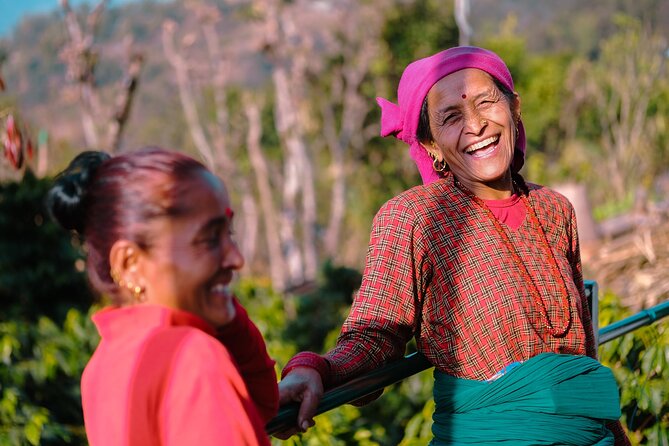
- Women-led community tourism: Your meal is prepared by a women’s group, supporting local jobs through tourism.
- Coffee and honey tasting when available: You may sample local coffee and honey, plus fruits and chocolate bars.
More sunrise runs up to Sarangkot to choose from.
- From Pokhara: Sarangkot Sunrise Himalayas Tour★ 4.7 · 218 reviews
- Pokhara: Sarangkot Sunrise with Half or Full-Day City Tour★ 4.8 · 100 reviews
- The Best of Pokhara: Full-Day Private Tour with Sarangkot Sunrise★ 5.0 · 66 reviews
- Pokhara: Sarangkot Sunrise And Private Full-Day Tour★ 4.8 · 32 reviews
Why This Sarangkot Coffee Tour Feels So Real
This tour is built for travelers who want more than a coffee tasting with a postcard backdrop. You get the best of both worlds: a hike with big Pokhara-area views, plus a hands-on look at small-scale organic coffee farming and the community that sustains it.
The value here is not just that you taste coffee. It’s that you understand the full chain—how crops are grown, how coffee moves through processing, and how local support changes results for farmers. And yes, the scenery helps too. When you’re walking above Phewa Lake and then tasting freshly connected local products, it makes the whole experience click.
The tour runs with a small group max of 10 and includes private transportation, which helps keep the day from turning into a chaotic shuffle. You’re also starting at 11:15am and returning to the same meeting point, so you can plan the rest of your Pokhara day without mystery.
Meeting Point at SalesBerry and the Phewa Lake Start
Your day begins at SalesBerry Department Store in Pokhara (6XFQ+JV2, Chiple Dhunga Rd). From there, you head out to start the experience that blends walking, village scenery, and local farming.
One of the smartest things about this morning setup is that the first segment gets you moving in a scenic way. You travel about 1 hour 30 minutes following the shore of Phewa Lake toward Khapaudi Village, then you begin the uphill portion.
Why that matters: Pokhara can be busy and water-heavy for tourists. This route gives you a calmer transition—from city edge to lake views to village roads—so you don’t feel like you’re being dropped into the hike without context.
Stop 1 to Stop 2: Shore Path, Khapaudi Village, and the First Uphill Effort
The early rhythm is: travel along the lake, reach Khapaudi Village, then start hiking uphill. Even though it’s a guided tour, the movement is part of the point. You’re not just commuting to a farm; you’re getting a feel for how rural neighborhoods sit above the lake.
From Khapaudi Village, you start the uphill hike (the tour later notes an additional uphill block of about 2 hours 30 minutes). This is where you’ll want to be honest with yourself about fitness. The good news: you’re only committing to a half-day timeframe (about 6 hours total), so you can plan it as an active afternoon break rather than an all-day endurance test.
Practical tip: wear shoes you trust. The tour info doesn’t mention gear, and the hike part is real enough that sturdy footwear matters more than fashion.
The Phewa Tal Hike: Village Life and Side-by-Side Walking
Next comes the Phewa Tal stretch. The tour describes hiking side by side, which is a small detail but important for how the day feels. Instead of speeding through stops, you’re moving at a human pace with time to notice everyday village life.
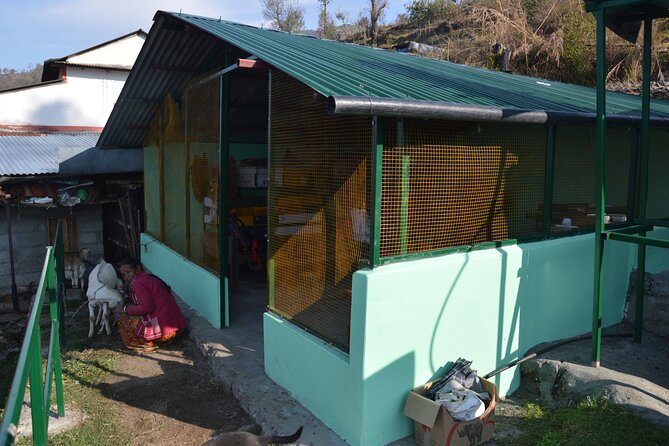
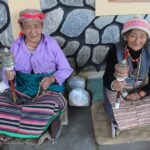
This is also where the day becomes more than views. You’re walking through rural areas and getting time to interact. The tour’s focus is local living—how farms are part of daily rhythms, not just attractions.
If you’re the kind of traveler who likes learning how people actually live (not just where they live), this is the section that usually makes the tour memorable. You’re seeing the everyday infrastructure of village life while your guide keeps coffee farming and community context in the background.

Pandeli Park and the 1200m View Over the Lake
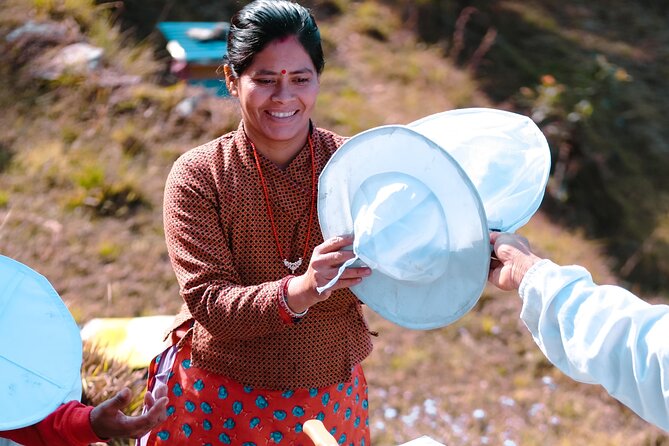
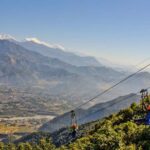
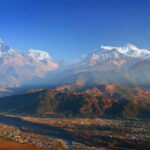
Then you reach Pandeli Park (Sarangkot). This stop is one of the best parts for pure scenery. The tour notes the viewpoint is at about 1200 meters altitude, and it’s known as a strong spot for the full view of Phewa Lake.
It also helps that this area connects to long walking routes into the Annapurna region—Pandeli Park is described as being on the oldest trek route to the Annapurna region. That adds a layer of meaning: you’re not only in a village coffee program; you’re in a place that has long attracted hikers.
You’ll get rest time here before moving toward the village and farm components. In other words, the day has built-in breathing space, not just constant uphill.
Inside the Community: Sharing Seeds and Organic Coffee Farming
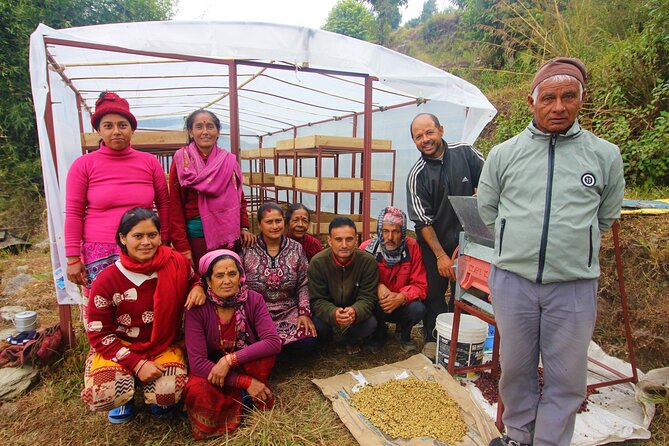
The center of the tour is the community-supported coffee work, connected to the non-profit Sharing Seeds. This is where your hike becomes a learning experience with real purpose.
Here’s what the tour emphasizes:
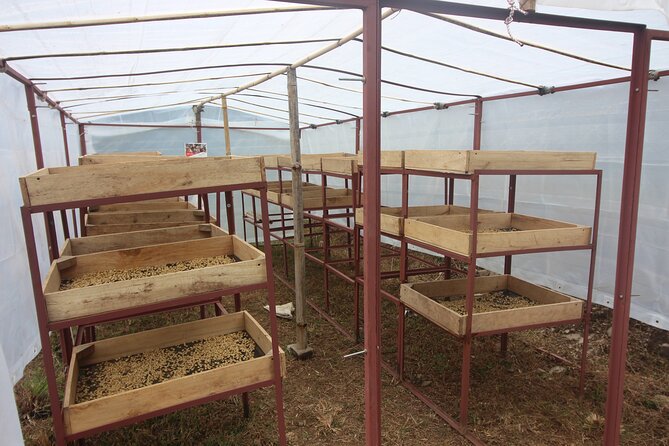
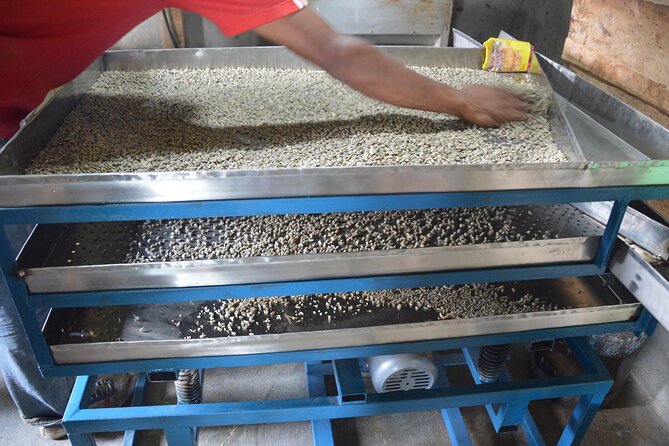
- You learn most stages of organic coffee farming and processing, from the farm stage to the cup.
- You hear how Sharing Seeds provides training and updated knowledge needed to farm sustainably.
- You learn about how the project supports farmers by paying 30% more for coffee cherries than other collectors.
That last point is a big deal. It explains why this tour isn’t just about looking at plants. It’s about how supply chains affect farm income and farming choices. When you understand the money angle—especially the difference between standard collectors and a cooperative approach—it makes the tasting feel more grounded.
Also, keep an eye out during the farm portion for the practical reality of small-scale production: coffee doesn’t arrive as a finished product. It grows, it’s cared for, it’s processed, and then it becomes what you taste.
Honey, Beehives, Vegetable Gardens, and Coffee Plants
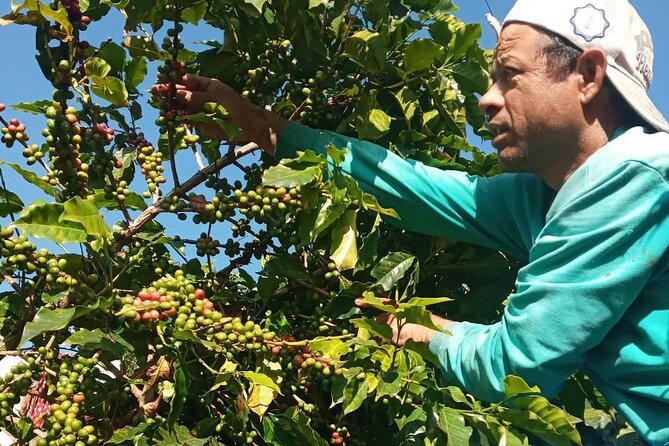
This tour doesn’t treat coffee like it’s an isolated crop. Your visit includes time around farm activities that usually travel together: beehives, vegetable garden areas, and coffee plants alongside other crops.
This matters for two reasons:
- It shows you the farm as a whole system, not a single-crop showroom.
- It helps you see why honey and coffee belong in the same conversation in this part of Nepal. Beekeeping and diversified growing often fit the practical needs of local agriculture.
If honey is available for tasting, you’ll get that too. The tour includes organic coffee and honey tasting upon availability, plus seasonal fruits and chocolate bars.
The Women’s Lunch: Food That Supports Local Jobs
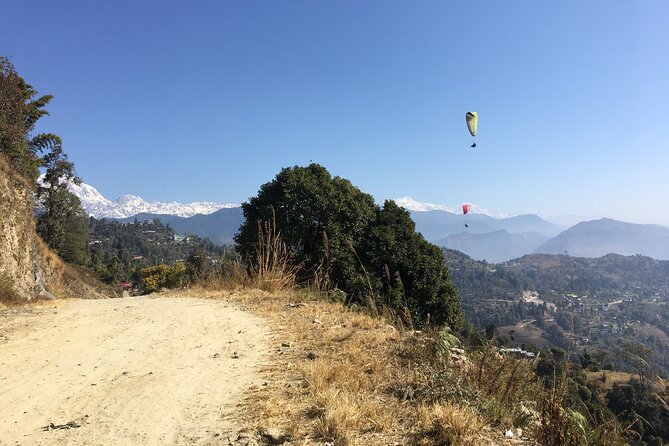
One of the most praised parts is the lunch. The tour includes an organic lunch prepared by a women’s group connected to the community tourism project.
This is one of those experiences where the meal actually carries information. You’re not eating somewhere generic and calling it local. You’re eating in a way that supports local work—jobs created through community tourism, driven by women.
It’s a good moment to slow down after hiking and look back at what you learned. Coffee processing steps and farming challenges can sound abstract until you sit down with food made by the same community at the center of the project.
And if you’re a coffee fan, this is a smart timing choice: you’ll likely have already tasted or discussed coffee, so the lunch becomes part of the same story.
Coffee Tasting, Guide Style, and the Farm-to-Cup Moment
A major strength of this tour is how the coffee lesson lands. People report that explanations are clear and hands-on, and they specifically mention a guide named Abby explaining the coffee progress in a way that made the whole process click.
That matters because coffee can be confusing. The difference between cherry, processing steps, and what ends up in your cup isn’t obvious unless someone walks you through it. When your guide ties steps together and then gives you tasting time, you get a cause-and-effect education instead of a lecture.
You’ll also have seasonal snacks like fruits and chocolate bars, which work well during a half-day hike. They keep your energy steady without turning the day into a constant eating stop.
Pace, Fitness Level, and What to Bring
The tour asks for moderate physical fitness. The itinerary includes lake-side travel and multiple uphill sections, including a substantial uphill block lasting around 2 hours 30 minutes.
If you’re normally comfortable hiking on uneven ground for a few hours, you’ll likely be fine. If your mobility is limited, you may want to ask about adjustments. There’s at least one documented case where the team arranged a taxi ride to the farm rather than doing the full hike.
What to bring (practical, not fancy):
- Comfortable hiking shoes for uneven paths
- Water and sun protection
- Light layers, since the altitude and breeze can change how you feel
- Anything you consider essential for your own comfort (the tour doesn’t provide hike gear)
Price and Value: Getting More Than a Coffee Tour
At $60 per person for about 6 hours, this isn’t a bargain in the sense of a super-cheap activity. But it is strong value because it bundles several costly things together: private transportation, guided farm time, organic coffee and honey tasting (when available), and an organic lunch made by a local women’s group.
The real value, though, is the connection to community support:
- You’re learning why farmers are paid more for cherries.
- You’re seeing how training for sustainable farming is organized.
- You’re supporting off-the-beaten-path tourism that creates local opportunities.
If your goal is to leave Pokhara knowing coffee isn’t only a café product, this tour makes sense financially. You pay for education, meals, and transport—not just a view.
Who Should Book This (and Who Should Skip It)
This tour fits best if you:
- Want an active Pokhara half-day that still includes meaningful culture and food
- Like small-scale farming stories and want to see organic Arabica work in action
- Enjoy coffee enough to care about process, not just flavor
- Prefer a small group experience (max 10) over big bus touring
You might want to choose a different option if you:
- Don’t handle uphill hiking well
- Expect a mostly flat sightseeing itinerary
- Want a quick, low-effort activity
Weather matters too. The tour notes it requires good weather, so if you’re visiting during a rainy stretch, plan to be flexible.
Should You Book the Sarangkot Village Coffee Culture Tour?
If you like your travel with a purpose, I’d book it. The combination is hard to beat: Phewa Lake scenery, a hike through rural areas, and a coffee experience tied to Sharing Seeds and women-led community tourism. It’s the kind of tour where the tasting feels earned, and the lunch feels like it belongs.
Book it if you’re ready for a moderate hike and you want to understand how organic Arabica farming actually works in a real community. Skip it only if the uphill part is a deal-breaker for your body.
If you’re in Pokhara with half a day to spare and you care about authentic local life, this is a strong pick.
FAQ
Where does the tour start?
The tour starts at SalesBerry Department Store, 6XFQ+JV2, Chiple Dhunga Rd, Pokhara 33700, Nepal. It ends back at the same meeting point.
How long is the tour?
The tour lasts about 6 hours.
What time does the tour start?
The listed start time is 11:15am.
How much does it cost?
It costs $60.00 per person.
How fit do I need to be?
The activity requires moderate physical fitness because it includes uphill hiking portions.
How big is the group?
The maximum group size is 10 travelers.
What’s included in the price?
Private transportation is included, along with organic coffee and honey tasting upon availability, and seasonal fruits and chocolate bars. An organic lunch prepared by the women’s group is also part of the experience.
Is hiking gear provided?
No. Gear or equipment for your hike is not included.
Is there anything to taste besides coffee?
Yes. You’ll have organic coffee tasting, and honey tasting is included upon availability, plus seasonal fruits and chocolate bars.
Is the tour dependent on weather?
Yes. It requires good weather, and if it’s canceled due to poor weather, you’ll be offered a different date or a full refund.
Are service animals allowed?
Yes, service animals are allowed.
Also Reviewed Around Pokhara
More Sarangkot Sunrises
Newer Pokhara reviews to browse before you decide

Sarangkot Sunrise Tours, compared.
 ★ 4.7Sarangkot Sunrise Himalayas TourFrom $8218 reviews
 ★ 4.8Sarangkot Sunrise with Half or Full-Day City TourFrom $8100 reviews
 ★ 5.0The Best of Pokhara: Full-Day Private Tour with Sarangkot SunriseFrom $6866 reviews
 ★ 5.0Paragliding at Sarangkot PokharaFrom $8050 reviews
 ★ 4.8Sarangkot Sunrise And Private Full-Day TourFrom $4332 reviews
 ★ 4.5Group Joining Sarangkot Sunrise Himalayas TourFrom $1223 reviews
 ★ 5.0Day Hiking from Sarangkot to World Peace Stupa from LakesideFrom $13020 reviews
 ★ 5.0Best Sunrise Tour from SarangkotFrom $2518 reviews
Browse the lists this tour appears in